Best White Noise for Baby Sleep: Machines vs Smart Speakers (2026)
Your baby needs white noise to sleep. That’s not debatable in 2026. The science is clear: consistent background sound helps infants fall asleep faster and stay asleep longer by masking household noises. The question is what device to use.
You’ve got two paths: a dedicated sound machine or the smart speaker already sitting on your shelf. One costs $50-70 and does one thing. The other costs $49 and does everything. The right choice depends on one question: how much do you trust your WiFi at 3am?
The Contenders
Hatch Rest+ ($70)
The Hatch Rest+ is the most popular dedicated nursery sound machine for good reason. It combines white noise (12 sound options), a night light (full RGB color), and a time-to-rise indicator (turns green when it’s okay to get up) in one device.
It’s app-controlled via Bluetooth (not WiFi), which means you can adjust volume and sound from your phone without entering the room. No internet required for core function. If your WiFi dies, the Hatch keeps playing.
What I like: The “toddler clock” feature alone justifies the price. Set it to turn green at 7am, and eventually your 2-year-old learns that green means they can leave their room. This buys you months of extra sleep once they’re in a toddler bed.
What I don’t like: The app can be slow to connect via Bluetooth (5-10 seconds), and you need a Hatch Rest+ subscription ($50/year) to unlock all sounds and premium features. The free tier has enough sounds for most families, but it feels nickel-and-dimey for a $70 device.
Best for: Families who want one device that handles sound, light, and toddler clock from birth through age 4-5.
Yogasleep Dohm ($50)
The Dohm is a mechanical fan-based sound machine. It doesn’t play recorded white noise. It generates actual airflow with a small internal fan. Two speed settings. One switch. No app. No WiFi. No Bluetooth.
This thing has been around since 1962. Your parents probably had one. It produces a rich, natural fan sound that many parents (and adults) prefer over digital recordings.
What I like: It never fails. Ever. Plug it in, flip the switch, it runs. No app updates, no connectivity issues, no subscription fees. It sounds better than any digital recording of white noise because it’s real mechanical sound with natural variation.
What I don’t like: You can’t adjust it remotely. If you want to turn it on before bringing a sleeping baby in from the car, you need to physically walk in and flip the switch. Unless you put it on a smart plug (more on this trick below).
Best for: Parents who want zero technology dependency for the single most important sleep aid in the nursery.
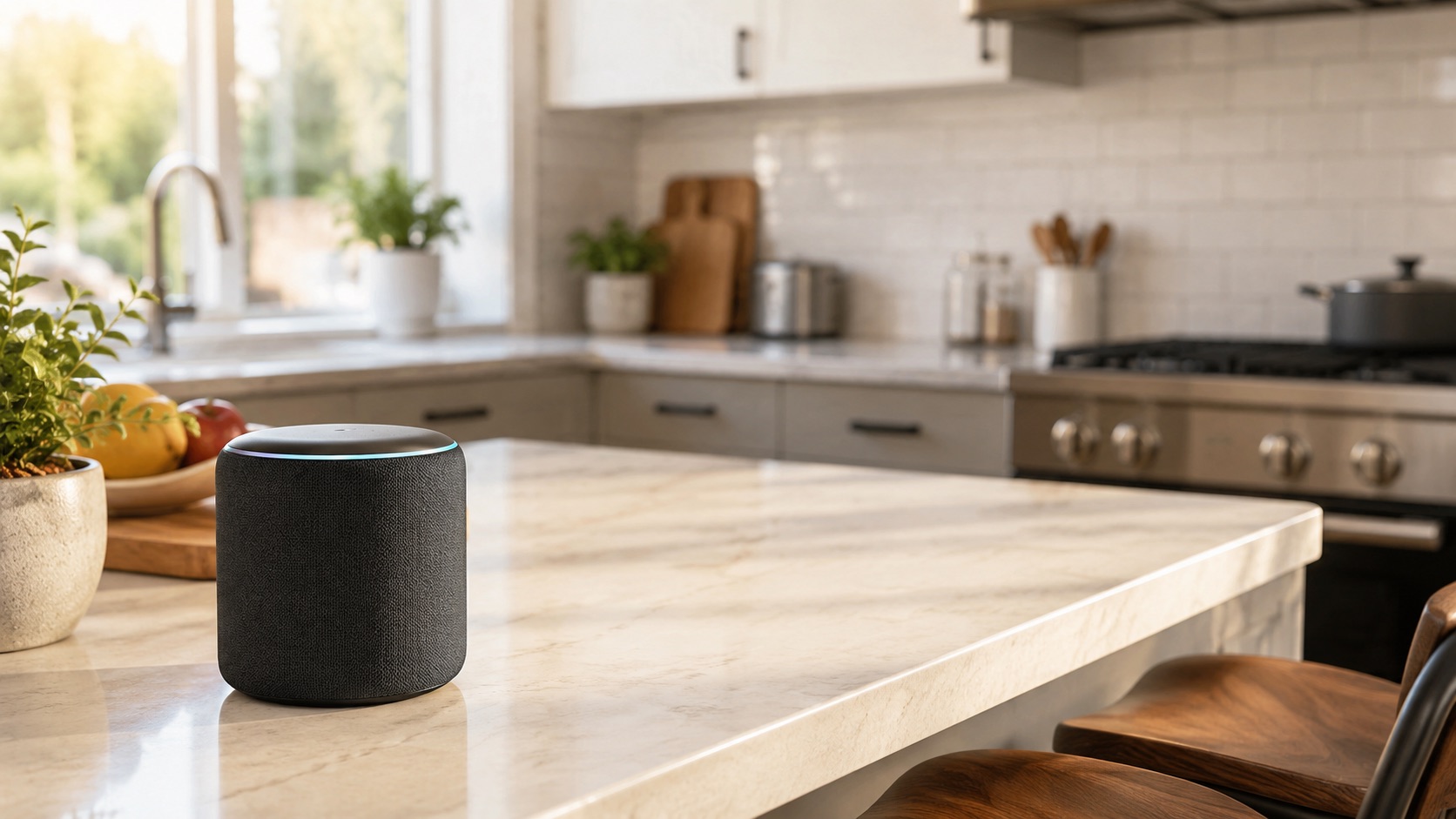
Amazon Echo Dot (5th Gen, $50)
The Echo Dot can play white noise, rain sounds, fan sounds, and dozens of other ambient tracks through Alexa. Say “Alexa, play white noise” and it loops indefinitely (as of 2026, Amazon fixed the old issue where sounds would stop after an hour).
It’s also a smart speaker for music, a smart home hub for Zigbee devices, an intercom between rooms, and a timer for bottle warming. Multi-function is its strength.
What I like: You probably already own one. The sound quality is genuinely good for a $50 speaker. Voice commands mean you can start the sound from another room. And it doubles as a hub for your other smart home devices under $50.
What I don’t like: It requires WiFi. When your internet goes down (or Amazon’s servers have issues, which happens 3-5 times per year), the white noise stops. I’ve had an Echo Dot randomly stop playing ambient sound at 2am because “the connection was interrupted.” Baby woke up. Everyone was miserable.
You also can’t guarantee the volume and sound will be identical every time you voice-command it. “Alexa, play white noise” might play a different track than last night, at a slightly different volume. Consistency matters for baby sleep.
Best for: Backup white noise source, or families in homes with rock-solid internet who want one device doing multiple jobs.
LectroFan Evo ($50)
The LectroFan Evo plays 22 digitally generated sounds: 10 fan variations and 12 white/pink/brown noise options. No WiFi. No app. Physical buttons on the device. Timer option (60 minutes or continuous).
What I like: The variety of sounds lets you find the exact frequency that works for your baby. Brown noise (deeper, lower frequency) works better for some infants than white noise. You won’t know until you try, and the LectroFan lets you experiment without buying multiple machines.
What I don’t like: No remote control at all. Physical buttons are on the device itself, which means reaching into the crib area to adjust volume. The timer is useless (you want continuous for baby sleep), but at least it has a continuous setting.
Best for: Parents who want sound variety without WiFi dependency. Great for travel because it’s compact and runs on USB power.
The Smart Plug Trick
Here’s the move that combines the reliability of a dumb machine with the convenience of smart home scheduling.
Take any non-WiFi sound machine (Dohm, LectroFan, or any machine with a physical on/off switch that defaults to “on” when power is restored). Plug it into a $15 smart plug.
Now you can:
- Schedule it to turn on at 7pm and off at 7am automatically
- Turn it on remotely from your phone (baby fell asleep in the car, prep the room before carrying them in)
- Include it in bedtime automations
- Keep the sound running even if WiFi drops (the plug loses connectivity but the outlet stays powered)
The critical detail: most smart plugs default to “last state” or “on” when they lose WiFi connection. The plug doesn’t cut power just because your internet died. The sound machine keeps running independently once it’s on. You only lose the ability to remotely control it during the outage.
This is the best of both worlds. A reliable, non-WiFi machine with smart scheduling layered on top. I use an Aqara smart plug ($15) with a Yogasleep Dohm, and it’s been running every night for 14 months without a single failure.
For the plug options, check our smart home devices under $50 guide.
Sound Quality: Does It Actually Matter?
Yes, more than you’d think. Babies respond differently to different frequencies.
White noise (equal energy across all frequencies): good for masking sharp household sounds like dishes, talking, dog barking.
Pink noise (emphasis on lower frequencies): often better for deep sleep maintenance. Sounds like heavy rainfall or a waterfall.
Brown noise (even more low-frequency emphasis): very deep, rumbly. Like a strong wind or distant thunder. Some babies love it, some are indifferent.
Mechanical fan sound (Dohm): natural, with slight variation that prevents the brain from “tuning it out.” Many sleep researchers prefer this over perfectly looped digital recordings.
The Echo Dot plays digital recordings. They’re fine, but they can have subtle loops that some sensitive sleepers notice. The Dohm produces real analog sound with no loop. The LectroFan generates sound algorithmically (no loops, no recordings). Each approach has fans (pun intended).
My recommendation: start with plain white noise. If your baby isn’t sleeping well after a week, try pink or brown noise. The machine matters less than finding the right frequency for your specific child.
Volume: The Safety Guideline
The AAP recommends white noise machines be placed at least 7 feet from the baby’s head and not exceed 50 decibels at the crib (about the volume of a quiet conversation). Many machines can go up to 85+ dB at max volume, which is harmful for infant hearing with extended exposure.
Use a free phone app (NIOSH SLM or Decibel X) to measure volume at crib level. Set it to 50 dB or below, then leave it alone. The Hatch Rest+ has this built into the app with a recommended volume cap, which is a nice safety feature.
The Reliability Question
Here’s the bottom line, and I’ll be blunt about it. If the white noise stops in the middle of the night, your baby wakes up. A woken baby means 30-90 minutes of resettling. Multiplied by how many months your child uses white noise (most use it for 1-3 years), reliability isn’t a nice-to-have. It’s the primary feature.
Reliability ranking:
- Yogasleep Dohm (mechanical, no electronics beyond the motor)
- LectroFan Evo (electronic but no WiFi, no connectivity)
- Hatch Rest+ (Bluetooth app, but plays independently once started)
- Echo Dot (WiFi and cloud dependent, will occasionally fail)
For your primary sleep sound, pick from the top 3. Use the Echo Dot as a backup, as a kitchen speaker, as a smart home hub, as all the other things it’s great at. Just don’t bet your baby’s sleep on Amazon’s cloud servers at 3am.
If you’re building a smart nursery from scratch, the sound machine plus smart plug combo should be one of your first purchases. It’s the device that makes the biggest immediate difference in everyone’s sleep quality.
Comparison Table
| Device | Price | Sound Type | WiFi Needed | Nightlight | App Control | Reliability |
|---|---|---|---|---|---|---|
| Hatch Rest+ | $70 | 12 digital sounds | No (Bluetooth) | Yes (RGB) | Yes (Bluetooth app) | High |
| Yogasleep Dohm | $50 | Mechanical fan | No | No | No (add smart plug) | Highest |
| Echo Dot (5th Gen) | $50 | Streaming/digital | Yes | No | Yes (voice/app) | Medium (WiFi dependent) |
| LectroFan Evo | $50 | 22 algorithmic sounds | No | No | No (add smart plug) | High |
My Recommendation
For most families: Yogasleep Dohm ($50) + Aqara smart plug ($15) = $65 total. Reliable, schedulable, sounds great, never fails.
For families who want the toddler clock feature: Hatch Rest+ ($70). You’ll use the time-to-rise light for years after baby outgrows the white noise (spoiler: most kids don’t outgrow it until age 3-4).
For budget-conscious families who already have an Echo: Use the Echo Dot as a starting point, but buy a $50 backup machine within the first month. You’ll need it when Amazon’s servers hiccup at 2am.
For travel: LectroFan Evo ($50). USB powered, compact, 22 sounds. Recreate the home sleep environment anywhere.
Pair whichever you choose with a temperature sensor and smart nursery automations for the full setup that actually helps your baby (and you) sleep better.
See how we compare products for our full methodology.
FAQ
Can I use Spotify or Apple Music on a speaker for white noise?
You can, but there are risks. Music streaming apps can throw up “are you still listening?” prompts that stop playback (Spotify does this after an hour). Streaming requires WiFi, so outages kill the sound. Ads can play if you don’t have a premium subscription (imagine a car insurance ad at 2am in the nursery). If you go this route, download a white noise track for offline playback and loop it locally. But honestly, a $50 dedicated machine is simpler and more reliable.
How long should white noise run during baby sleep?
All night, every night, until the child decides they don’t want it anymore. There’s no medical reason to stop using white noise at any particular age. Most kids naturally drop it between ages 3-5 when they become heavier sleepers. Running it continuously is fine (the Dohm has been running 12 hours nightly in countless homes for decades without issue). Don’t use the timer. Timers turn off the sound mid-sleep, which defeats the purpose.
Is white noise safe for babies’ hearing?
Yes, if you follow volume guidelines. Keep the machine at least 7 feet from the crib and below 50 dB measured at head level. At that distance and volume, it’s no louder than ambient conversation. The risk only exists at high volumes (above 70 dB) with prolonged exposure, or if parents place the machine right next to the baby’s head. Measure once with a phone app, set it, and forget it.
Will my baby become dependent on white noise?
Probably yes, for a while. Is that a problem? No. “Dependence” on a sleep association is only bad if it’s unsustainable (like rocking to sleep for 45 minutes). White noise is completely sustainable: it requires zero effort from parents, costs nothing to run, works in any environment, and travels easily. Your baby being “dependent” on white noise is like you being “dependent” on a pillow. It’s a tool that helps sleep. Use it without guilt.
Should I use white noise or pink noise or brown noise?
Start with white noise. It’s the broadest spectrum and masks the widest variety of household sounds. If your baby seems restless or wakes easily, try pink noise (deeper, more like rain) for a few nights. Some sleep-resistant babies respond better to brown noise (even deeper, like a rumble). The LectroFan Evo is great for experimenting because it has all three types. There’s no universal “best” frequency. It depends entirely on your baby and your home’s ambient sound profile.