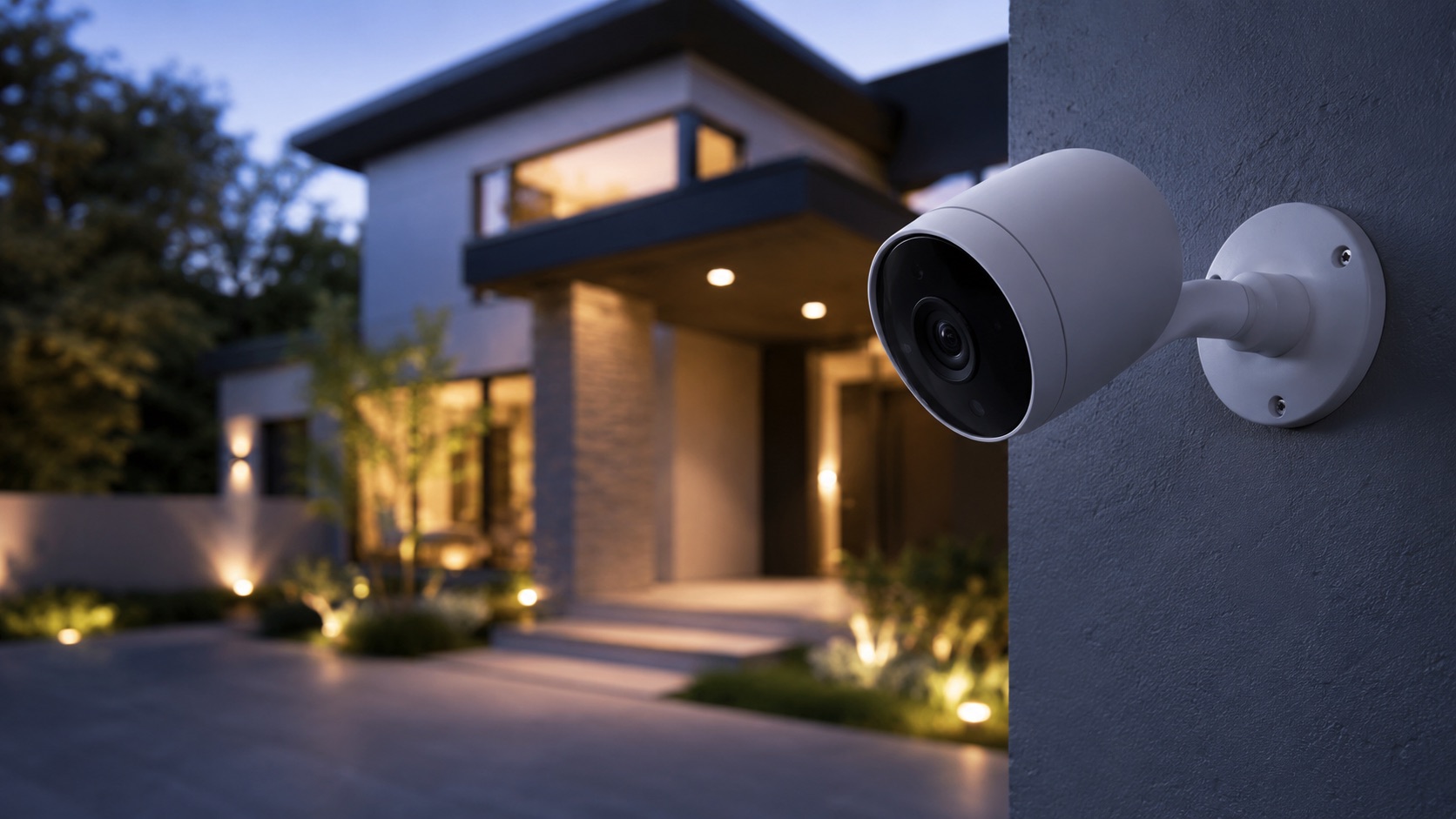
Arlo vs Ring Cameras (2026) — Which System Is Better?
Arlo vs Ring Cameras: The 2026 Showdown
Choosing between Arlo and Ring is the most common security camera dilemma homeowners face in 2026. Both brands dominate the cloud-based camera market, but they take fundamentally different approaches to smart home security. Arlo positions itself as the premium, ecosystem-agnostic option while Ring leverages Amazon’s massive smart home infrastructure to offer tightly integrated but more restricted cameras.
This research-based comparison examines the two ecosystems through published capabilities, subscription requirements and documented owner feedback. We do not have evidence of an owned multi-camera Arlo-and-Ring test, so the article does not present its conclusions as one.
Camera Lineups at a Glance
Arlo’s 2026 Lineup
- Arlo Pro 5S ($250): The flagship battery-powered camera with 2K HDR, color night vision, dual-band WiFi, and a 160° field of view. This is their best all-around option for most homes.
- Arlo Essential ($50–130): Budget-friendly options ranging from indoor cameras to outdoor wireless models. The Essential XL offers extended battery life at the higher price point.
- Arlo Ultra 2 ($400): The premium tier with 4K video, integrated spotlight, and 180° diagonal field of view. Overkill for most homes but exceptional for large properties.
Ring’s 2026 Lineup
- Ring Spotlight Cam ($170): Versatile outdoor camera with built-in LED spotlights, 1080p video, and two-way talk. Available in battery, plug-in, and solar versions.
- Ring Stick Up Cam ($100): Their most flexible option — works indoors or outdoors with battery, plug-in, or solar power.
- Ring Floodlight Cam ($200): Hardwired outdoor camera with powerful dual floodlights and 1080p HDR video. Excellent for driveways and backyards.
Video Quality Comparison
Arlo wins the video quality battle decisively. The Pro 5S records in 2K HDR while the Ultra 2 pushes to full 4K. Ring maxes out at 1080p HDR across its entire lineup — a notable gap in 2026 when competitors have largely moved to higher resolutions.
In practice, Arlo’s higher resolution means you can zoom into footage and still identify faces, license plates, and package labels clearly. Ring’s 1080p is adequate for general security monitoring but falls short when you need fine detail.
Color night vision is another area where Arlo excels. The Pro 5S and Ultra 2 produce vivid color footage in low light using integrated spotlights, while Ring’s color night vision is less refined and tends to wash out at longer distances.
Subscription Costs: Where It Really Hurts
Both companies push subscriptions heavily, and the long-term costs can exceed the hardware price within a year or two.
Arlo Secure Plans
- Arlo Secure ($3/mo per camera or $13/mo for unlimited cameras): 30-day cloud history, person/vehicle/animal detection, activity zones.
- Arlo Secure Plus ($18/mo): Adds 24/7 emergency response, theft replacement, and extended warranty.
Ring Protect Plans
- Ring Protect Basic ($3.99/mo per camera): 180-day video history, person detection, sharing.
- Ring Protect Plus ($20/mo for all devices): Adds 24/7 professional monitoring, extended warranty, and 10% off Ring purchases.
Cost at Scale (3+ Cameras)
Here’s where the math changes dramatically. With 3 cameras:
- Arlo: $13/mo (unlimited plan) = $156/year
- Ring: $20/mo (Plus plan) = $240/year — OR $3.99 × 3 = $11.97/mo = $143.64/year
Ring’s per-camera plan actually becomes competitive at 3 cameras, but if you want full features including professional monitoring, Ring’s $20/mo Plus plan is the better deal compared to Arlo’s $18/mo Secure Plus (which doesn’t include monitoring for all cameras simultaneously).
Smart Home Integration
This is where the two brands diverge most sharply.
Arlo works with virtually every smart home ecosystem: Apple HomeKit, Google Home, Amazon Alexa, Samsung SmartThings, and IFTTT. If you have a mixed ecosystem or ever plan to switch platforms, Arlo gives you complete freedom.
Ring is Amazon-exclusive. It integrates deeply with Alexa, Echo Show displays, Fire TV, and other Amazon devices — but offers zero support for Google Home or Apple HomeKit. If your household uses Google Assistant or Siri as the primary voice assistant, Ring is a non-starter.
For homes already committed to the Amazon ecosystem, Ring’s integration is arguably tighter than Arlo’s Alexa support. You get seamless live views on Echo Show, Alexa-triggered recording, and Ring Alarm integration. But that lock-in is a significant trade-off.
Battery Life and Power Options
Arlo’s Pro 5S offers 4–6 months of battery life under typical use, while the Essential XL pushes to 8+ months. Ring’s battery cameras generally deliver 3–6 months depending on activity level.
Both brands offer solar panel accessories ($50–80) for indefinite outdoor power. Ring also has a wider selection of hardwired options, making it slightly more convenient for permanent installations where running power isn’t an issue.
Local Storage Options
Arlo: Supports local storage via USB on the Arlo SmartHub, but this requires the optional SmartHub ($80) and doesn’t replace cloud features — it’s a backup only. Without a subscription, you get no cloud recording at all.
Ring: Offers no local storage whatsoever. Every recording requires a Ring Protect subscription and internet connectivity. If your internet goes down, Ring cameras become live-view-only devices with no recording capability.
If local storage and subscription-free security matter to you, neither brand is ideal — but Arlo at least offers the option.
App Experience and Reliability
Both apps are functional but have distinct personalities. Arlo’s app feels more polished with faster clip loading and better timeline navigation. Ring’s app is more utilitarian but benefits from deeper Alexa ecosystem integration and the Neighbors social features.
Ring’s Neighbors app (built into the main app) shows crime and safety alerts from nearby Ring users — a community feature Arlo doesn’t match. Whether you find this useful or anxiety-inducing is personal preference.
Head-to-Head Comparison Table
| Factor | Arlo | Ring | Winner |
|---|---|---|---|
| Max Video Resolution | 4K (Ultra 2) / 2K (Pro 5S) | 1080p HDR | Arlo |
| Field of View | Up to 180° diagonal | Up to 140° horizontal | Arlo |
| Color Night Vision | Excellent (all models) | Good (spotlight-dependent) | Arlo |
| Subscription (1 camera) | $3/mo | $3.99/mo | Arlo |
| Subscription (unlimited) | $13/mo | $20/mo (with monitoring) | Tie |
| Smart Home Compatibility | HomeKit, Google, Alexa, SmartThings | Alexa only | Arlo |
| Local Storage | Yes (SmartHub required) | No | Arlo |
| Entry Price | $50 (Essential Indoor) | $100 (Stick Up Cam) | Arlo |
| Professional Monitoring | $18/mo (Secure Plus) | $20/mo (Protect Plus) | Arlo |
| Hardwired Options | Limited | Extensive | Ring |
| Community Features | None | Neighbors app | Ring |
| Amazon/Alexa Integration | Good | Excellent (native) | Ring |
| Battery Life | 4–8 months | 3–6 months | Arlo |
| 24/7 Recording | No (cloud clips only) | No (cloud clips only) | Tie |
Who Should Choose Arlo?
Arlo is the better choice if you:
- Want the best video quality available in a wireless camera
- Use Apple HomeKit, Google Home, or a mixed smart home ecosystem
- Need local storage backup capability
- Plan to scale to 4+ cameras (the unlimited plan saves money)
- Prioritize image quality for identifying people and vehicles
Who Should Choose Ring?
Ring makes more sense if you:
- Are deeply invested in the Amazon/Alexa ecosystem
- Want seamless Echo Show and Fire TV integration
- Prefer hardwired camera installations
- Value the Neighbors community safety features
- Want a combined camera + alarm system under one subscription
The Verdict
For most households in 2026, Arlo wins on technical merit. Superior video quality, broader smart home compatibility, and local storage options make it the more future-proof choice. However, Ring remains compelling for Amazon-centric homes where deep Alexa integration and the combined Ring Alarm + camera ecosystem deliver convenience that Arlo can’t match.
If you’re still building your smart home ecosystem, check our guide to the best smart home ecosystem for 2026 and our video doorbell comparison which includes both Arlo and Ring doorbells.
Also consider whether you even need a subscription — our roundup of the best security systems without monthly fees covers cameras that offer full functionality with zero recurring costs.
See how we compare products for our full methodology.
Frequently Asked Questions
Can I use Ring cameras without a subscription?
Yes, but functionality is severely limited. Without Ring Protect, you get live view only — no recorded clips, no person detection, and no video history. You’ll be notified of motion but can only see what’s happening in real-time. For most users, Ring without a subscription defeats the purpose of having the camera.
Does Arlo work with Google Home and Apple HomeKit?
Yes, Arlo supports both Google Home and Apple HomeKit in addition to Amazon Alexa and Samsung SmartThings. This makes Arlo the most ecosystem-flexible major camera brand in 2026. You can view live feeds on Google Nest Hub displays, use Siri shortcuts, and incorporate cameras into HomeKit automations.
Which is better for a rental apartment — Arlo or Ring?
Arlo is generally better for renters because battery-powered models require zero installation and the broader smart home compatibility means you won’t need to rebuild automations if you switch ecosystems later. Ring’s best models (Floodlight Cam) require hardwiring, though the Stick Up Cam Battery works well in rentals too.
How many cameras can each system support?
Arlo supports up to 20 cameras on a single account with the SmartHub. Ring has no official camera limit — you can add as many devices as your WiFi supports. Both systems work best with a strong mesh WiFi network when running 4+ cameras.
Do Arlo or Ring cameras work during a power outage?
Battery-powered models from both brands continue recording during power outages — but only if your WiFi router also has backup power. Without internet, neither brand can upload clips to the cloud. Arlo cameras with the SmartHub can record locally during outages if the hub has power (via UPS). Ring has no local storage option, so clips are lost if internet drops.