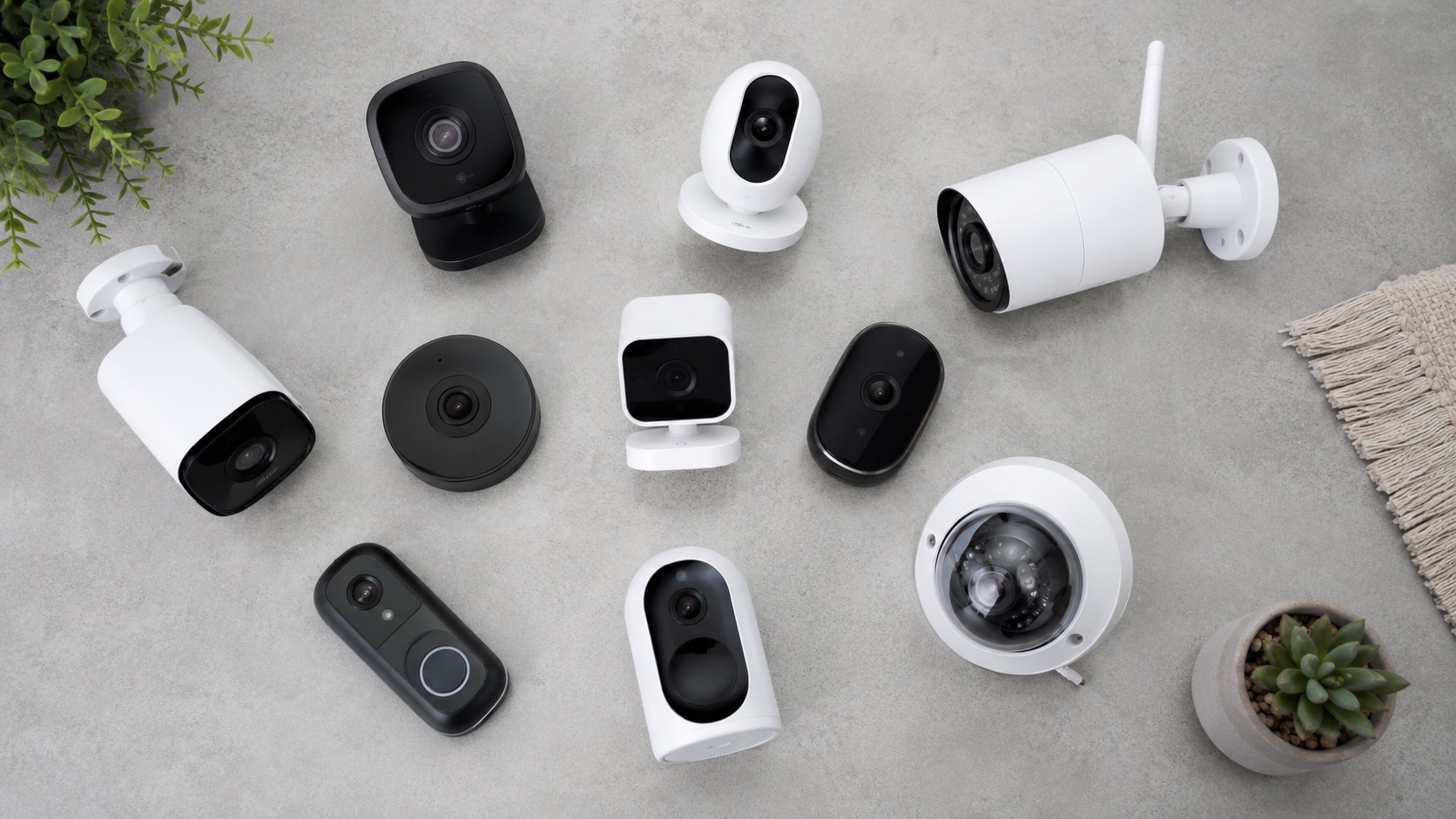
Ring vs Arlo vs Eufy — Best Security Cameras Compared (2026)
Choosing a security camera system in 2026 means picking between three dominant brands: Ring, Arlo, and Eufy. Each has carved out a distinct niche — Ring owns the Alexa-connected smart home, Arlo pushes the boundaries on video quality, and Eufy keeps winning over buyers who refuse to pay monthly subscriptions.
This research-based comparison uses published ecosystem capabilities, subscription terms and owner feedback. We do not have a documented owned three-system test. The “best” choice depends on storage, platform and installation priorities.
See the security camera topic guide for Bart’s local PoE setup, installation guidance and narrower comparisons.
The Big Picture: Three Different Philosophies
Before diving into specs, it helps to understand what each company prioritizes:
- Ring is Amazon’s security play. Everything feeds into the Alexa ecosystem, and the cameras are designed to work alongside Ring Alarm, Ring Doorbell, and Echo devices. The hardware is affordable, but you’ll pay a monthly fee to unlock most features.
- Arlo positions itself as the premium option. You get the sharpest video, the most advanced AI detection, and wire-free designs that genuinely look good on your home. But that quality comes at a higher price point.
- Eufy (by Anker) bets on local storage and zero subscriptions. Their cameras store footage on a local HomeBase or onboard storage, meaning your video never has to touch the cloud. For privacy-focused buyers, that’s a massive selling point.
Comparison Table
| Feature | Ring | Arlo | Eufy |
|---|---|---|---|
| Starting Price | $170 (Spotlight Cam) | ~$250 (Pro 5) | $43 (Indoor Cam) |
| Video Quality | 1080p–2K | 2K–4K HDR | 2K–4K |
| Local Storage | No (cloud only) | No (USB on some bases) | Yes (HomeBase/onboard) |
| Cloud Storage | Yes (required for clips) | Yes (optional paid) | Optional (paid add-on) |
| Subscription Required | Effectively yes ($3.99–$20/mo) | Practically yes ($3–$18/mo) | No |
| Smart Home Integration | Alexa (deep), Google, HomeKit limited | Alexa, Google, Apple HomeKit | Alexa, Google, Apple HomeKit |
Ring: Best for Alexa Households
Camera Lineup
Ring offers the broadest product range of the three. The Spotlight Cam ($170–$200) is their workhorse outdoor camera with built-in lights and siren. The Stick Up Cam works indoors or outdoors. The Indoor Cam is their budget option, and the Ring Video Doorbell line (starting around $100) remains the most popular video doorbell in the US.
What Ring Does Well
Ring cameras integrate with Alexa like nothing else on the market. Say “Alexa, show me the front door” and your Echo Show instantly pulls up the live feed. Motion alerts trigger Alexa routines — lights turn on, announcements play through speakers, and your Ring Alarm can arm automatically. If you’re already in the Amazon ecosystem with Echo devices throughout your home, Ring cameras slot in effortlessly.
The Ring Protect plans also cover every device on your account. The $20/month Ring Protect Pro plan includes all cameras, alarm monitoring, and extended warranty. For households with 5+ Ring devices, the per-device cost actually becomes reasonable.
Where Ring Falls Short
Without a subscription, Ring cameras are basically live-view-only devices. You can’t review recorded clips, use person detection, or access most smart features without Ring Protect. The base video quality (1080p on many models) also lags behind Arlo and Eufy in 2026 — though their newer models are pushing to 2K.
Pros:
- Deepest Alexa integration available
- Affordable hardware entry point
- Huge ecosystem (alarm, doorbell, floodlight, etc.)
- Neighborhood alerts via the Ring app
Cons:
- Subscription essentially required ($3.99–$20/mo)
- No local storage option
- Video quality behind competitors on older models
- Privacy concerns with cloud-only approach
Arlo: Best Video Quality and AI Features
Camera Lineup
Arlo’s flagship Pro 5 (~$250) delivers 2K HDR video with a 160° field of view. The Ultra 2 pushes to 4K and includes an integrated spotlight. Their Essential line offers more affordable options, and the Arlo Video Doorbell competes directly with Ring’s offering.
What Arlo Does Well
Nobody matches Arlo’s image quality. The color night vision on the Pro 5 and Ultra 2 is genuinely impressive — you can identify faces and read license plates in conditions where Ring cameras show grainy blobs. The AI package detection, animal detection, and vehicle detection are more accurate than competitors, reducing false alerts significantly.
Arlo also supports Apple HomeKit natively, making it the strongest choice for Apple households who want HomeKit Secure Video integration. The wire-free magnetic mounts make installation trivial, and the cameras are weather-rated for extreme conditions.
Where Arlo Falls Short
Price. A full Arlo system with four cameras and the SmartHub runs $800+ before you factor in the subscription. The Arlo Secure plan ($3–$18/month depending on tier) unlocks the AI features that justify choosing Arlo in the first place. Without it, you lose smart notifications, activity zones, and cloud recording — though you can still use local USB backup on the SmartHub.
Battery life is also a consideration. While Arlo advertises 6+ months, real-world usage in high-traffic areas might mean recharging every 2–3 months.
Pros:
- Best-in-class video quality (2K–4K HDR)
- Superior AI detection accuracy
- Full Apple HomeKit support
- Excellent wire-free design and build quality
Cons:
- Most expensive hardware
- Subscription needed for best AI features ($3–$18/mo)
- Battery life varies with usage
- App can be sluggish at times
Eufy: Best Value — No Subscription Required
Camera Lineup
Eufy’s range starts remarkably low. The Indoor Cam begins at just $43, while the SoloCam line offers fully wireless outdoor options from $100. The HomeBase 3 system pairs with their premium cameras for local AI processing, and the Eufy Video Doorbell Dual offers a unique dual-camera design.
What Eufy Does Well
The headline feature is simple: no subscription fees, ever. All recording, AI detection, and storage happens locally on the HomeBase or onboard the camera itself. Over a typical 3-year ownership period, this saves you $144–$720 compared to Ring or Arlo’s subscriptions. For the budget-conscious smart home builder, that’s a compelling argument.
Eufy’s AI has also matured significantly. Face recognition, pet detection, and activity zones all work locally without sending your footage to any server. For anyone concerned about cloud privacy or data breaches, Eufy’s approach is far more appealing. If you’re building a security system without monthly fees, Eufy cameras are the obvious companion.
Where Eufy Falls Short
The app experience isn’t as polished as Ring or Arlo. Notification speed can lag by a few seconds compared to cloud-processed alternatives. The ecosystem is also less unified — Eufy makes great individual products but doesn’t tie them together as seamlessly as Ring does with Alexa or Arlo does with HomeKit.
Video quality on their budget models is merely adequate rather than impressive, though the premium SoloCam S340 with 4K and dual lenses competes well at its price point.
Pros:
- Zero subscription fees
- Local storage and processing (privacy-first)
- Extremely affordable entry point ($43)
- Face recognition included free
- Good Apple HomeKit and Google Home support
Cons:
- Slightly slower notification delivery
- Less polished app experience
- Ecosystem less unified than competitors
- Customer support can be hit-or-miss
Which Brand Should You Choose?
Pick Ring if…
You’re deep in the Amazon/Alexa ecosystem and want cameras that talk to your Echo devices, Ring Alarm, and smart lights without any configuration. The subscription cost is the price of admission for a genuinely unified experience. Check our SimpliSafe vs Ring Alarm vs Abode comparison if you’re also shopping for a full security system.
Pick Arlo if…
Video quality is your top priority and you’re willing to pay a premium for it. Arlo is also the best pick for Apple HomeKit households and anyone who wants the most accurate AI detection with minimal false alerts. See our best smart home ecosystem guide to figure out which platform ties your setup together.
Pick Eufy if…
You refuse to pay monthly fees on principle, care about local privacy, or simply want the most camera coverage for the least money. Eufy’s total cost of ownership over 3–5 years crushes both Ring and Arlo.
The Verdict
- Best overall value: Eufy — no subscription makes it unbeatable long-term
- Best video quality: Arlo — 4K HDR with accurate AI detection
- Best Alexa integration: Ring — nothing else comes close in the Amazon ecosystem
There’s no wrong choice among these three in 2026. They’re all reliable, well-supported, and offer solid security. The right answer depends on whether you prioritize ecosystem integration (Ring), image quality (Arlo), or cost savings (Eufy).
See how we compare products for our full methodology.
FAQ
Do Ring cameras work without a subscription?
Technically yes — you get live view and real-time motion alerts. But you cannot save or review video clips, use person detection, or access most smart features without Ring Protect ($3.99/month for one camera or $20/month for unlimited devices).
Is Eufy really free with no hidden costs?
Yes. Eufy cameras record to local storage (HomeBase or onboard microSD) at no ongoing cost. They offer an optional cloud plan if you want off-site backup, but it’s not required for any features. All AI detection runs locally.
Which brand has the best night vision?
Arlo wins here, particularly the Pro 5 and Ultra 2 with color night vision powered by integrated spotlights and larger image sensors. Eufy’s premium models (SoloCam S340) come close, while Ring’s night vision is functional but not class-leading.
Can I mix cameras from different brands?
You can, but you’ll need multiple apps to manage them. A better approach is using a platform like Home Assistant or Apple HomeKit (which supports both Arlo and Eufy natively) to unify your cameras in one interface. Ring’s HomeKit support remains limited.
How much does each system cost over 3 years (4 cameras)?
- Ring: ~$680 hardware + $720 subscription = $1,400 total
- Arlo: ~$1,000 hardware + $648 subscription = $1,648 total
- Eufy: ~$400 hardware + $0 subscription = $400 total
The difference is dramatic. Eufy’s no-subscription model saves $1,000–$1,200 over three years for a 4-camera setup.