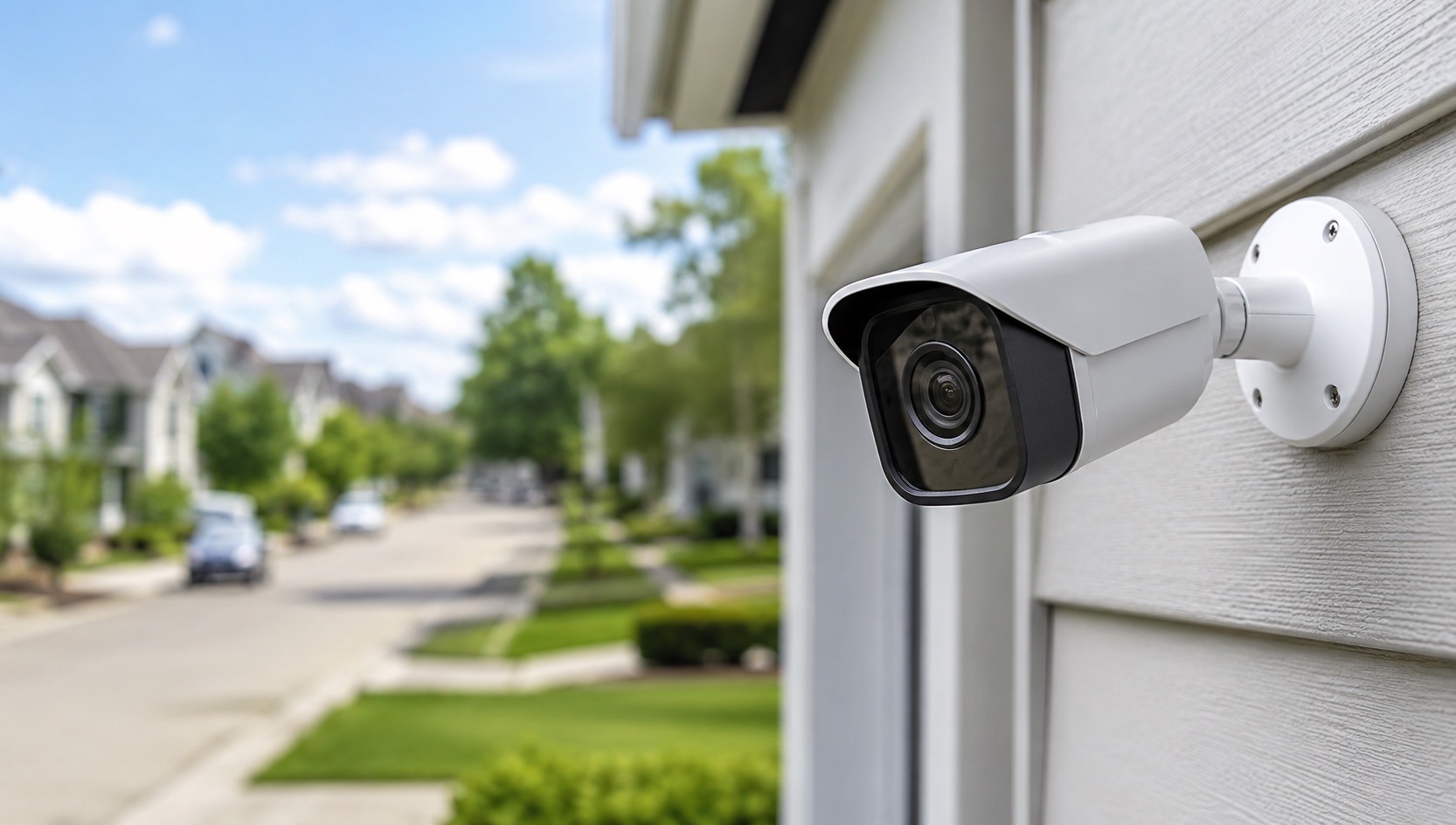
Best Battery-Powered Security Cameras 2026: Outdoor and Indoor Picks
Battery-powered security cameras are not just for renters anymore. The 2026 models last longer, record sharper video, and store footage locally without mandatory subscriptions. Whether you need a camera for a detached garage, a vacation home, or a spot where running Ethernet is impossible, battery cameras fill the gap that wired systems cannot reach.
I have tested and researched the top battery cameras available in 2026. These are the ones worth buying.
Quick Picks
| Camera | Price | Battery Life | Resolution | Local Storage | Best For |
|---|---|---|---|---|---|
| Reolink Argus 4 Pro | $130 | 3-6 months | 4K | MicroSD | Best overall |
| Eufy eufyCam S340 | $120 | 3-6 months | 4K | HomeBase | Best for Apple users |
| Blink Outdoor 4 | $100 | Up to 2 years | 1080p | USB drive (Sync Module) | Best battery life |
| Arlo Pro 5S | $180 | 3-6 months | 2K | MicroSD + Arlo Hub | Best image quality |
| Wyze Cam Outdoor v2 | $50 | 3-6 months | 1080p | MicroSD | Best budget |
Battery Cameras vs Wired: When to Choose Battery
Battery cameras make sense when:
- You cannot run Ethernet or power cables (detached buildings, fences, trees)
- You need a temporary installation (events, construction sites, vacation homes)
- You want to test camera positions before committing to permanent wiring
- You rent and cannot modify the property
Battery cameras do not make sense when:
- You need 24/7 continuous recording (batteries die too fast)
- You want the highest possible resolution and frame rate (battery cameras throttle to save power)
- You have reliable power at the camera location (wired is always better)
For permanent installations, see our PoE security cameras guide. For renter-specific options, see our battery cameras for renters article.
1. Reolink Argus 4 Pro — Best Overall ($130)
The Argus 4 Pro hits the sweet spot of price, features, and reliability. It shoots 4K, has a built-in spotlight for color night vision, and stores footage on a microSD card with no subscription required.
Key specs:
- 4K (8MP) resolution
- 130-degree field of view
- Color night vision (spotlight + IR)
- Rechargeable battery (3-6 months typical)
- MicroSD slot (up to 128GB)
- Solar panel compatible ($30 accessory)
- Two-way audio
- IP65 weather rating
The 4K resolution is unusual for a battery camera and makes a real difference when identifying faces or license plates. The built-in spotlight activates on motion and provides color footage at night, which is far more useful than black-and-white IR.
Add the solar panel ($30) and you never need to recharge. The panel provides enough power to keep the battery topped up in most climates.
Pros: 4K resolution, color night vision, solar compatible, no subscription Cons: Higher price than budget options, larger physical size
2. Eufy eufyCam S340 — Best for Apple Users ($120)
The eufyCam S340 works with Apple HomeKit, making it the best choice for Apple households. Recordings go to the HomeBase (included in kits) or to iCloud via HomeKit Secure Video.
Key specs:
- 4K (8MP) resolution
- 135-degree field of view
- Color night vision (spotlight)
- Rechargeable battery (3-6 months)
- HomeBase local storage (16GB expandable)
- HomeKit Secure Video compatible
- Solar panel compatible
- IP67 weather rating
The HomeKit integration is the standout feature. If you have an Apple TV or HomePod as a hub, the S340 can record to iCloud with end-to-end encryption. Apple cannot see your footage. This is the most private cloud storage option available.
Without HomeKit, the HomeBase stores recordings locally. The 16GB built-in storage fills up quickly with multiple cameras, but you can expand it via USB.
Pros: HomeKit support, 4K, solid build quality, HomeBase local storage Cons: HomeBase storage limited, requires HomeBase for full functionality
3. Blink Outdoor 4 — Best Battery Life ($100)
If changing or recharging batteries is your biggest concern, the Blink Outdoor 4 is the answer. It runs on two AA lithium batteries for up to two years. Two years without touching the camera.
Key specs:
- 1080p resolution
- 143-degree field of view
- IR night vision
- AA lithium batteries (up to 2 years)
- USB drive local storage (via Sync Module 2)
- Alexa compatible
- IP65 weather rating
The trade-off for that insane battery life is 1080p resolution instead of 4K. For most home security use cases (identifying people at your door, monitoring your yard), 1080p is sufficient. You will not read license plates at 20 meters, but you will clearly see faces at 10 meters.
Local storage requires the Sync Module 2 ($35), which adds a USB drive for local recording. Without it, you get limited free cloud clips (12-second clips, 2-hour cooldown).
Pros: Unmatched battery life, affordable, easy setup Cons: Only 1080p, requires Sync Module for full local storage, no color night vision
4. Arlo Pro 5S — Best Image Quality ($180)
The Arlo Pro 5S produces the sharpest, most color-accurate footage of any battery camera. The 2K HDR sensor handles difficult lighting (bright sky + dark shadows) better than competitors.
Key specs:
- 2K HDR resolution
- 160-degree field of view
- Color night vision (spotlight)
- Rechargeable battery (3-6 months)
- MicroSD slot + Arlo Hub storage
- Dual-band WiFi (2.4/5GHz)
- IP65 weather rating
The 160-degree field of view is the widest on this list, covering more area from a single camera. The dual-band WiFi connection is more reliable than single-band cameras, especially in congested neighborhoods.
The downside is Arlo’s push toward subscriptions. Without Arlo Secure ($8/month per camera or $13/month for unlimited), you lose smart detection (person, vehicle, animal) and extended cloud storage. The camera still records locally to microSD, but the smart features are subscription-locked.
Pros: Best image quality, widest field of view, dual-band WiFi Cons: Expensive, smart features require subscription
5. Wyze Cam Outdoor v2 — Best Budget ($50)
At $50, the Wyze Cam Outdoor v2 is the cheapest way to get a functional outdoor battery camera. It does not compete on image quality or features with the others on this list, but it works and it costs less than dinner for two.
Key specs:
- 1080p resolution
- 110-degree field of view
- IR night vision
- Rechargeable battery (3-6 months)
- MicroSD slot (on base station)
- IP65 weather rating
The camera connects to a base station (included) rather than directly to your WiFi. This improves battery life and range but means the base station must be within range of both the camera and your router.
Local storage is via microSD on the base station, not on the camera itself. Wyze offers free cloud clips (12-second clips with 5-minute cooldown) and optional Cam Plus ($2/month) for longer clips and person detection.
Pros: Cheapest option, decent battery life, local storage available Cons: Only 1080p, base station required, Wyze reliability concerns
For more Wyze user experiences, see our Wyze cameras Reddit opinions article.
Solar Panels: The Battery Camera Game-Changer
Most battery cameras support solar panel accessories. A $20-30 solar panel keeps the battery charged indefinitely in most climates, eliminating the biggest inconvenience of battery cameras.
| Camera | Solar Panel | Price | Compatibility |
|---|---|---|---|
| Reolink Argus 4 Pro | Reolink Solar Panel 2 | $30 | Excellent |
| Eufy eufyCam S340 | Eufy Solar Panel | $50 | Excellent |
| Blink Outdoor 4 | No official panel | N/A | Third-party only |
| Arlo Pro 5S | Arlo Solar Panel 2 | $50 | Excellent |
| Wyze Cam Outdoor v2 | Wyze Solar Panel | $25 | Good |
If your camera gets 2-3 hours of direct sunlight per day, a solar panel eliminates battery recharging entirely. This transforms a battery camera from a maintenance task into a set-and-forget device.
Installation Tips for Battery Cameras
Height: Mount at 2.5-3 meters. High enough to prevent tampering, low enough for facial detail.
Angle: Tilt slightly downward. You want faces in the frame, not the sky.
WiFi signal: Test the WiFi signal strength at the mounting location before installing. Battery cameras need a stable connection to avoid draining batteries with constant reconnection attempts.
Motion zones: Configure motion detection zones to ignore roads, sidewalks, and trees. This extends battery life significantly by reducing unnecessary recordings.
Weather protection: Even IP65-rated cameras benefit from some shelter. Mount under eaves or awnings when possible to reduce direct rain exposure.
Battery Life: Real-World Numbers
Manufacturers claim long battery life, but real-world numbers depend on usage:
| Usage Level | Typical Battery Life | Example |
|---|---|---|
| Low (5-10 events/day) | 6-12 months | Quiet backyard |
| Medium (20-50 events/day) | 3-6 months | Front door |
| High (100+ events/day) | 1-3 months | Busy street-facing camera |
Motion sensitivity, video quality, and WiFi strength all affect battery life. Higher resolution and more frequent recordings drain batteries faster.
Related Guides
FAQ
How long do battery camera batteries actually last?
Real-world battery life ranges from 1-12 months depending on usage. Quiet locations with 5-10 motion events per day can see 6-12 months. Busy locations with 100+ events per day may need recharging every 1-3 months. Solar panels eliminate this concern entirely.
Can battery cameras record continuously?
No. Battery cameras are designed for motion-triggered recording only. Continuous recording would drain the battery in hours. If you need 24/7 recording, use a wired PoE camera system.
Do battery cameras work in cold weather?
Most battery cameras operate down to -20C (-4F). Battery performance degrades in extreme cold, reducing battery life by 20-40%. Lithium batteries handle cold better than alkaline. If you live in a very cold climate, consider a wired camera for critical locations.
Are battery cameras secure?
Battery cameras use the same encryption as wired cameras. The security risk is not the camera itself but the cloud service it connects to. For maximum privacy, choose cameras with local storage (microSD or HomeBase) and avoid cloud-dependent features.
Can I use battery cameras with Home Assistant?
Yes. Reolink, Eufy, and some other battery cameras integrate with Home Assistant via their respective integrations or ONVIF. Battery cameras typically provide motion events and snapshots to Home Assistant, though live streaming may be limited to conserve battery.