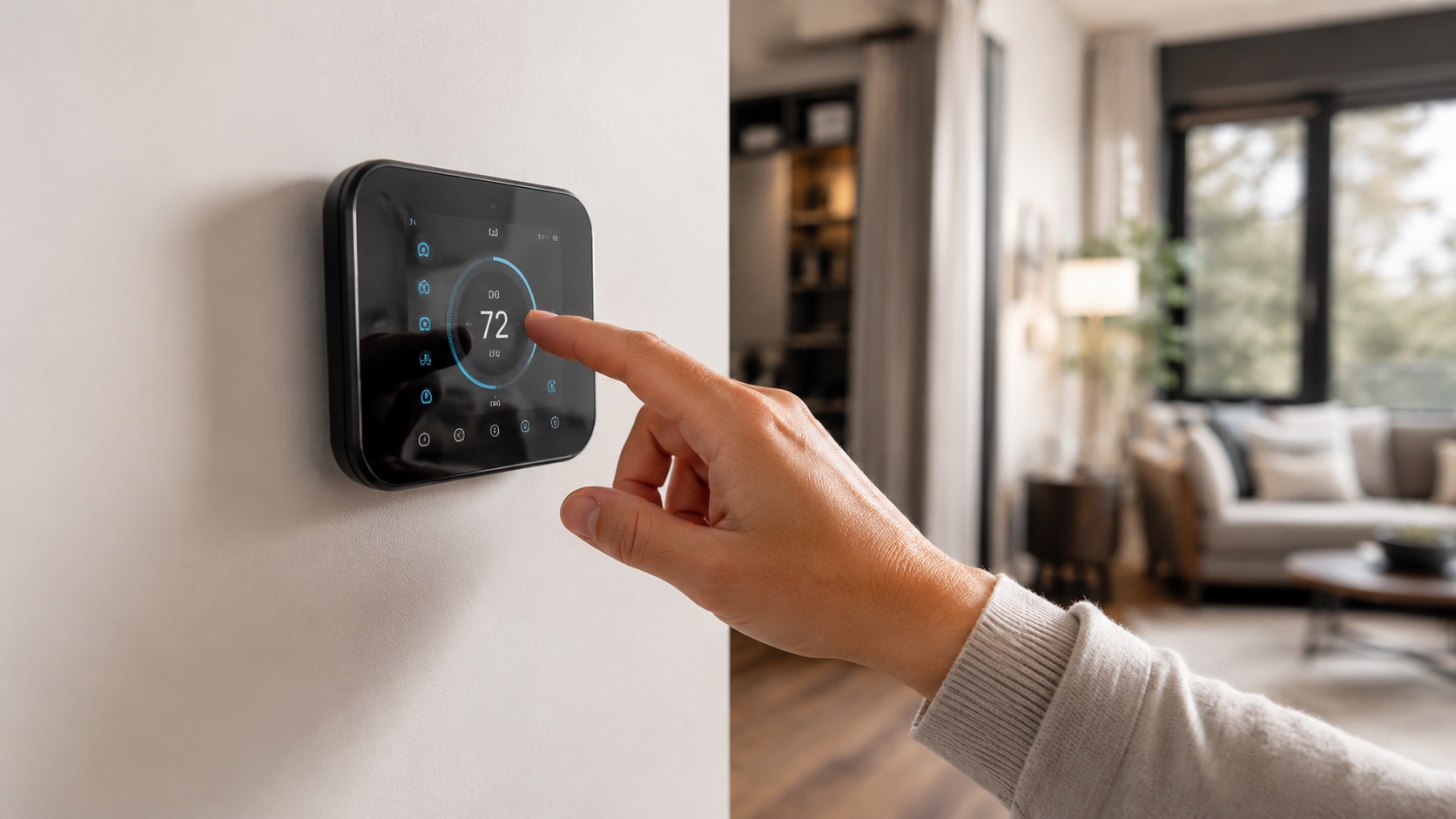
Ecobee Pricing vs Nest Pricing — Full Cost Comparison (2026)
Ecobee Pricing vs Nest Pricing — Full Cost Comparison (2026)
Choosing between Ecobee and Google Nest is one of the most common dilemmas for anyone shopping for a smart thermostat. Both brands deliver excellent climate control, learning algorithms, and energy-saving features — but their pricing structures differ significantly once you factor in sensors, subscriptions, and long-term energy savings.
In this comprehensive pricing comparison, we break down every cost associated with both ecosystems so you can make an informed decision based on your budget and household needs.
Ecobee Thermostat Lineup and Pricing (2026)
Ecobee currently offers two main thermostat models aimed at different budgets:
Ecobee Premium — $249
The Ecobee Premium is the flagship model and includes one SmartSensor in the box. This is a significant value-add since sensors from other brands typically cost extra. The Premium features a built-in air quality monitor, Siri and Alexa built-in, a zinc metal frame, and a larger display compared to previous generations. It supports geofencing, occupancy detection, and the eco+ energy optimization program at no additional cost.
Ecobee Enhanced — $189
The Ecobee Enhanced is a more budget-friendly option that removes some premium features like the built-in air quality monitor and the included sensor. It still offers the same core smart thermostat functionality, scheduling, geofencing, and energy reports. If you don’t need room sensors or air quality monitoring, this is a solid entry point.
Ecobee SmartSensors — $80 for a 2-Pack
Additional SmartSensors retail at $80 for a two-pack ($40 each). These wireless sensors detect temperature and occupancy in individual rooms, allowing the thermostat to prioritize comfort where people actually are rather than relying solely on the thermostat’s hallway reading.
Google Nest Thermostat Lineup and Pricing (2026)
Google offers two primary thermostat options under the Nest brand:
Google Nest Learning Thermostat (4th Gen) — $280
The latest Nest Learning Thermostat is Google’s premium offering. At $280, it’s the most expensive option in this comparison. It features a redesigned borderless display, Matter support, improved learning algorithms, and a sleek modern design. However, unlike the Ecobee Premium, it does not include any temperature sensors in the box.
Google Nest Thermostat (Budget Model) — $130
The budget Nest Thermostat provides basic smart thermostat functionality at an accessible price point. It supports scheduling, app control, and basic energy history. It lacks the advanced learning algorithms and premium build of the 4th Gen model but still integrates with the Google Home ecosystem.
Nest Temperature Sensors — $40 Each or $100 for 3-Pack
Nest Temperature Sensors cost $40 individually or $100 for a three-pack. They allow multi-room temperature monitoring similar to Ecobee’s SmartSensors, though they lack occupancy detection — a notable difference.
Full Cost Comparison Table
| Item | Ecobee | Google Nest |
|---|---|---|
| Premium thermostat | $249 (Ecobee Premium) | $280 (Nest 4th Gen) |
| Budget thermostat | $189 (Ecobee Enhanced) | $130 (Nest Thermostat) |
| Included sensors | 1 (with Premium) | 0 |
| Additional sensors (per unit) | $40 each (2-pack for $80) | $40 each (3-pack for $100) |
| 3-sensor setup total cost | $249 + $80 = $329 | $280 + $100 = $380 |
| Monthly subscription required | No (eco+ is free) | No (Nest Aware not needed) |
| Professional installation | $75–150 (optional) | $75–150 (optional) |
| Energy program/rebates | eco+ (free enrollment) | Seasonal Savings (free) |
| Claimed energy savings | Up to 26% | 10–12% heating, 15% cooling |
Subscription and Ongoing Costs
One of the best things about both Ecobee and Nest thermostats is that neither requires a paid subscription to function fully.
Ecobee eco+ is a free energy optimization program that adjusts your temperature settings based on grid demand, weather forecasts, and your schedule. It’s entirely optional and can save additional money on top of the thermostat’s baseline savings.
Nest Aware is Google’s subscription service ($8/month or $80/year), but it’s designed for Nest cameras and doorbells — not thermostats. Your Nest thermostat works completely independently without any subscription.
Both brands offer free energy reports, scheduling, and remote control through their respective apps.
Long-Term Value: 3-Year and 5-Year Cost Analysis
The real comparison becomes clear when you factor in energy savings over time. Let’s assume an average US household spending $2,000/year on energy, with approximately 50% ($1,000) going to heating and cooling.
Ecobee 3-Year Cost Analysis
- Hardware: $249 (Premium with 1 sensor)
- Additional sensors: $80 (2-pack for full coverage)
- Total upfront: $329
- Annual savings (26% of $1,000): $260/year
- 3-year net savings: $260 × 3 - $329 = $451 saved
Nest 4th Gen 3-Year Cost Analysis
- Hardware: $280 (4th Gen)
- Sensors: $100 (3-pack)
- Total upfront: $380
- Annual savings (12.5% average of $1,000): $125/year
- 3-year net savings: $125 × 3 - $380 = -$5 (break-even)
5-Year Comparison
| Metric | Ecobee Premium | Nest 4th Gen |
|---|---|---|
| Total upfront cost | $329 | $380 |
| Annual energy savings | ~$260 | ~$125 |
| 5-year total savings | $1,300 | $625 |
| 5-year net savings (minus hardware) | $971 | $245 |
| Break-even point | ~15 months | ~3 years |
The difference is dramatic over five years. Ecobee’s higher claimed savings percentage translates to nearly four times the net savings compared to Nest over a five-year period.
Important Caveats on Energy Savings Claims
It’s worth noting that Ecobee’s 26% savings claim and Nest’s 10-15% claim are measured differently:
- Ecobee’s 26% comes from their eco+ program combined with thermostat optimization and is measured against a baseline of no thermostat programming at all.
- Nest’s 10-12% heating and 15% cooling claims come from independent studies and are measured against homes that already had basic programmable thermostats.
Real-world savings depend heavily on your climate zone, home insulation, existing habits, and energy rates. A homeowner who already manually adjusts their thermostat will see less dramatic savings than someone upgrading from a basic non-programmable unit.
For a deeper dive into actual savings data, check out our guide on how much a smart thermostat actually saves.
Which Offers Better Value?
Choose Ecobee if:
- You want sensors included in the box
- You value the eco+ free energy program
- You want built-in air quality monitoring
- Maximum energy savings is your priority
- You prefer platform-agnostic compatibility (Apple HomeKit, Alexa, Google Home)
Choose Google Nest if:
- You’re already invested in the Google Home ecosystem
- You prefer the Nest’s learning algorithm approach
- You want the budget $130 option for basic smart control
- You value the aesthetic design of the 4th Gen model
- You don’t need occupancy-detecting sensors
For more thermostat recommendations, check our complete best smart thermostat 2026 roundup. If you’re building a smart home on a budget, our guide to the best smart home devices under $50 includes affordable climate control options.
Matter Compatibility
Both the Ecobee Premium and the Nest Learning Thermostat 4th Gen support Matter, the new universal smart home standard. This means regardless of which ecosystem you choose today, your thermostat will work with any Matter-compatible platform in the future. Learn more about the standard in our best Matter-compatible devices guide.
Installation Costs
Both thermostats offer DIY installation for handy homeowners, which is free. Professional installation typically runs $75–150 depending on your area and HVAC complexity. Both brands include a C-wire adapter if your system lacks a common wire, eliminating what used to be a hidden cost with older smart thermostats.
If you’re starting from scratch with your smart home setup, our how to start a smart home from scratch guide covers thermostat installation as part of a complete setup walkthrough.
FAQ
Is Ecobee or Nest cheaper overall?
Ecobee is cheaper for a full sensor setup. The Ecobee Premium at $249 includes one sensor, while the Nest 4th Gen at $280 includes none. Adding comparable sensor coverage makes Nest approximately $50 more expensive than Ecobee for equivalent functionality.
Do Ecobee or Nest thermostats require a monthly subscription?
No, neither brand requires a subscription for thermostat functionality. Ecobee’s eco+ program is free, and Nest Aware is only for cameras and doorbells. All smart features, scheduling, and energy reports are included at no ongoing cost.
Which thermostat saves more money on energy bills?
Based on manufacturer claims, Ecobee saves more (up to 26%) compared to Nest (10-15%). However, real-world savings vary significantly based on your climate, home insulation, and existing habits. Both will reduce your energy bills compared to a non-programmable thermostat.
Can I use Ecobee with Google Home or Nest with Apple HomeKit?
Ecobee works with Google Home, Apple HomeKit, Amazon Alexa, and SmartThings. The Nest Learning Thermostat 4th Gen works with Google Home and Amazon Alexa, and supports Matter for cross-platform use. However, native HomeKit support is only available on Ecobee.
Is the budget Nest Thermostat ($130) worth it over the Ecobee Enhanced ($189)?
The $130 Nest Thermostat is a great value for basic smart control within the Google ecosystem. However, the Ecobee Enhanced at $189 offers more advanced scheduling, better energy reports, and broader platform compatibility. If you only need simple remote control and basic scheduling, the Nest saves you $59. If you want maximum energy savings and flexibility, the extra $59 for the Ecobee Enhanced is well spent.
Final Verdict
For most households, Ecobee offers better value in 2026. The included sensor, free eco+ program, and higher energy savings claims make it the more cost-effective choice over time — despite Google Nest’s lower entry-level price point. However, if you’re deeply embedded in the Google ecosystem and prioritize the learning algorithm experience, the Nest 4th Gen remains an excellent premium thermostat that will serve you well for years to come.