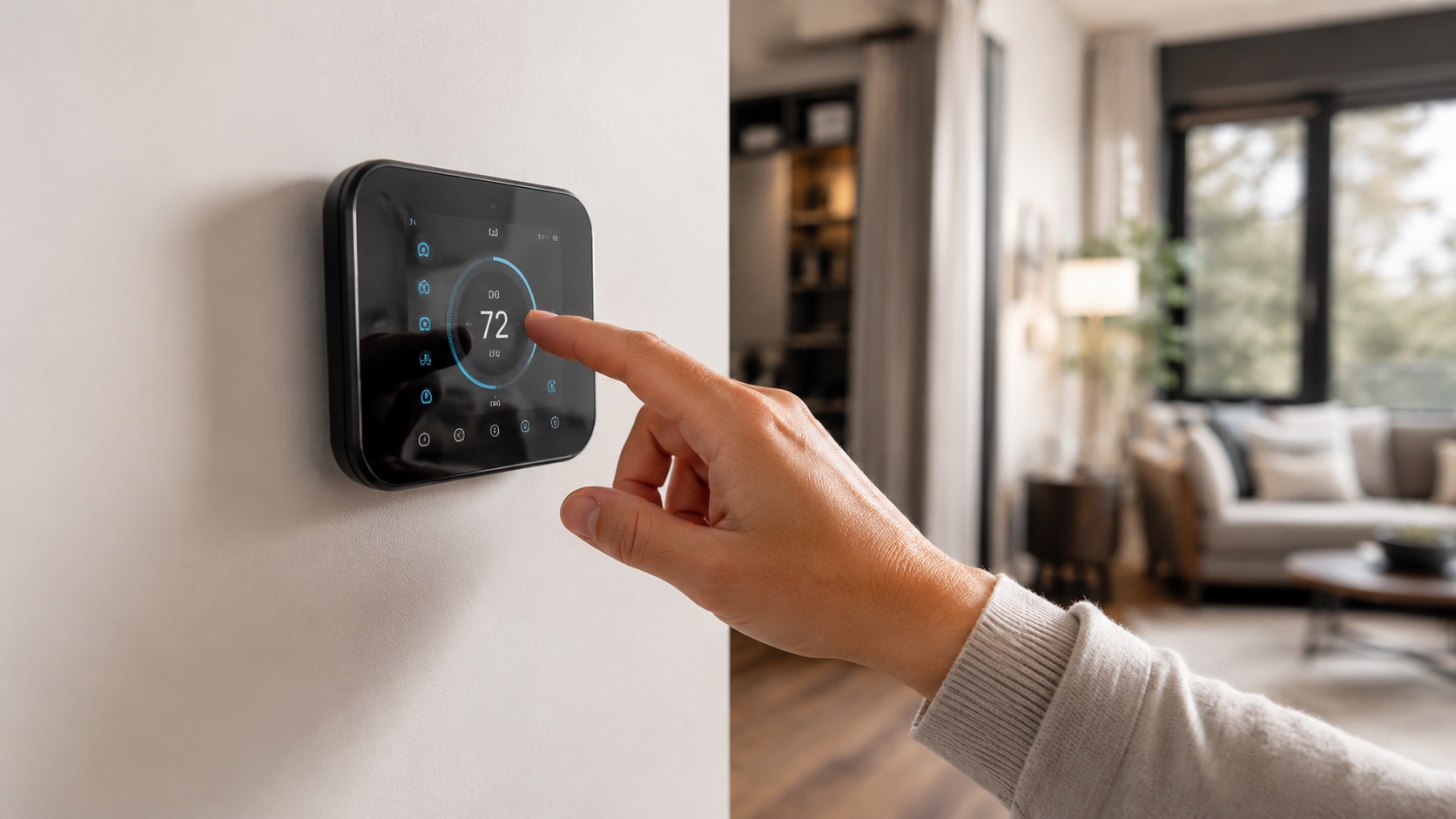
Best Smart Thermostat 2026 (Ecobee vs Nest vs Honeywell)
Best Smart Thermostat 2026 (Ecobee vs Nest vs Honeywell)
Your thermostat controls roughly half your energy bill. That’s not a typo — heating and cooling accounts for about 50% of the average household’s energy consumption. So when a $200-$280 device promises to cut that by 10-26%, the math works out fast.
I’ve compared four of the best smart thermostats available in 2026, from the premium Ecobee and Nest down to Amazon’s ultra-budget option. Whether you’re starting your smart home from scratch or upgrading from a basic programmable thermostat, this guide breaks down exactly which one deserves a spot on your wall.
Quick Comparison Table
| Thermostat | Price | Sensors Included | Learning/AI | Matter Support | Voice Assistant | Energy Savings |
|---|---|---|---|---|---|---|
| Ecobee Smart Thermostat Premium | $249 | ✅ (2 room sensors) | ✅ Smart algorithms | ✅ | Siri + Alexa built-in | Up to 26% |
| Google Nest Learning 4th Gen | $280 | ❌ (sold separately) | ✅ Advanced AI | ✅ | Google Assistant | Up to 23% |
| Honeywell Home T9 | $199 | ❌ (sold separately) | Basic scheduling | ❌ | Alexa/Google (external) | Up to 15% |
| Amazon Smart Thermostat | $60 | ❌ | ❌ | ❌ | Alexa (external) | Up to 10% |
Ecobee Smart Thermostat Premium — Best Overall
The Ecobee Premium is the thermostat I recommend to most people, and it’s been my top pick since its release. At $249, it’s not cheap — but you’re getting a complete package that other brands charge extra for.
What sets Ecobee apart is the included room sensors. Two come in the box, and you can add more later. These sensors detect occupancy and temperature in different rooms, so your system heats or cools based on where you actually are — not just where the thermostat happens to be mounted in the hallway.
The built-in voice assistants (both Siri and Alexa) mean this thing doubles as a smart speaker. The air quality monitor is a nice bonus. And Ecobee’s claimed 26% energy savings isn’t just marketing — it’s backed by EPA certification.
Pros:
- Room sensors included (huge value — competitors charge $35-40 per sensor)
- Built-in Siri and Alexa — no separate smart speaker needed
- Air quality monitoring
- Matter compatible for future-proofing
- Works with virtually every smart home ecosystem
- Excellent app with detailed energy reports
Cons:
- $249 is still a significant investment
- Display isn’t as visually striking as the Nest
- Built-in speaker audio quality is just okay
- Some users report occasional Wi-Fi connectivity hiccups
Energy Savings Deep Dive
Ecobee’s 26% figure comes from their eco+ feature combined with room sensors. The system learns when you’re home, which rooms you use most, and adjusts based on local utility rates and weather forecasts. In practice, most users report 15-23% savings — still excellent, and the thermostat pays for itself within 1-2 years for most households.
Google Nest Learning Thermostat 4th Gen — Best for Google Homes
Google completely redesigned the Nest for its 4th generation, and it shows. The new display is genuinely gorgeous — a borderless, edge-to-edge screen that looks more like a piece of art than a thermostat. If aesthetics matter to you (and they should, since this thing is on your wall), the Nest wins hands down.
But it’s more than a pretty face. The AI learning is the most sophisticated here. Give it about a week, and it learns your schedule, temperature preferences, and habits. It auto-adjusts without you ever touching it. Matter compatibility means it plays nicely with other Matter devices regardless of ecosystem.
At $280, it’s the most expensive option here. And room sensors aren’t included — you’ll pay an extra $40 each for those.
Pros:
- Stunning display — genuinely the best-looking thermostat
- Most advanced AI learning algorithm
- Matter compatible
- Deep Google Home integration with routines and automations
- Excellent energy reports with Nest Renew
Cons:
- Most expensive at $280
- Room sensors sold separately ($40 each)
- Google Home ecosystem works best — less ideal for Apple households
- Learning period takes 1-2 weeks
- No built-in voice assistant (requires external Google speaker)
Who Should Buy the Nest?
If you’re already invested in the Google ecosystem with Nest speakers, Chromecast, and Google Home routines, the Nest thermostat is a no-brainer. The integration is seamless. It also works with other platforms via Matter, but you’ll get the deepest experience with Google.
Honeywell Home T9 — Best Budget Smart Thermostat
Honeywell has been making thermostats since before your grandparents were born. The T9 doesn’t have the flashiest features or the prettiest display, but it’s reliable, well-built, and gets the job done at $199.
The T9 supports room sensors (sold separately at $35 for a 2-pack), has geofencing, and integrates with both Alexa and Google Assistant. No Matter support is a miss in 2026, but if you just want a solid smart thermostat without overthinking ecosystem compatibility, this is your pick.
Pros:
- $199 price point — most affordable “full-featured” option
- Rock-solid reliability (Honeywell’s track record)
- Room sensors available (sold separately)
- Geofencing works well
- Simple, intuitive app
- Works with Alexa and Google Assistant
Cons:
- No Matter support
- Room sensors cost extra ($35 for 2-pack)
- No built-in voice assistant
- AI/learning is basic compared to Nest or Ecobee
- Display is functional but uninspiring
- Energy savings claims more modest (up to 15%)
Amazon Smart Thermostat — Best Basic Option
At $60, the Amazon Smart Thermostat is genuinely impressive for what it offers. It won’t learn your schedule or monitor room-by-room temperatures, but it connects to Alexa, supports basic scheduling, and participates in utility energy savings programs like Demand Response.
This is the thermostat I’d recommend if you’re looking for smart home devices under $50 (it often drops to $45 on sale). It’s also great as a rental-friendly option since the investment is minimal.
Pros:
- Incredible value at $60 (often on sale for less)
- Dead simple setup
- Alexa integration works well
- Energy Star certified
- Utility rebate eligible
- Good for rentals or secondary homes
Cons:
- No room sensors
- No learning/AI features
- Basic display
- Alexa-only (no Google Assistant or HomeKit)
- No Matter support
- Energy savings limited compared to premium options
- Build quality feels budget
Energy Savings: What to Realistically Expect
Let’s talk real numbers. The Department of Energy estimates that smart thermostats save 10-15% on heating and cooling for average users. Premium models with learning AI and room sensors push that to 20-26% for optimized setups.
For a household spending $2,000/year on heating and cooling (roughly average in the US), that means:
- Amazon Smart Thermostat: $200-300/year saved → pays for itself in 3-4 months
- Honeywell T9: $200-300/year saved → pays for itself in 8-12 months
- Ecobee Premium: $300-520/year saved → pays for itself in 6-10 months
- Google Nest 4th Gen: $300-460/year saved → pays for itself in 7-11 months
Every thermostat on this list pays for itself within the first year for most households. The more expensive models just save more in the long run.
Which Smart Thermostat Should You Buy?
Best overall: Ecobee Smart Thermostat Premium — The included room sensors, built-in voice assistants, and broad ecosystem support make it the best value despite the $249 price tag. If you want one thermostat that does everything well, this is it.
Best for Google homes: Google Nest Learning Thermostat 4th Gen — If you live in the Google ecosystem, the Nest’s AI learning and deep Home integration are unmatched. The display is stunning. Just budget for room sensors separately.
Best budget: Honeywell Home T9 — Reliable, full-featured, and $50-80 less than the premium options. No Matter support hurts its future-proofing, but it works great today.
Best basic: Amazon Smart Thermostat — At $60, it’s a steal. Perfect for rentals, secondary homes, or anyone who just wants basic smart scheduling without the premium price.
See how we compare products for our full methodology.
FAQ
How much do smart thermostats actually save?
Realistically, 10-26% on heating and cooling costs depending on the model and how you use it. Models with room sensors and AI learning (Ecobee, Nest) save more than basic smart thermostats. For most US households, that translates to $200-520 per year in savings.
Do I need a C-wire for a smart thermostat?
Most smart thermostats require a C-wire (common wire) for consistent power. The Ecobee includes a Power Extender Kit for homes without one, and the Amazon Smart Thermostat works without a C-wire in most setups. Check your current wiring before purchasing — most modern HVAC systems (installed after 2010) already have a C-wire.
Can I install a smart thermostat myself?
Yes, for most people. If you can turn off your HVAC breaker and connect color-coded wires to labeled terminals, you can do this in 30 minutes. All four thermostats here include step-by-step installation guides and compatibility checkers. If your wiring looks unusual or you have a complex HVAC system (multiple zones, heat pumps with aux heat), consider hiring a pro.
Are smart thermostats worth it in apartments or rentals?
Absolutely — especially the Amazon Smart Thermostat at $60. You can swap it in, save on energy while you live there, and swap the old one back when you move out. Just keep the original thermostat and take a photo of the wiring before you start.
Should I wait for Matter to mature before buying?
No. The Ecobee Premium and Google Nest 4th Gen already support Matter, so they’re future-proofed. Even the Honeywell T9 without Matter works fine with Alexa and Google Assistant — it just won’t get cross-platform interoperability. Buy what works for your current ecosystem today.
Final Thoughts
A smart thermostat is one of the highest-ROI smart home upgrades you can make. Unlike a smart light that just looks cool, a thermostat directly reduces your energy bill every single month. Whether you go premium with the Ecobee or budget with the Amazon option, you’ll save money within the first year.
My advice? If your budget allows, go Ecobee Premium. The included sensors and built-in voice assistant make it the most complete package. But honestly, any thermostat on this list is a significant upgrade over a basic programmable model. Pick the one that fits your budget and ecosystem, and enjoy the savings.