Smart Thermostat vs Programmable: Real Savings Compared (2026)
A $25 Honeywell programmable thermostat can save you 10% on heating and cooling. A $250 Ecobee Smart Thermostat Premium can save you 23%. The catch? That 10% only happens if you actually program the thing, and most people never do.
Here’s the honest math on whether a smart thermostat is worth 5-10x more upfront.
How Programmable Thermostats Work (And Why They Fail)
A programmable thermostat is simple. You set a schedule: 68°F when you’re home, 62°F when you’re sleeping, 60°F when you’re at work. It follows that schedule every single day. The Honeywell Home RTH2300B ($25) and similar models have done this reliably for decades.
The Energy Department estimates that setting back your thermostat 7-10°F for 8 hours a day saves about 10% annually on heating and cooling. That’s real money. On a $2,000/year energy bill, you’d save $200.
Here’s the problem: research from Nest (Google) and Ecobee shows that roughly 40% of programmable thermostat owners never program them. They use them as manual up/down thermostats. Another 30% program them once and never update the schedule when their routine changes.
So that “10% savings” is theoretical for nearly 70% of owners. The real average savings for programmable thermostat households is closer to 3-5%, because human behavior gets in the way.
How Smart Thermostats Actually Save More
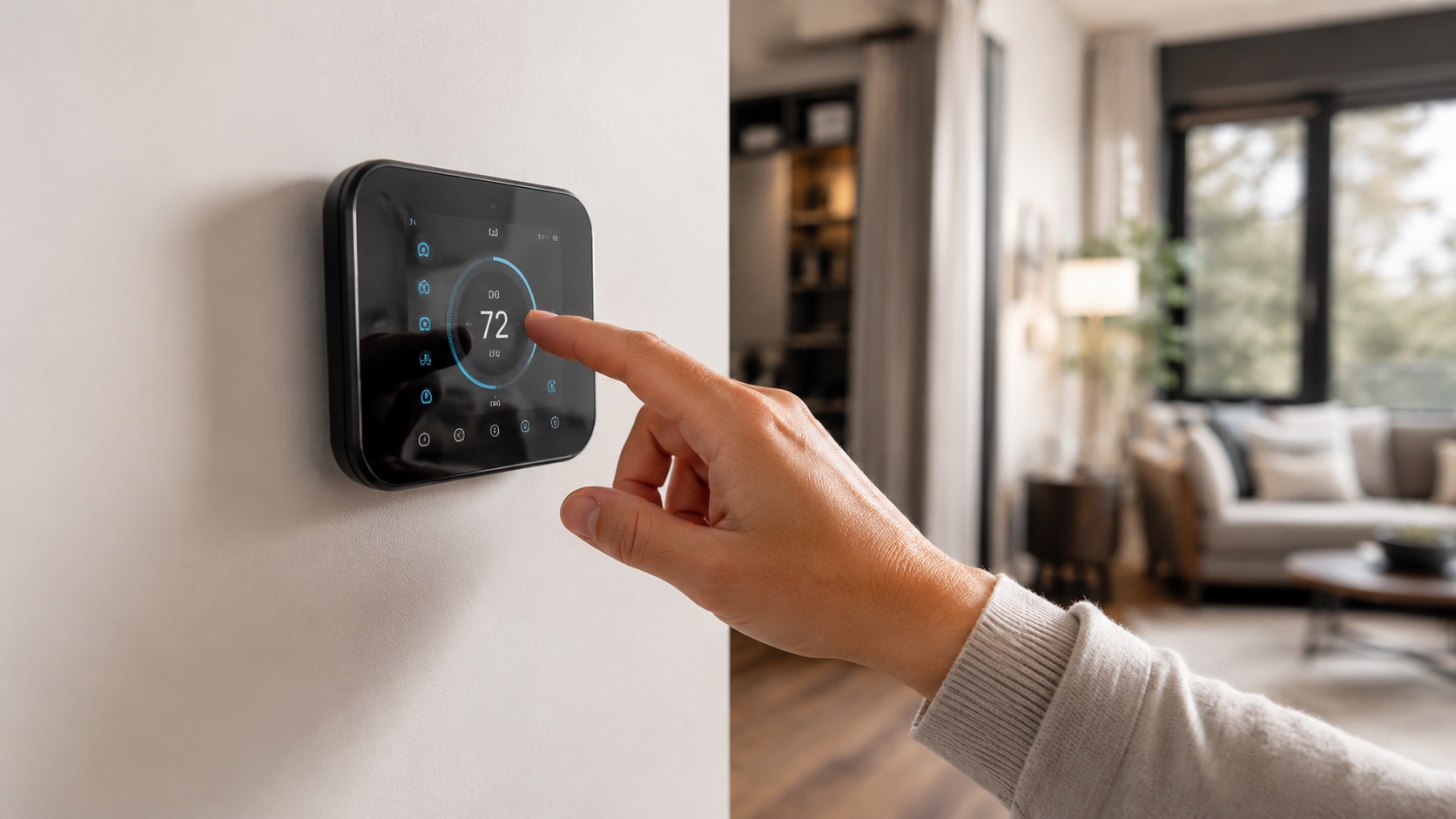
Smart thermostats bypass the human failure point. They learn your patterns, detect when you leave, and adjust automatically. No programming required.
The Ecobee Smart Thermostat Premium ($250) uses occupancy sensors. Nobody home? It dials back. Someone walks into a room? It prioritizes that zone. The Nest Learning Thermostat ($250) watches when you adjust the temperature for the first week, then builds a schedule automatically.
Documented savings from smart thermostats:
- Nest: 10-12% on heating, 15% on cooling (Nest’s own study, verified by independent researchers)
- Ecobee: 23% average savings (Ecobee’s published data, slightly optimistic but backed by utility program results)
- EPA estimates for ENERGY STAR certified smart thermostats: 8% on heating, 10% on cooling (conservative baseline)
The consensus from utility rebate program data is 15-23% real-world savings for smart thermostats vs a non-setback thermostat, and 5-13% additional savings over a properly-programmed programmable thermostat.
Why the extra savings over a programmable? Three reasons:
1. Geofencing: Your phone leaves a radius around your home, the thermostat goes into away mode. You come back early from work on a random Tuesday? It starts heating before you arrive. A programmable can’t do this.
2. Learning and adaptation: Your schedule changes seasonally. You start working from home on Fridays. A smart thermostat notices and adapts within days. A programmable runs the same Monday-Friday schedule until you manually change it (you won’t).
3. Room sensors: The Ecobee comes with a remote sensor. Place it in the bedroom. Now the thermostat knows the actual temperature where you sleep, not just at the hallway thermostat location. This prevents over-heating rooms you’re in and under-heating rooms you’re not.
The Break-Even Analysis
Let’s do real math for an average US household spending $2,000/year on heating and cooling.
Scenario 1: Replacing a dumb thermostat (no setback schedule)
| Thermostat | Cost | Annual savings | Break-even |
|---|---|---|---|
| Honeywell RTH2300B (programmable) | $25 | $200 (10%, if programmed) | 2 months |
| Google Nest Thermostat | $130 | $300-360 (15-18%) | 4-5 months |
| Ecobee Smart Thermostat Premium | $250 | $360-460 (18-23%) | 7-8 months |
| Google Nest Learning Thermostat | $250 | $320-400 (16-20%) | 8-9 months |
Scenario 2: Replacing an already-programmed programmable thermostat
| Thermostat | Cost | Additional savings | Break-even |
|---|---|---|---|
| Google Nest Thermostat | $130 | $100-160 (5-8%) | 10-16 months |
| Ecobee Smart Thermostat Premium | $250 | $160-260 (8-13%) | 12-19 months |
| Google Nest Learning Thermostat | $250 | $120-200 (6-10%) | 15-25 months |
The verdict is clear. If you’re replacing a basic thermostat you never programmed (most people), a smart thermostat pays for itself in under a year. If you’re already running an optimized programmable schedule, the break-even takes 1-2 years.
Either way, the smart thermostat pays for itself. It’s just a question of how quickly.
Full Feature Comparison
| Feature | Programmable ($25) | Smart ($130-280) |
|---|---|---|
| Set weekly schedule | Yes | Yes (auto-learned) |
| Remote temperature control | No | Yes (app from anywhere) |
| Geofencing (auto away/home) | No | Yes |
| Learning/adaptive schedule | No | Yes |
| Room sensors | No | Yes (Ecobee, Nest) |
| Energy usage reports | No | Yes (monthly breakdowns) |
| Voice control | No | Yes (Alexa, Google, Siri) |
| Smart home integration | No | Yes |
| Utility rebate eligible | Rarely | Usually ($50-100 rebates) |
| Installation | DIY, 20 min | DIY, 30 min |
| C-wire required | Sometimes | Usually (adapters available) |
| Humidity control | Rare | Standard |
| Air filter reminders | No | Yes |
| HVAC monitoring | No | Yes (alerts if system struggles) |
Beyond Energy: The Comfort Factor
Savings get the headlines, but comfort is why people actually love their smart thermostats.
Pre-cooling and pre-heating: A smart thermostat knows it takes your house 45 minutes to go from 72°F to 68°F at night. It starts cooling at 9:15pm so your bedroom hits target at 10pm when you get in bed. A programmable just switches at the time you set and you wait.
Humidity management: The Ecobee tracks humidity and can trigger your dehumidifier or humidifier integration. In summer, 72°F at 60% humidity feels like 76°F. Managing humidity means you can set a higher temperature and still feel comfortable, saving even more.
HVAC health alerts: Smart thermostats track how long your system runs per cycle. If your AC suddenly runs 40% longer to reach the same temperature, the Ecobee will alert you. Catching a refrigerant leak or failing compressor early saves hundreds in emergency repairs.
Filter reminders: Based on actual runtime hours, not just a calendar reminder. If your system ran heavily during a heat wave, it’ll remind you to change the filter sooner.
Remote Access: More Useful Than You’d Think
I dismissed remote thermostat control as a gimmick until I actually used it. Real scenarios where it matters:
- Coming home 2 hours early from a trip. Start heating the house from the car instead of walking into a 58°F house.
- Heat wave while you’re at work. Check that your AC is actually running and the house isn’t at 90°F (happened to me once with a broken programmable).
- Vacation home monitoring. Know if your pipes are at risk of freezing without being there.
- Unexpected schedule change. Working from home today? Turn off the away schedule with two taps.
Utility Rebates Cut the Upfront Cost
Most major utilities offer $50-100 rebates on ENERGY STAR certified smart thermostats. Some offer them free through energy efficiency programs. Check your utility’s website before you buy.
After rebates, a $250 Ecobee often costs $150-200 out of pocket. A $130 Nest Thermostat drops to $30-80. At those prices, the break-even math becomes almost instant.
Installation: Both Are DIY
Both programmable and smart thermostats install in 20-30 minutes with a screwdriver. The main gotcha is the C-wire (common wire). Many smart thermostats need one for constant power. Older homes might not have one run to the thermostat location.
Solutions if you don’t have a C-wire:
- Use the Nest Thermostat ($130), which can work without a C-wire using battery recharging
- Install a C-wire adapter ($20-30, plugs into your furnace)
- Run a new thermostat wire (harder, but permanent fix)
Programmable thermostats mostly run on batteries, so the C-wire issue doesn’t apply to them. That’s one genuine advantage of going basic.
Who Should Stick With Programmable
A $25 programmable thermostat makes sense if:
- You have a perfectly predictable schedule that never changes
- You’re disciplined enough to actually program and update it seasonally
- You have zero interest in remote access or smart home integration
- You’re trying to spend as little as possible and will genuinely use the programming feature
- Your HVAC system is simple (single zone, no heat pump)
There’s nothing wrong with a programmable thermostat that’s actually programmed. It’s a proven energy-saving tool. The issue is that most people treat them like manual thermostats.
Who Should Go Smart
A smart thermostat is the better buy if:
- Your schedule varies (remote work days, travel, irregular hours)
- You’ve owned a programmable and never programmed it (be honest)
- You want energy monitoring and automation without thinking about it
- You have a multi-room home and want room sensors
- You want integration with your broader smart home setup
- You care about HVAC health monitoring
The Verdict
For most households, a smart thermostat pays for itself in 1-2 years and then saves $200-400 annually for the rest of its life. The Google Nest Thermostat at $130 (often $50-80 after rebates) is the best value pick. The Ecobee Premium at $250 is worth it for larger homes where room sensors make a real difference.
The $25 programmable thermostat is only the better choice if you’re the rare person who will genuinely program it, update it when your schedule changes, and never want remote access. For the other 90% of people: just get the smart thermostat. You’ll save more because it removes the human element entirely.
See how we compare products for our full methodology.
Frequently Asked Questions
Do smart thermostats really save money over programmable ones? Yes, consistently. The key difference is that smart thermostats adapt to your actual behavior rather than relying on you to set and maintain a schedule. Studies from utility programs show 5-13% additional savings over properly-programmed programmables, and 15-23% savings over unprogrammed ones. On a $2,000 annual HVAC bill, that’s $100-460 per year.
Can I install a smart thermostat myself? Almost always yes. It’s a 30-minute job with a screwdriver. The only complication is if your home lacks a C-wire (common wire) for constant power. The Nest Thermostat works without one. For other models, a $25 C-wire adapter solves the problem. If you have a heat pump or multi-zone system, follow the manufacturer’s wiring guide carefully.
What’s the best smart thermostat for the money in 2026? The Google Nest Thermostat at $130 is the best value. It learns your schedule, has geofencing, works with all major smart home platforms, and costs half what the premium options cost. The Ecobee Smart Thermostat Premium ($250) is worth the upgrade for homes over 2,000 sq ft where room sensors prevent hot/cold spots. See our complete thermostat rankings for more.
Do smart thermostats work with all HVAC systems? Most smart thermostats support: forced air (gas/electric), heat pumps (including dual fuel), radiant, and boilers. Check compatibility before buying. The Nest and Ecobee both have online compatibility checkers. The main systems that cause issues are proprietary communicating systems (like some Carrier Infinity setups) and very old millivolt systems.
Are the energy savings claims from Nest and Ecobee accurate? They’re optimistic but grounded in reality. Nest claims 10-12% heating, 15% cooling. Ecobee claims 23% overall. Independent utility program evaluations typically show 15-20% total savings, landing between the manufacturer claims and conservative EPA estimates. Your actual savings depend on your climate, home insulation, and how poorly optimized your previous thermostat usage was.