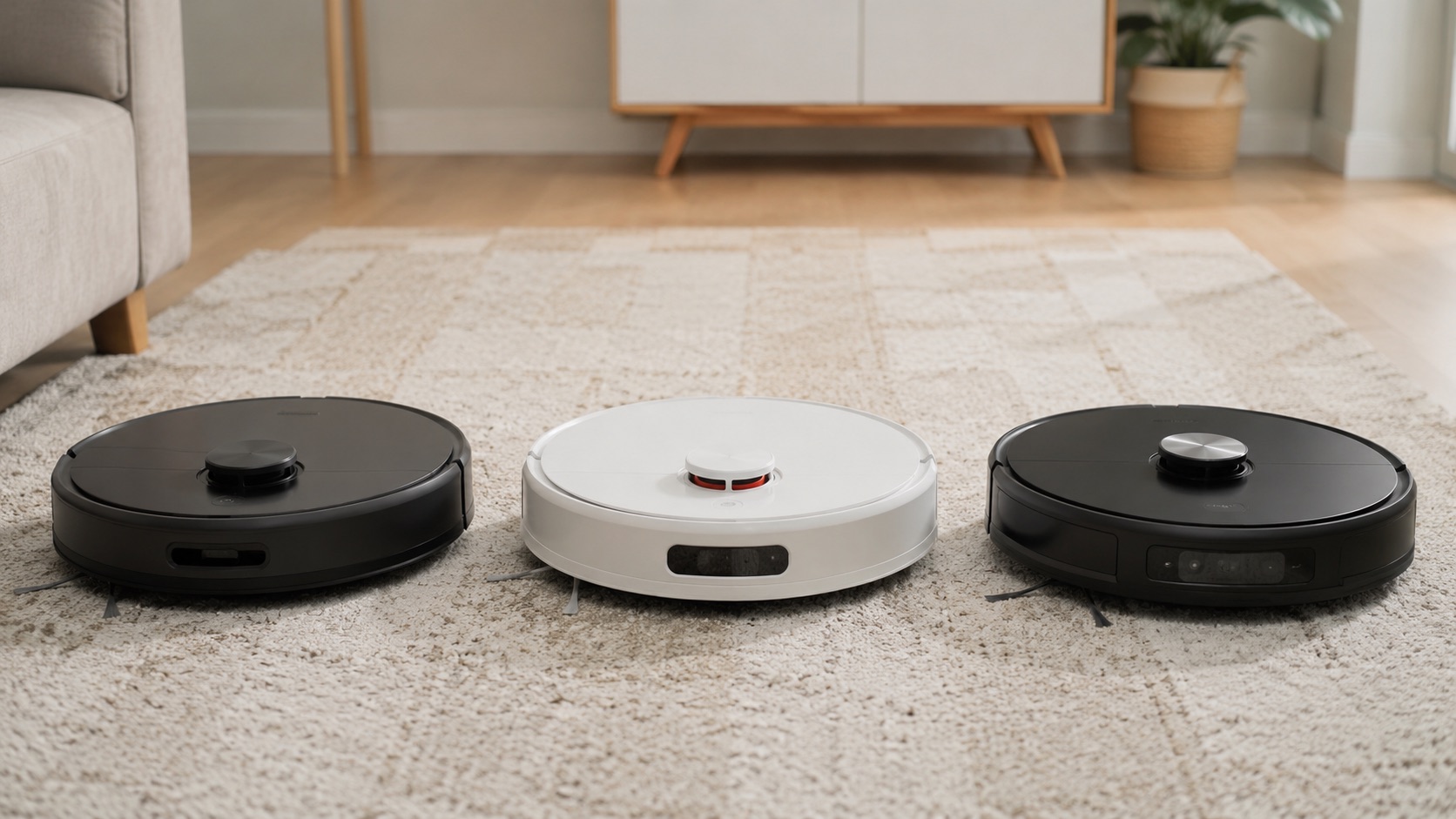
Robot Vacuum vs Regular Vacuum: Which Saves More Time? (2026)
A robot vacuum cleans your floors while you sleep. A regular vacuum cleans them better, but only when you drag it out of the closet. The real question isn’t which cleans better (the regular vacuum wins that easily). It’s whether daily mediocre cleaning beats weekly thorough cleaning.
After two years with both running in the same house, I have a clear answer.
Time: The Only Metric That Really Matters
The average American home is about 2,000 sq ft. Vacuuming it properly with an upright takes 45-60 minutes. Most people vacuum once a week, some less. That’s 45-60 minutes of active work where you’re pushing a machine around and can’t do anything else.
A robot vacuum runs daily (or on whatever schedule you set) with zero time from you. Set it, forget it, come home to clean floors. Over a week, here’s how the time breaks down:
Regular vacuum: 45-60 minutes per session, 1-2 times per week. You’re there the entire time.
Robot vacuum: 2 minutes per week (emptying the dustbin, or zero if you have a self-emptying base). The robot handles everything else during its 60-90 minute run while you’re at work or sleeping.
That’s 3-5 hours per month saved. Over a year, you’re getting back 36-60 hours. That’s a full work week you reclaim annually by letting a robot do floors.
The time savings argument alone justifies the purchase for most people. Your time has value. Even at minimum wage, 50 hours per year is worth $725.
Cleaning Quality: The Honest Comparison
Here’s where I won’t sugarcoat it. Robot vacuums are about 80% as good as a quality upright on flat, open floors. On everything else, they’re worse.
Where robots do well (80-90% as good):
- Hardwood floors with light to moderate debris
- Low-pile carpet in open areas
- Daily dust and hair maintenance
- Under beds and furniture (huge advantage, since you never vacuum there manually)
Where robots struggle:
- Deep carpet cleaning (no match for a Dyson or Shark with powered brushhead)
- Edges and corners (they try, but geometry works against them)
- Stairs (completely useless, zero robots handle stairs in 2026)
- High-pile rugs (some get stuck, others avoid them entirely)
- Cluttered rooms with lots of obstacles on the floor
- Spots and stains (robots don’t do spot cleaning pressure)
Where robots actually beat regular vacuums:
- Under furniture. When’s the last time you moved your couch to vacuum? A 3.5-inch tall robot goes under there daily.
- Consistency. Vacuuming daily means pet hair, crumbs, and dust never accumulate. Your floors stay at a baseline cleanliness that weekly vacuuming can’t match.
The “Maintenance Cleaning” Concept
This is the framework that made everything click for me. Robot vacuums are maintenance tools, not deep-cleaning tools.
Think of it like brushing teeth vs. going to the dentist. Daily brushing (robot vacuum) keeps things consistently clean. But you still need the deeper clean periodically (regular vacuum for carpet, edges, stairs).
The ideal setup for most homes: robot runs daily on a schedule, you break out the regular vacuum every 1-2 weeks for deep carpet passes and stairs. Instead of spending 60 minutes every week, you spend 20-30 minutes every other week on the spots the robot can’t reach.
Total active vacuuming time drops from 4+ hours per month to about 1 hour per month. The robot handles the other 80%.
Cost Comparison
| Category | Budget Robot | Mid-Range Robot | Premium Robot | Quality Upright | Premium Stick |
|---|---|---|---|---|---|
| Example | Eufy 11S | Roborock Q Revo | Roborock S8 MaxV Ultra | Shark Navigator | Dyson V15 |
| Price | $100-150 | $300-450 | $800-1,400 | $150-200 | $650-750 |
| Self-empty base | No | Yes | Yes | N/A | N/A |
| Mopping | No | Yes | Yes | N/A | N/A |
| Suction (Pa) | 2,000-4,000 | 5,500-7,000 | 8,000-12,000 | 15,000-20,000+ | 10,000-15,000 |
| Annual maintenance | $20 (filters/brushes) | $30-50 | $40-60 (bags + parts) | $15-20 | $20-30 |
| Lifespan | 2-3 years | 3-5 years | 4-6 years | 5-8 years | 5-7 years |
| Deep carpet ability | Poor | Fair | Good | Excellent | Very Good |
| Stairs | No | No | No | Yes | Yes |
| Time required from you | Near zero | Near zero | Near zero | 45-60 min/session | 30-45 min/session |
The cost-per-year math:
- Budget robot: $50-75/year (including replacement every 2-3 years)
- Mid-range robot: $75-130/year
- Premium robot: $175-300/year
- Quality upright: $25-40/year (they last forever)
Robots cost more to own over time. You’re paying for the time savings, not for cheaper cleaning.
Who Still Needs Both?
Almost everyone. Seriously.
If you have carpet (especially medium or high-pile), stairs, or rooms with lots of furniture legs and obstacles, a robot vacuum alone won’t cut it. You need a regular vacuum for:
- Stairs (every home with stairs needs a regular vacuum or handheld)
- Deep carpet passes every 1-2 weeks
- Quick spot cleans of spills
- Upholstery and curtains
- Car interior
The smart combo for most homes: a mid-range robot ($300-450) for daily floors plus a basic upright or stick ($100-200) for stairs and deep cleans. Total investment: $400-650 for a system that keeps your home genuinely clean with minimal effort.
If you only have hardwood or tile and no stairs? A premium robot with mopping ($500-800) might genuinely replace your regular vacuum. Maybe. You’ll still want a handheld for furniture and car.
The Pet Hair Factor
Pet owners benefit most from robot vacuums. Dog and cat hair accumulates fast, especially in spring and fall shedding seasons. Vacuuming once a week isn’t enough to keep up with a Golden Retriever.
A robot running daily catches hair before it weaves into carpet fibers and clings to baseboards. The difference is dramatic. Instead of visible tumbleweeds by day 4 after your weekly vacuum, floors stay clean looking every single day.
If you have pets, a robot vacuum isn’t a luxury. It’s baseline maintenance. Check our best robot vacuum picks for models with tangle-free brushes designed for pet hair.
Navigation and Smart Features in 2026
Modern mid-range robots ($300+) use LiDAR navigation. They map your home, avoid obstacles, and clean in efficient patterns instead of bouncing randomly. The Roborock Q Revo and Dreame L20 Ultra both map multi-floor homes and let you set no-go zones, room-specific schedules, and cleaning intensity per room.
Budget robots ($100-150) still use bump-and-go or basic gyroscope navigation. They eventually cover the whole floor, but less efficiently. They’ll miss spots and take longer.
The gap between budget and mid-range navigation is the biggest quality-of-life difference in the robot vacuum world. If you can stretch to $300, LiDAR mapping is worth every penny.
The Mopping Question
Most mid-range and premium robots now include mopping pads. Are they good? They’re okay. A robot mop is like a Swiffer WetJet running automatically. Light maintenance mopping, not deep scrubbing.
For kitchens with dried-on food splatter or bathrooms with soap scum, a robot mop won’t replace hands-and-knees scrubbing. But for daily dust-mopping of hardwood and tile? It keeps floors noticeably cleaner between real mops.
The Verdict
Robot vacuums are for maintenance between deep cleans, not a full replacement for your regular vacuum. Get one for the time savings (3-5 hours per month), the consistency of daily cleaning, and the under-furniture coverage you’d never do manually.
Don’t get one expecting to throw away your regular vacuum. You’ll still need it for stairs, deep carpet passes, and spot cleaning. The combo of daily robot + biweekly manual is the sweet spot.
Best value in 2026: a Roborock Q Revo ($400) with self-empty base and mopping, paired with whatever regular vacuum you already own. That gives you 90% of the premium robot experience at a reasonable price. If you need specific recommendations for your situation, check our complete robot vacuum guide.
See how we compare products for our full methodology.
Frequently Asked Questions
Can a robot vacuum replace a regular vacuum completely? Only in very specific situations: all hard floors, no stairs, no carpet, minimal furniture legs. For the typical home with mixed flooring and multiple levels, you’ll still need a regular vacuum for deep carpet cleaning and stairs. Think of the robot as handling 80% of the work (daily maintenance) while you do 20% manually every couple of weeks.
Are robot vacuums worth it for small apartments? It depends on your time priorities. A 600 sq ft apartment takes 15-20 minutes to vacuum manually. A robot saves you that time but costs $150-400. If you hate vacuuming or have pets that shed constantly, yes. If you don’t mind a quick weekly pass, the math is less compelling. The sweet spot for robot vacuum ROI is homes over 1,000 sq ft.
How often should a robot vacuum run? Daily for homes with pets or kids. Every other day for couples or singles without pets. The point is consistency rather than intensity. Running daily on a lower suction setting keeps floors cleaner than a weekly deep clean, uses less battery, and is quieter. Schedule it when you’re out or sleeping.
Do robot vacuums damage hardwood floors? No, modern robots with rubber brush rolls are hardwood-safe. Older models with stiff bristle brushes could scratch delicate finishes, but those are mostly discontinued. The bigger risk is a small pebble or hard debris getting trapped under the robot and dragged across the floor. Keep your floors clear of hard objects and you’ll be fine.
What’s the best budget robot vacuum in 2026? The Eufy RoboVac G30 at $180 is the best value under $200. It has decent gyroscope navigation, 2,500Pa suction, and works reliably on hard floors and low carpet. For $300-400, the Roborock Q series adds LiDAR mapping, self-emptying, and mopping, which makes a massive quality-of-life difference. See our budget robot vacuum picks under $50 entry point for the cheapest options that still work.