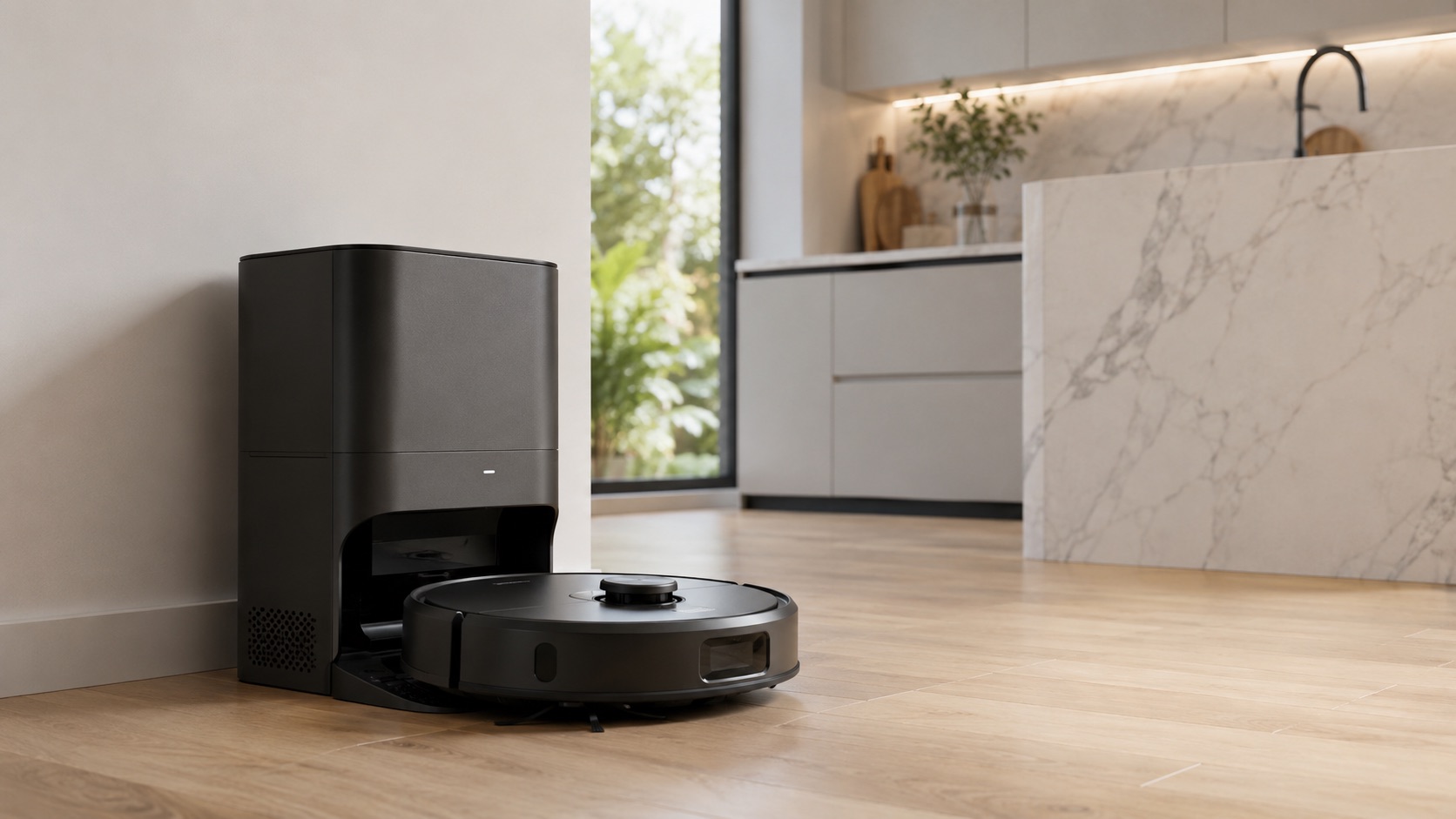
Roborock vs Roomba 2026 — Which Brand Is Better?
Roborock vs Roomba 2026 — Which Brand Is Better?
The robot vacuum market has shifted dramatically over the past few years. Roborock has gone from a relatively unknown Chinese brand to the dominant force in the premium segment, while iRobot’s Roomba — once the undisputed king — has struggled through financial difficulties and a failed Amazon acquisition. So where does that leave buyers in 2026?
If you’re trying to decide between Roborock and Roomba, this is the comparison you need. We’re not just pitting one model against another — we’re comparing these brands across their entire lineups, from budget picks to flagship models. By the end, you’ll know exactly which brand deserves your money.
For our overall top picks regardless of brand, check out our best robot vacuum 2026 roundup.
The State of Both Brands in 2026
Roborock’s Rise
Roborock has been on an absolute tear. Originally a Xiaomi ecosystem company, they’ve established themselves as the technology leader in robot vacuums. Their R&D investment shows in features like FlexiArm side brushes, VibraRise mopping systems, and industry-leading suction power. The S8 MaxV Ultra regularly tops “best of” lists, and their mid-range options offer flagship features from two years ago at half the price.
Their strategy is clear: pack in every possible feature at aggressive price points. It’s working — Roborock now commands the largest market share in the premium robot vacuum segment globally.
iRobot’s Struggles
iRobot has had a rough few years. After Amazon’s acquisition fell through due to regulatory concerns, the company faced layoffs, restructuring, and significant financial losses. Their product development slowed, and competitors like Roborock, Dreame, and Ecovacs leapfrogged them on specs.
That said, Roomba isn’t dead. The Combo j9+ remains a solid all-in-one option, and their budget Essential/Vac series makes robot vacuums accessible to first-time buyers. iRobot still has brand recognition, strong US customer support, and a simplicity that appeals to people who don’t want to tinker with 47 app settings.
Current Lineups Compared
Roborock’s 2026 Lineup
- S8 MaxV Ultra — The flagship. 10,000Pa suction, FlexiArm edge mopping, obstacle avoidance with AI camera, auto-empty/auto-wash/auto-refill dock. MSRP $1,800, frequently on sale for around $500 (yes, really).
- Qrevo CurvX — The curved-edge innovation model at $900. Features edge-hugging design for better corner cleaning, strong suction, and a full self-maintaining dock.
- Q series — Budget-friendly options starting around $250-400. You give up some suction power and advanced features but still get LiDAR navigation and decent mopping.
Roomba’s 2026 Lineup
- Combo j9+ — Their best all-in-one at $240-360 (street price has dropped significantly). Combines vacuuming and mopping with an auto-retract mop pad. Self-empty base included.
- j7+ — Still available and still competent. Great obstacle avoidance, self-empty base, but vacuum-only.
- Essential/Vac series — Entry-level Roombas starting under $200. Basic navigation, no self-empty, but the Roomba name and reliability.
Head-to-Head Comparison
Suction Power
This one isn’t close. Roborock’s S8 MaxV Ultra delivers 10,000Pa of suction — the highest in any consumer robot vacuum. Even their mid-range Q series models hit 5,500-7,000Pa. Roomba doesn’t publish Pa ratings in the same way, but independent testing puts the Combo j9+ around 2,000-3,000Pa equivalent.
Does this matter in practice? On hard floors, not much. On medium-pile carpet, you’ll notice the difference. On thick carpet or for embedded pet hair, Roborock’s extra suction is genuinely useful.
Winner: Roborock (by a wide margin)
Navigation & Obstacle Avoidance
Both brands use sophisticated navigation, but with different approaches. Roborock relies on LiDAR combined with an AI-powered camera system (in premium models) for obstacle detection. Their mapping is fast, accurate, and allows for detailed room-by-room customization.
Roomba uses a combination of visual SLAM (vSLAM) navigation and front-facing cameras. The j7+ and j9+ are particularly good at avoiding pet waste and cables — iRobot literally marketed “P.O.O.P.” (Pet Owner Official Promise) guaranteeing the robot won’t spread pet accidents.
Roborock’s navigation is faster and creates more precise maps. Roomba’s obstacle avoidance is slightly more conservative, which can be a pro (fewer stuck situations) or a con (might miss spots near obstacles).
Winner: Tie — Roborock for speed/precision, Roomba for conservative reliability
Mopping Capability
Roborock dominates mopping. The S8 MaxV Ultra features sonic vibration mopping at 4,000 RPM with a FlexiArm that extends the mop pad to reach edges and corners. The VibraRise system automatically lifts the mop when carpet is detected. The dock washes the mop with hot water and dries it to prevent odor.
Roomba’s Combo j9+ mops decently but lacks the vibration scrubbing and edge-reaching capability. Its auto-retract system lifts the mop pad on top of the robot when hitting carpet, which works well but doesn’t clean as aggressively.
Winner: Roborock (significantly better mopping technology)
Self-Empty Station & Dock
Roborock’s flagship dock is a beast — it empties the dustbin, washes the mop, refills the water tank, and dries the mop with hot air. You can essentially ignore the robot for weeks. The Qrevo CurvX dock is similarly capable.
Roomba’s Clean Base auto-empties into bags (which means ongoing costs for replacement bags). The Combo j9+ dock handles dust but doesn’t wash or dry mop pads the same way Roborock’s does.
Winner: Roborock (more complete self-maintenance)
App Quality
The Roborock app is feature-rich — maybe too feature-rich. You can customize suction levels per room, set no-go zones, schedule different cleaning modes for different areas, adjust water flow, and more. It’s powerful but can feel overwhelming for casual users.
The iRobot Home app is cleaner and simpler. It does less, but what it does is intuitive. Smart mapping, scheduling, and “Clean Everywhere” or “Clean Specific Rooms” is straightforward. iRobot has also improved their app significantly in recent updates.
Winner: Depends — Roborock for power users, Roomba for simplicity
Warranty & Support
iRobot has the advantage here for US buyers. They offer a standard 1-year warranty with responsive US-based customer support. Parts availability is good, and there’s a robust network of repair information.
Roborock offers a 1-year warranty as well, but support can be slower. They’ve improved, but some users report longer wait times and occasional language barriers. Replacement parts are readily available through Amazon and third-party sellers.
Winner: Roomba (especially for US customers)
Pricing Tiers
Here’s where it gets interesting. On paper, Roborock is more expensive (MSRP $1,800 for the flagship). In practice, their aggressive sale pricing makes them incredible value. Getting an S8 MaxV Ultra for $500 is arguably the best deal in robot vacuums.
Roomba’s pricing has come down significantly. The Combo j9+ at $240-360 is genuinely affordable for what you get. Their budget options under $200 make robot vacuums accessible to almost anyone.
Winner: Both — Roborock for value at the high end, Roomba for accessible entry points
Comparison Table
| Feature | Roborock | Roomba | Winner |
|---|---|---|---|
| Suction Power | Up to 10,000Pa | ~2,000-3,000Pa | Roborock |
| Navigation | LiDAR + AI Camera | vSLAM + Camera | Tie |
| Mopping | Sonic vibration, FlexiArm, auto-wash | Retractable pad, basic mopping | Roborock |
| Self-Empty Dock | All-in-one (empty, wash, dry, refill) | Bag-based auto-empty | Roborock |
| App Quality | Feature-rich, complex | Simple, intuitive | Tie |
| Obstacle Avoidance | AI-powered, fast | Conservative, reliable | Tie |
| Warranty/Support | 1 year, improving support | 1 year, strong US support | Roomba |
| Budget Options | Q series from ~$250 | Essential from ~$150 | Roomba |
| Flagship Value | $500 on sale (from $1,800) | $240-360 (Combo j9+) | Roborock |
| Smart Home Integration | Alexa, Google, Matter | Alexa, Google, Matter | Tie |
Pros and Cons
Roborock Pros
- Industry-leading suction power
- Best-in-class mopping with sonic vibration
- All-in-one dock handles everything
- Incredible sale prices for flagship models
- Rapid innovation cycle
- Excellent smart home integration
Roborock Cons
- App can be overwhelming
- MSRP pricing is very high (wait for sales)
- Customer support still improving
- Some models are large/heavy
- Brand less recognized by casual buyers
Roomba Pros
- Simple, intuitive setup and operation
- Strong US customer support
- Excellent obstacle avoidance (pet-waste promise)
- Very competitive pricing on Combo j9+
- Budget options under $200
- Trusted brand name with long track record
Roomba Cons
- Lower suction power across the lineup
- Mopping capabilities lag behind competitors
- Bag-based auto-empty means ongoing costs
- Slower innovation pace since acquisition fell through
- Fewer customization options in app
- Financial uncertainty around iRobot’s future
The Verdict
Roborock wins on features and value. If you want the most capable robot vacuum-mop combo with the strongest suction, best mopping, and a dock that does everything — Roborock is the clear choice. The S8 MaxV Ultra on sale is unbeatable, and even the Qrevo CurvX at $900 outperforms everything Roomba offers.
Roomba wins on simplicity and US support. If you want something that just works out of the box, has reliable American customer service, and doesn’t require you to navigate a complex app — Roomba still has a place. The Combo j9+ at its current pricing is a great buy for people who want a solid robot vacuum without the fuss.
For most tech-savvy buyers reading this blog, Roborock is probably the better pick. But if you’re buying for a parent or someone who values simplicity over specs, don’t sleep on Roomba.
Whichever brand you choose, make sure your Wi-Fi can handle another smart device. A good mesh Wi-Fi system ensures your robot stays connected throughout your home. And if you’re building out a broader smart home, see our guide to the best smart home ecosystem to make sure everything works together.
Looking for budget smart home picks to pair with your new robot? Check out our best smart home devices under $50 guide.
See how we compare products for our full methodology.
FAQ
Is Roborock owned by Xiaomi?
Roborock started as a Xiaomi ecosystem company, but they’ve been independent for years. They design, manufacture, and sell their own products. While some budget Roborock models are still sold under the Xiaomi brand in certain markets, the main Roborock lineup is entirely their own.
Will iRobot go out of business?
It’s a valid concern given their financial difficulties, but iRobot is still operational and releasing products. They’ve restructured and cut costs. However, the uncertainty is worth considering — if iRobot were to shut down, warranty support and software updates could be affected. For now, they’re still a functioning company.
Can Roborock and Roomba integrate with smart home systems?
Yes, both brands work with Amazon Alexa and Google Assistant for voice control. Both are also adding Matter support for broader smart home integration. You can start cleaning via voice commands, include them in routines, and control them remotely through their respective apps.
Is the Roborock S8 MaxV Ultra worth $1,800?
At MSRP, it’s a tough sell. But Roborock frequently discounts this model to $400-600 during sales events (Prime Day, Black Friday, and flash sales). At those prices, it’s an absolute steal. Our advice: never pay full MSRP for Roborock — set a price alert and wait for the next sale.
Which brand is better for pet owners?
Both handle pet hair well, but for different reasons. Roborock’s superior suction power picks up embedded pet hair more effectively, especially from carpet. Roomba’s obstacle avoidance is better at detecting and avoiding pet waste accidents. If shedding is your main concern, go Roborock. If you have a puppy still being house-trained, Roomba’s P.O.O.P. guarantee offers peace of mind.