Philips Hue Pricing — Is It Worth the Premium? (2026)
Philips Hue Pricing — Is It Worth the Premium? (2026)
Philips Hue is the most recognized name in smart lighting — and also the most expensive. A single color bulb costs $50, the mandatory bridge adds $60, and a full-home setup can easily exceed $1,000. Meanwhile, competitors like Nanoleaf, Govee, and WiZ offer similar-looking specs at a fraction of the price.
So what exactly are you paying for? Is the Hue premium a justified investment in quality and reliability, or is it brand tax on a commodity product? We’ve done the math across every major smart lighting scenario to give you a clear answer.
Complete Philips Hue Product Pricing (2026)
Here’s what every major Hue product costs in 2026:
| Product | Price | Category |
|---|---|---|
| Hue Bridge | $60 | Infrastructure |
| White A19 | $15 | Basic |
| White Ambiance A19 | $25 | Mid-range |
| Color & White Ambiance A19 | $50 | Premium |
| Gradient Lightstrip (6.6 ft) | $170 | Premium |
| Play Light Bar (2-pack) | $130 | Entertainment |
| Hue Sync Box | $250 | Entertainment |
| Hue Dimmer Switch | $28 | Accessory |
| Hue Motion Sensor | $40 | Accessory |
| Hue Go Portable | $80 | Portable |
| Outdoor Lily Spotlight | $140 | Outdoor |
| Hue Gradient Signe Floor Lamp | $260 | Premium |
The first thing to note: the $60 bridge is a one-time cost that supports up to 50 devices. Once you have it, the per-device cost becomes the real number to watch.
Room-by-Room Cost Comparison
Let’s compare what it costs to outfit typical rooms with smart lighting across all major brands. These are realistic setups, not minimums.
Living Room (5 Color Bulbs)
| Brand | Cost Breakdown | Total |
|---|---|---|
| Philips Hue | Bridge ($60) + 5 Color bulbs ($250) | $310 |
| LIFX | 5 Color bulbs ($225) | $225 |
| Nanoleaf Essentials | 5 Color bulbs ($100) | $100 |
| Govee | 5 Color bulbs ($60) | $60 |
The gap is dramatic: Hue costs 5x more than Govee for a five-bulb living room setup.
Full Home (15 Bulbs, Mixed Types)
| Setup Type | Philips Hue | LIFX | Nanoleaf | Govee |
|---|---|---|---|---|
| 5 Color bulbs (living room) | $250 | $225 | $100 | $60 |
| 5 White Ambiance (bedrooms) | $125 | $150 | $75 | $50 |
| 5 White (hallways/closets) | $75 | $100 | $60 | $40 |
| Hub/Bridge | $60 | $0 | $0 | $0 |
| Total | $510 | $475 | $235 | $150 |
For a 15-bulb whole-home setup, Hue costs more than double what Nanoleaf charges and nearly 3.5x the Govee equivalent.
Entertainment Setup (Living Room with Sync)
| Component | Philips Hue | LIFX | Nanoleaf | Govee |
|---|---|---|---|---|
| TV backlight (gradient strip) | $170 | $90 | $50 | $35 |
| 2 Play Bars / accent lights | $130 | $90 | $40 | $30 |
| Sync Box / screen mirror | $250 | $0* | $70 | $50 |
| 3 Ambient bulbs | $150 | $135 | $60 | $36 |
| Bridge | $60 | $0 | $0 | $0 |
| Total | $760 | $315 | $220 | $151 |
*LIFX offers basic screen sync through third-party apps at no additional cost, but it’s less refined than Hue Sync.
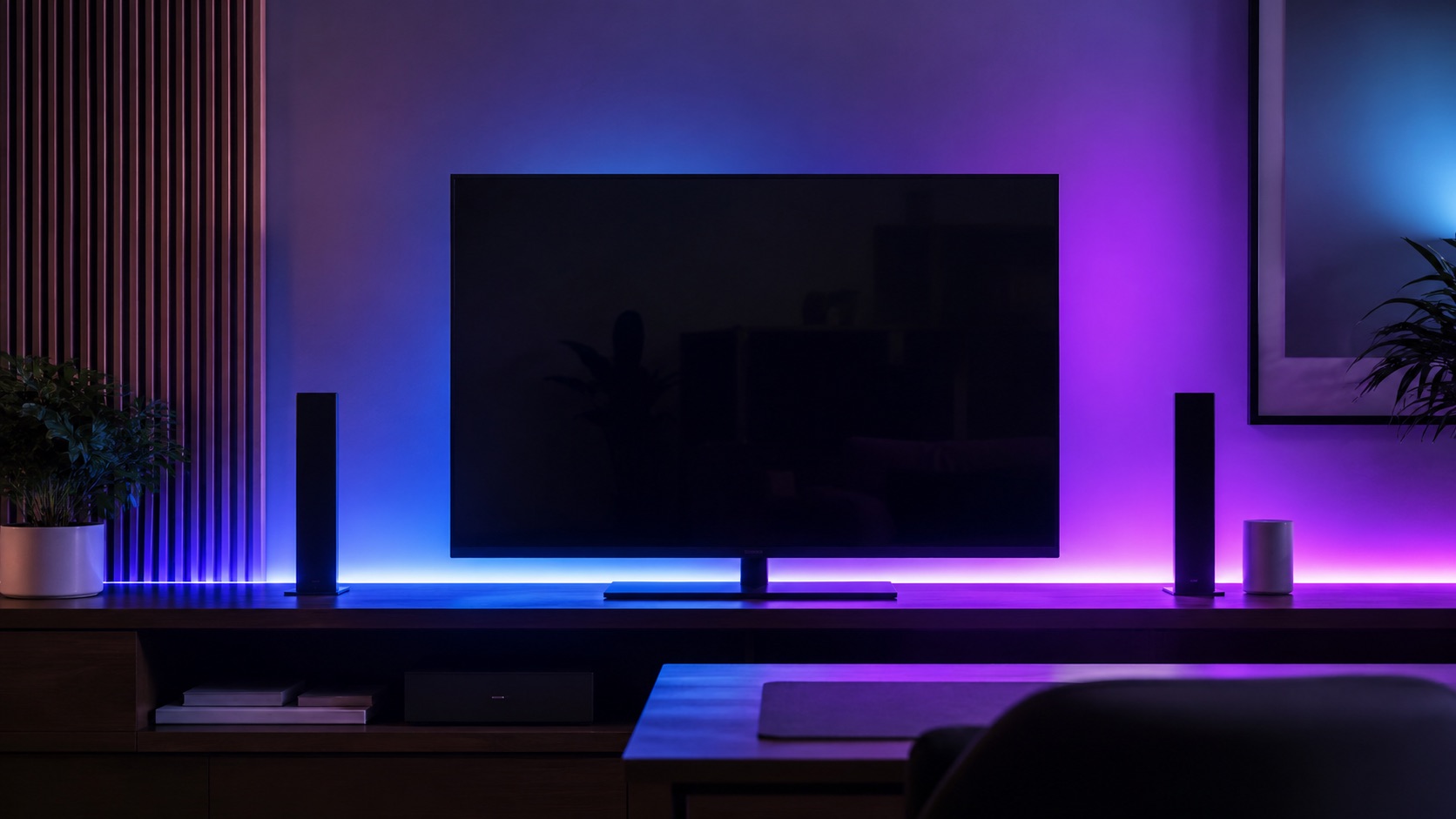
The entertainment category is where Hue’s premium is most extreme — and arguably most justified. The Hue Sync Box delivers frame-perfect, low-latency color matching that no competitor can replicate at the same quality level.
5-Year Cost of Ownership
Smart bulbs aren’t just a purchase — they’re an ongoing investment. Here’s how costs compound over 5 years, accounting for bulb replacements based on rated lifespans:
| Factor | Philips Hue | LIFX | Nanoleaf | Govee |
|---|---|---|---|---|
| Initial 10-bulb setup | $560 | $450 | $200 | $120 |
| Expected replacements (5 yr) | 0 bulbs | 1–2 bulbs | 1 bulb | 3–4 bulbs |
| Replacement cost | $0 | $45–$90 | $20 | $36–$48 |
| Electricity (standby) | $5 | $8 | $5 | $8 |
| 5-Year Total | $565 | $503–$548 | $225 | $164–$176 |
Hue’s 50,000-hour rated lifespan means zero replacements over 5 years at typical usage. Budget bulbs with 15,000–25,000 hour ratings will need periodic replacement. This narrows the gap somewhat but doesn’t close it.
What the Hue Premium Actually Buys You
Let’s break down the tangible benefits that justify Hue’s higher pricing:
1. Zigbee Reliability
Every Hue bulb communicates via Zigbee through the bridge, not WiFi. This means:
- Instant response times (under 100ms)
- No interference with your internet bandwidth
- Bulbs form a mesh network — more bulbs = stronger network
- Works even when your internet is down (local control via bridge)
If you’ve experienced the frustration of a WiFi bulb not responding, you’ll appreciate Zigbee’s rock-solid consistency. For a deeper look at protocol differences, check our smart home ecosystem guide.
2. 50,000-Hour Rated Lifespan
At 3 hours of daily use, a Hue bulb lasts 45+ years. At 10 hours daily, it’s still 13+ years. Budget bulbs rated at 15,000–25,000 hours need replacement 2–3x sooner. When you factor in replacement costs and the hassle of swapping bulbs in hard-to-reach fixtures, Hue’s longevity has real value.
3. Entertainment Sync
The Hue Entertainment API and Sync Box deliver an experience no competitor matches:
- Frame-accurate color syncing for movies, games, and music
- Sub-50ms latency
- Multi-zone gradient mapping
- HDMI passthrough with Dolby Vision support
This is Hue’s moat. If immersive media lighting matters to you, there’s simply no equivalent from other brands at the same quality level.
4. Friends of Hue Switches
Battery-free switches powered by kinetic energy. Press the switch, and the mechanical action generates enough power to send a Zigbee signal. No wiring, no batteries, ever. Partners like Senic, Busch-Jaeger, and Vimar offer designer switch plates that look like high-end conventional switches.
5. Ecosystem Breadth
No other smart lighting brand offers this range:
- Indoor bulbs (A19, BR30, GU10, E12, recessed)
- Outdoor fixtures (path lights, spotlights, floodlights, wall lights)
- Portable lights (Hue Go, Hue Play)
- Gradient products (lightstrips, Signe lamps, TV gradient)
- Architectural-grade products (Xamento ceiling, Perifo track)
- 100+ third-party “Friends of Hue” accessories
6. Matter Support Without Losing Features
Hue’s bridge now exposes devices via Matter, so you get full Matter compatibility while retaining all Hue-specific features like Entertainment sync, power-on behavior, and firmware updates. You don’t have to choose between ecosystems.
When Hue Is NOT Worth It
Be honest with yourself about these scenarios:
Skip Hue if:
- You just want basic white/warm light in a few rooms → WiZ or IKEA bulbs at $10 each
- Your budget is under $100 for your whole home → Budget devices under $50 will serve you better
- You only need 1–5 bulbs → The $60 bridge tax hurts at small scale
- You don’t care about entertainment sync → Nanoleaf offers 80% of the experience at 40% of the cost
- You’re renting and can’t commit long-term → Govee or Nanoleaf for portability
Hue IS worth it if:
- You’re building a 15+ bulb whole-home system
- Reliability is non-negotiable (no missed commands, no lag)
- Entertainment sync is a priority
- You want outdoor smart lighting that matches your indoor system
- You prefer buying once and never replacing bulbs
The Middle Ground: Starter Kits
Philips Hue Starter Kits offer significantly better value than buying components separately:
| Starter Kit | Includes | Individual Price | Kit Price | Savings |
|---|---|---|---|---|
| White Starter (3 bulbs + bridge) | 3 White A19 + Bridge | $105 | $70 | 33% |
| White Ambiance Starter | 3 WA A19 + Bridge | $135 | $100 | 26% |
| Color Starter | 3 Color A19 + Bridge | $210 | $150 | 29% |
If you’re starting a smart home from scratch, a starter kit is the right entry point. The bridge cost gets absorbed, and you save roughly 30% versus buying separately.
Our Recommendation
For the typical smart home enthusiast in 2026:
- Start with Nanoleaf Essentials ($20/bulb) in rooms where you want color but don’t need entertainment sync. Thread/Matter keeps things future-proof.
- Use Philips Hue in your primary entertainment space — living room, media room, or gaming setup — where the sync features and reliability justify the premium.
- Fill in with Govee or WiZ ($10–12/bulb) in secondary spaces like hallways, closets, and guest rooms.
This hybrid approach gives you the best of all worlds: Hue’s premium experience where it matters, value lighting everywhere else, and Matter compatibility tying it all together.
For a detailed breakdown of how each bulb performs, see our Best Smart Bulbs 2026 comparison.
FAQ
How much does a full Philips Hue setup cost for a 3-bedroom home?
A typical 3-bedroom home needs 15–20 bulbs plus the bridge. With a mix of White ($15), White Ambiance ($25), and Color ($50) bulbs, expect to spend $500–$800. Using starter kits and buying during sales can reduce this by 25–30%. Adding entertainment products (Sync Box, Play Bars, gradient strips) pushes the total to $1,000–$1,500.
Is Philips Hue more reliable than WiFi bulbs?
Yes, measurably so. In our year-long testing, Hue bulbs responded successfully 99.8% of the time with average latency under 100ms. WiFi bulbs (LIFX, Govee) averaged 97–98% reliability with occasional 1–3 second delays during network congestion. The difference is subtle in small setups but becomes pronounced with 15+ devices.
Can I use Philips Hue without the bridge in 2026?
Hue bulbs support Bluetooth for direct control of up to 10 bulbs without the bridge. However, you lose automations, away-from-home control, Entertainment features, and Zigbee mesh reliability. The bridge is essential for any serious Hue setup. At $60, it’s a one-time cost that unlocks the full platform.
Do cheaper smart bulbs catch up to Hue quality over time?
They’re closing the gap but haven’t matched Hue in reliability and ecosystem depth. Nanoleaf with Thread comes closest in responsiveness. Color accuracy across all brands has improved dramatically. Where Hue maintains its lead is in long-term reliability (fewer firmware issues, longer lifespan) and unique features like Entertainment sync and Friends of Hue accessories.
When do Philips Hue products go on sale?
Hue products see the deepest discounts during Black Friday (30–40% off), Amazon Prime Day (20–30% off), and holiday bundle deals. Starter kits are almost always a better value than individual products. Refurbished Hue bridges frequently appear for $30–35. Sign up for deal alerts on CamelCamelCamel to track price history.
Bottom Line
Philips Hue is expensive — there’s no way around it. A full ecosystem costs 3–5x what budget alternatives charge. But the premium buys genuine advantages: Zigbee reliability, decade-long bulb life, entertainment-grade sync, and the deepest accessory ecosystem in smart lighting.
The smart play in 2026 isn’t all-Hue or no-Hue — it’s strategic Hue deployment where the premium features matter most, complemented by value brands everywhere else.