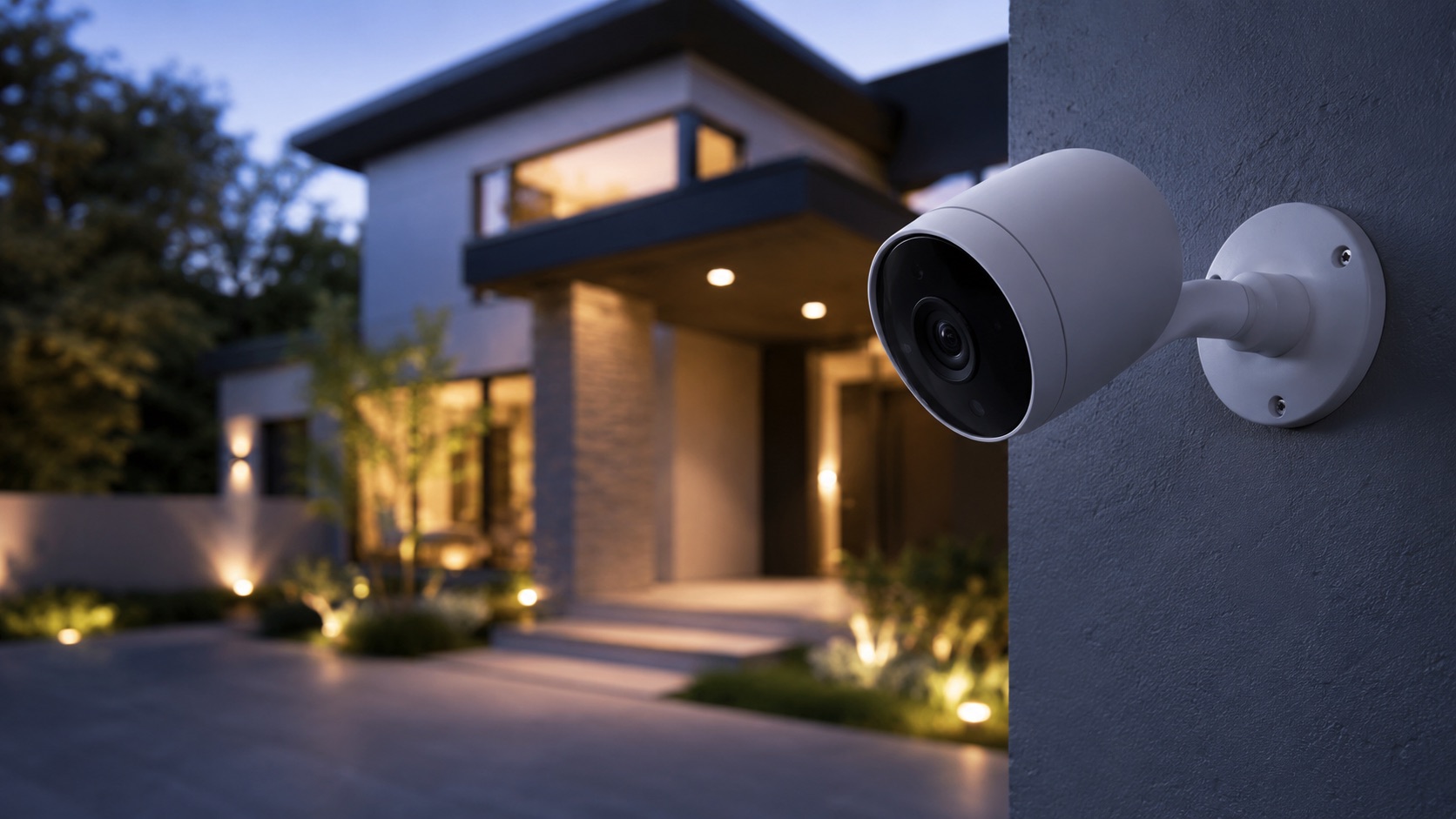
Reolink Cameras — Complete Buyer's Guide (2026)
Why Reolink Is the King of DIY Security Systems
Reolink has earned its reputation as the best camera brand for DIY security enthusiasts who want professional-grade surveillance without professional-grade pricing or monthly fees. Their PoE (Power over Ethernet) systems deliver rock-solid reliability, true 4K resolution, and local NVR storage — all without a single subscription dollar.
In this complete guide, we cover every Reolink camera and system available in 2026. Whether you’re wiring up a single PoE camera or building an 8-camera NVR system from scratch, this buyer’s guide has you covered.
For first-party installation context, start with Bart’s Reolink and Ubiquiti PoE setup. The security camera topic guide connects that setup with comparisons, placement and VLAN guidance.
The Complete Reolink Lineup (2026)
PoE Wired Cameras
Reolink RLC-810A — $55 (4K)
The RLC-810A is Reolink’s best-selling camera for good reason: true 4K resolution (3840×2160) at just $55 is remarkable value. It features person/vehicle detection, color night vision with its integrated spotlight, and reliable PoE power. A single Ethernet cable delivers both power and data — no separate power supply needed. This is the camera that makes Reolink’s reputation.
Reolink RLC-823A — $100 (4K PTZ)
A 4K pan-tilt-zoom camera with 5× optical zoom and auto-tracking. The RLC-823A physically follows detected motion across a 360° horizontal range. It’s ideal for covering large open areas like parking lots, yards, or warehouses where you need one camera to do the work of three. The PoE connection ensures uninterrupted power for constant motor operation.
Reolink Duo 3 PoE — $100 (Dual-Lens 180°)
The Duo 3 uses two lenses stitched together to deliver a full 180° panoramic field of view in 4K. Instead of panning, you capture everything in a single ultra-wide frame. AI distinguishes people, vehicles, and animals across the entire width. This is perfect for monitoring wide driveways, storefronts, or long fence lines without blind spots.
WiFi Cameras
Reolink Argus 4 Pro — $120 (Battery 4K WiFi 6)
The Argus 4 Pro combines battery power with WiFi 6 connectivity for wire-free 4K outdoor surveillance. Its color night vision, 180° dual-lens view, and solar panel compatibility make it a top choice for locations where running cable isn’t feasible. WiFi 6 ensures faster, more reliable streaming even at a distance from your router.
Reolink E1 Zoom — $50 (Indoor PTZ)
An affordable indoor PTZ camera with 5MP resolution and 3× optical zoom. The E1 Zoom tracks motion automatically and covers a full 355° horizontal pan. It connects via WiFi and stores footage on a microSD card or your NVR. A solid budget pick for indoor monitoring when you want more flexibility than a fixed camera provides.
Battery Cameras (Argus Series)
The Argus series is Reolink’s wire-free lineup designed for flexible placement. Every Argus camera supports the Reolink Solar Panel add-on ($20), turning battery cameras into perpetual-power solutions. The series ranges from basic 1080p models to the flagship Argus 4 Pro with dual-lens 4K. Battery cameras store footage on microSD cards or sync to the Reolink cloud (optional, not required).
Video Doorbells
Reolink Video Doorbell WiFi — $100
A 2K+ video doorbell with person detection, package alerts, and two-way audio. It connects via WiFi and can store footage locally on a microSD card or NVR. Compatible with existing mechanical or electronic chimes. The wide-angle lens captures visitors from head to toe, including packages on the ground.
Reolink Video Doorbell PoE — $120
Same features as the WiFi version but powered via PoE for maximum reliability. No battery to charge, no WiFi drops — just consistent, always-on performance. Ideal if you’re already running PoE to other cameras and want your doorbell on the same wired infrastructure. This pairs perfectly with an NVR-based home security system without monthly fees.
NVR Systems
Reolink RLN8-410 — $130 (8-Channel)
An 8-channel NVR that supports 4K recording on all channels simultaneously. It features two SATA bays supporting up to 12TB total storage. With 8 independent PoE ports built in, the NVR powers and records all your cameras from a single box. The 2TB model (with a pre-installed drive) runs about $180.
Reolink RLN16-410 — $230 (16-Channel)
For larger properties or businesses, the 16-channel NVR handles up to sixteen 4K cameras simultaneously. It includes 16 PoE ports and supports up to 12TB of storage across its drive bays. Motion-based recording optimizes storage, while 24/7 continuous recording is available for high-security areas.
Complete Kits
Reolink RLK8-810B4 — $300 (4-Camera Kit)
This kit includes the RLN8-410 NVR (with 2TB HDD pre-installed) plus four RLC-810A 4K cameras with pre-made Ethernet cables. It’s a true plug-and-play 4K surveillance system — unbox, mount, connect, done. For a family home, four cameras typically cover the front door, back door, driveway, and garage.
Reolink RLK16-810B8 — $600 (8-Camera Kit)
The big kit: 16-channel NVR with 4TB HDD and eight 4K cameras. This covers a large home comprehensively or a small business entirely. At $75 per camera effectively (including the NVR and storage), the per-camera cost is extraordinary value for 4K surveillance.
Comparison Table: Full Reolink Lineup
| Camera/System | Price | Type | Resolution | Storage | Best For |
|---|---|---|---|---|---|
| E1 Zoom | $50 | WiFi Indoor PTZ | 5MP | MicroSD / NVR | Budget indoor monitoring |
| RLC-810A | $55 | PoE Wired | 4K (8MP) | NVR | Best-value outdoor cam |
| RLC-823A | $100 | PoE PTZ | 4K (8MP) | NVR | Large area tracking |
| Duo 3 PoE | $100 | PoE Wired | 4K 180° | NVR | Ultra-wide coverage |
| Video Doorbell WiFi | $100 | WiFi | 2K+ | MicroSD / NVR | Front door (wireless) |
| Video Doorbell PoE | $120 | PoE Wired | 2K+ | NVR | Front door (wired) |
| Argus 4 Pro | $120 | Battery WiFi 6 | 4K dual-lens | MicroSD / Cloud | Wire-free outdoor |
| RLN8-410 (NVR) | $130 | 8-Ch NVR | Supports 4K | Up to 12TB HDD | Small home base station |
| RLN16-410 (NVR) | $230 | 16-Ch NVR | Supports 4K | Up to 12TB HDD | Large property / business |
| RLK8-810B4 Kit | $300 | 4-cam + NVR | 4K | 2TB included | Complete 4-cam system |
| RLK16-810B8 Kit | $600 | 8-cam + NVR | 4K | 4TB included | Complete 8-cam system |
| Solar Panel Add-on | $20 | Accessory | — | — | Perpetual battery power |
Why Reolink Excels for DIY PoE Systems
The PoE Advantage
Power over Ethernet is the gold standard for security cameras, and Reolink makes it accessible to non-professionals. Here’s why PoE beats WiFi for permanent installations:
- Reliability: No WiFi dropouts, no signal interference, no dead zones. One cable, always connected.
- Power + data: A single Ethernet cable carries both power and video. No separate power adapter or outlet needed at the camera.
- Distance: PoE works up to 100 meters (330 feet) from the NVR — far beyond any WiFi camera’s range.
- Bandwidth: Wired connections handle 4K streams without buffering or compression artifacts.
- Scalability: Adding a camera means running one cable. No mesh extenders or WiFi congestion.
DIY Installation
You don’t need a professional installer. Reolink’s PoE systems are designed for homeowners:
- Mount cameras at desired locations
- Run Cat5e/Cat6 cable back to a central point (attic, closet, or utility room)
- Plug cables into the NVR’s built-in PoE ports
- Cameras power on and auto-pair — no software configuration needed
The hardest part is running cable through walls or along eaves. The electronics are plug-and-play. If you’re already setting up a mesh WiFi system, you likely have the skills to run Ethernet too.
Storage: NVR vs. MicroSD vs. Cloud
NVR Storage (Recommended for PoE Systems)
The NVR is Reolink’s primary storage solution. Benefits include centralized recording from all cameras in one box, large HDD capacity (up to 12TB), timeline-based playback and search, motion event tagging and filtering, and remote access via the Reolink app.
MicroSD (Battery/WiFi Cameras)
WiFi and battery cameras that aren’t NVR-connected store footage on microSD cards (up to 128GB typically). This is fine for a single camera but becomes unwieldy when managing 4+ cameras individually.
Cloud (Optional)
Reolink offers cloud storage plans starting at $5/month, but they’re entirely optional. Every camera works fully with local storage alone. Cloud is useful as off-site backup insurance — if someone steals your NVR, the cloud copy persists.
Building a Complete System: Recommendations by Property Size
Small Apartment/Condo (1–2 cameras)
- 1× RLC-810A for the entrance ($55)
- 1× E1 Zoom for the main room ($50)
- Storage: MicroSD cards
- Total: ~$105
Standard Home (4 cameras)
- RLK8-810B4 kit: 4× RLC-810A + 8-channel NVR with 2TB ($300)
- Covers: front door, back door, driveway, garage/side
- Total: $300
Large Property (8+ cameras)
- RLK16-810B8 kit: 8× RLC-810A + 16-channel NVR with 4TB ($600)
- Add: 1× RLC-823A PTZ for large yard ($100)
- Add: 1× Duo 3 PoE for wide driveway ($100)
- Total: ~$800 for 10 cameras
This tier of coverage would cost $2,000+ from competitors, plus ongoing monthly fees. Reolink’s value proposition at scale is unmatched. It pairs well with smart sensors for comprehensive property monitoring.
Smart Home Integration
Reolink cameras support Google Home and Amazon Alexa for live view on smart displays. You can ask “Hey Google, show me the driveway” and see your 4K feed on a Nest Hub. Integration with home automation systems continues to grow, though Reolink focuses on standalone reliability over ecosystem dependency.
For those building a broader smart home ecosystem, Reolink’s ONVIF support means compatibility with third-party NVR software like Blue Iris, Synology Surveillance Station, and Home Assistant.
Reolink vs. the Competition
Compared to Ring, Arlo, and Nest, Reolink offers:
- 4K resolution at price points where competitors offer 1080p
- Zero subscription fees with full local storage
- PoE infrastructure that’s commercial-grade
- Expandable NVR storage up to 12TB
The trade-off: Reolink’s app and AI features are less polished than Ring or Google’s. If you prioritize slick software over hardware value, you may prefer a subscription brand. If you prioritize picture quality, reliability, storage capacity, and total cost of ownership — Reolink wins decisively.
Frequently Asked Questions
Can Reolink PoE cameras work without an NVR?
Yes. Every Reolink PoE camera can operate standalone — simply power it via a PoE switch or injector and it records to a microSD card or streams to the app. The NVR adds centralized storage and multi-camera management but isn’t required for individual cameras to function.
How difficult is it to install PoE cameras yourself?
The cameras themselves are plug-and-play. The challenging part is running Ethernet cable through your home’s walls, attic, or exterior. If you can drill holes and pull cable through conduit, you can install a PoE system in a weekend. Many homeowners run cables along eaves or through existing cable TV pathways.
Do Reolink cameras work with HomeKit or Matter?
As of 2026, Reolink does not natively support Apple HomeKit or Matter. They support Google Home, Alexa, and ONVIF. For HomeKit integration, you’d need a bridge solution like Home Assistant or Scrypted. Check our guide to Matter-compatible devices for native HomeKit camera options.
How much storage do I need for 4K cameras?
A single 4K camera recording on motion detection uses roughly 50–80GB per week depending on activity. For a 4-camera system, a 2TB drive stores approximately 4–6 months of motion-triggered footage. For 24/7 continuous recording, expect about 2 weeks per TB per camera at 4K.
Is Reolink a reliable long-term brand?
Reolink has been manufacturing security cameras since 2009 and continues to release firmware updates for products 4–5 years old. Their NVR systems are designed for multi-year continuous operation. The brand has a strong presence on security forums and a responsive support team. For a subscription-free system, long-term hardware reliability matters more than with cloud-dependent brands — and Reolink delivers on durability.
Final Verdict
Reolink is the undisputed value champion for subscription-free security cameras in 2026. Their PoE systems deliver commercial-grade reliability at consumer prices, and the 4K image quality at $55/camera is extraordinary. If you’re willing to run Ethernet cable (or hire someone for a one-time installation), a Reolink NVR system will outperform subscription cameras costing 3–4× more — and save you thousands in fees over the system’s lifetime. Start with a 4-camera kit and expand as needed — the 16-channel NVR has room to grow.