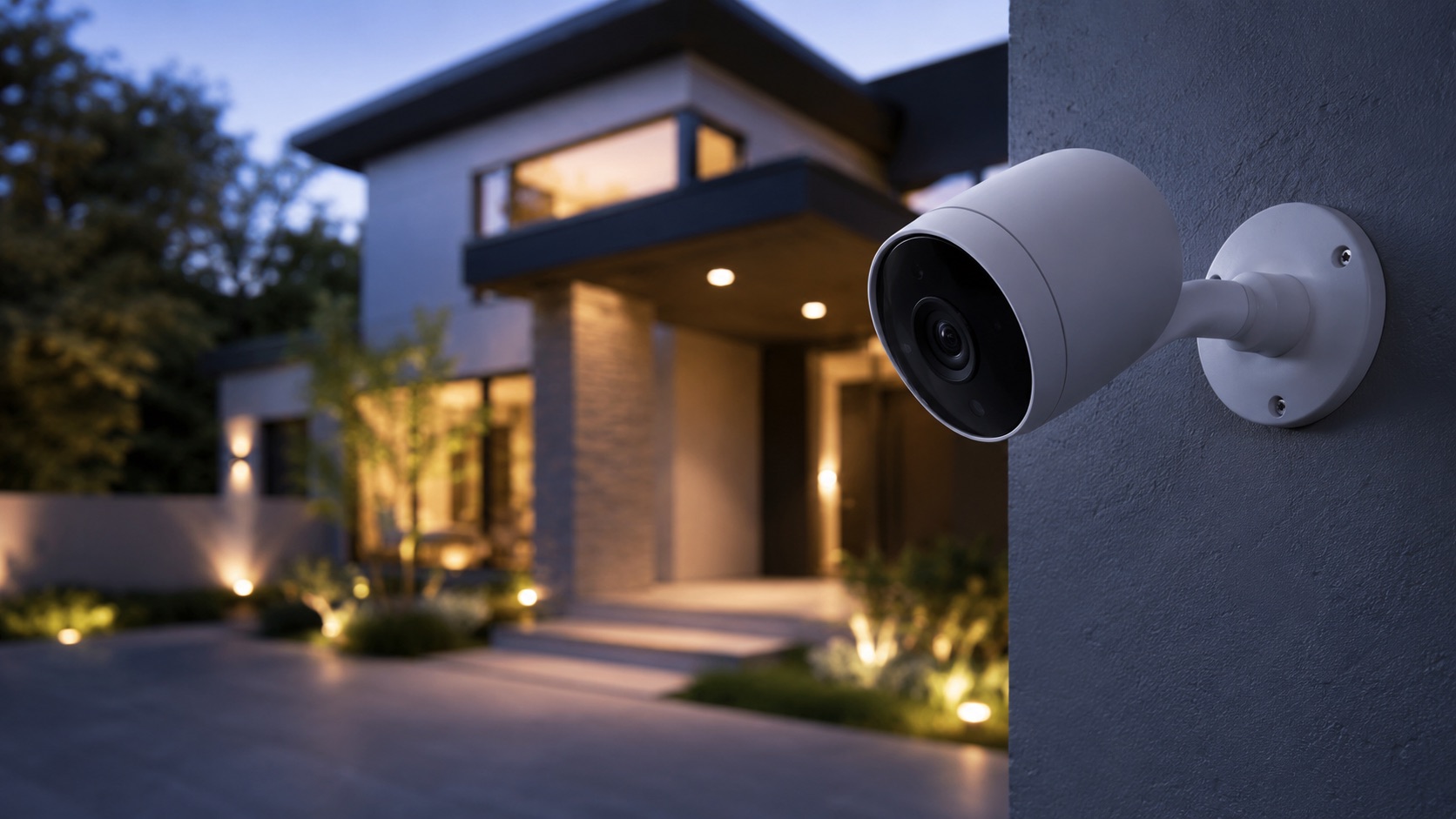
Ring Cameras — Complete Buyer's Guide (2026)
Ring Cameras — Complete Buyer’s Guide (2026)
Ring has cemented itself as one of the most recognizable names in home security. Owned by Amazon, Ring offers an extensive lineup of indoor and outdoor cameras, video doorbells, and a full alarm system — all tied together through the Ring app and optional Ring Protect subscription plans.
But with so many models available in 2026, choosing the right Ring camera can feel overwhelming. Do you need the Floodlight Cam or will a Stick Up Cam suffice? Is the subscription worth it? What do you actually get for free?
This guide breaks down the entire Ring camera lineup, explains every subscription tier, and helps you pick the best Ring camera for your specific situation.
The Complete Ring Camera Lineup (2026)
Ring currently sells five distinct camera models, each designed for a different use case. Here’s a closer look at each one.
Ring Indoor Cam (2nd Gen) — $60
The most affordable entry point into the Ring ecosystem. The Indoor Cam is a compact, plug-in camera designed for monitoring the inside of your home. It features 1080p HD video, two-way talk, and motion detection. The second-generation model added a physical privacy shutter — a welcome improvement that lets you physically block the lens when you’re home.
Best for: Budget-conscious buyers who want basic indoor monitoring, pet watching, or keeping an eye on deliveries inside the door.
Ring Pan-Tilt Indoor Cam — $80
Building on the Indoor Cam, the Pan-Tilt model adds motorized 360-degree horizontal rotation and 169-degree vertical tilt. You can manually control the camera angle from the app or set it to automatically follow motion. This means one camera can effectively cover an entire room rather than a fixed angle.
Best for: Large open-plan rooms, playrooms, or anyone who wants full-room coverage without buying multiple cameras.
Ring Stick Up Cam (3rd Gen) — $100
The most versatile camera in Ring’s lineup. The Stick Up Cam works indoors or outdoors and comes in battery, wired, and solar-powered variants. It’s weather-resistant, compact, and can be mounted virtually anywhere. The battery version offers true wireless installation — no wires at all.
Best for: Renters, flexible placement needs, garages, sheds, or anyone who wants one camera that works everywhere.
Ring Spotlight Cam Plus — $170
The Spotlight Cam Plus adds integrated LED spotlights and a 110-decibel siren to the camera experience. Available in battery, wired, and solar variants, it’s designed for outdoor security where you want to actively deter intruders — not just record them. The spotlights activate on motion detection and can be triggered manually from the app.
Best for: Driveways, backyards, side yards, and any outdoor area where active deterrence matters.
Ring Floodlight Cam Wired Pro — $250
Ring’s flagship outdoor camera. The Floodlight Cam Wired Pro features two ultra-bright 2000-lumen LED floodlights, 1080p HDR video, 3D motion detection with Bird’s Eye View (an overhead map showing exactly where motion occurred), and dual-band WiFi for stronger connectivity. It replaces an existing outdoor floodlight fixture and requires hardwired electrical installation.
Best for: Front yards, driveways, and high-traffic outdoor areas where maximum illumination and advanced detection are needed.
Ring Video Doorbells and Alarm
Beyond cameras, Ring’s ecosystem includes video doorbells starting at $100 (Battery Doorbell Plus) up to $230 (Doorbell Pro 2), plus the Ring Alarm system ($200 for the 5-piece kit). These all integrate seamlessly in the Ring app, and the Ring Protect Plus plan covers unlimited cameras and doorbells at one address. For a deeper comparison of video doorbells, see our best video doorbells 2026 guide.
Ring Camera Comparison Table
| Camera | Price | Location | Power | Key Feature | Best For |
|---|---|---|---|---|---|
| Indoor Cam (2nd Gen) | $60 | Indoor | Plug-in | Privacy shutter | Budget indoor monitoring |
| Pan-Tilt Indoor Cam | $80 | Indoor | Plug-in | 360° motorized rotation | Full-room coverage |
| Stick Up Cam (3rd Gen) | $100 | Indoor/Outdoor | Battery/Wired/Solar | Versatile mounting | Flexible placement |
| Spotlight Cam Plus | $170 | Outdoor | Battery/Wired/Solar | LED spotlights + siren | Active deterrence |
| Floodlight Cam Wired Pro | $250 | Outdoor | Hardwired | 2000-lumen floods + 3D detection | Maximum outdoor security |
Ring Protect Subscription Plans Explained
One of the most common questions about Ring is what you get without a subscription versus with one. Here’s the breakdown.
What You Get for Free (No Subscription)
- Live view (watch your camera feed in real-time)
- Two-way talk
- Motion notifications
- Motion zones customization
- Integration with Alexa
What you don’t get: Video recording, video history, sharing, or any cloud storage. Without a subscription, once a motion event passes, it’s gone. You can watch live, but you cannot review what happened while you were away.
Ring Protect Basic — $3.99/month
- Everything free, plus:
- 180 days of cloud video recording (for one camera)
- Photo and video sharing
- Snapshot capture (periodic still images)
- Person-only detection
This plan covers one camera or doorbell. If you have multiple devices, you need a Basic plan for each or upgrade to Plus.
Ring Protect Plus — $10/month
- Everything in Basic, plus:
- Covers unlimited cameras and doorbells at one address
- 24/7 professional monitoring for Ring Alarm
- Assisted monitoring (cellular backup for alarm)
- Ring Edge (local video processing on compatible Ring Alarm Pro)
- Extended warranty on all Ring devices
For most households with more than two Ring devices, Plus is the clear value play.
Ring Protect Pro — $20/month
- Everything in Plus, plus:
- 24/7 professional monitoring with cellular backup
- Eero Plus network security (ad blocking, VPN, password manager)
- Digital security features
- Priority response integration (where available)
The Pro plan is essentially Ring Protect Plus bundled with Eero’s premium networking features and enhanced alarm monitoring.
Ring TAKE encryption versus optional E2EE
Ring began a phased rollout of Throw Away the Key Encryption, or TAKE, in September 2026. TAKE is designed to become the default protection worldwide after rollout while keeping cloud-dependent features available. It rotates encryption keys and allows a secure cloud enclave to hold a temporary copy when an enabled feature needs cloud processing, then deletes that copy afterward.
TAKE is not the same as end-to-end encryption. Ring’s optional E2EE mode keeps keys limited to enrolled devices, which gives stronger key isolation but disables some shared-user and cloud-dependent features. Live View, playback, and sharing remain available within the E2EE device model, but buyers should check Ring’s current compatibility list before enrolling cameras.
For most households that rely on Smart Alerts and the full Ring app experience, default TAKE is the practical option once it reaches their account. Privacy-focused owners who accept feature tradeoffs should evaluate optional E2EE separately. Neither mode turns a cloud-first Ring system into a local-storage camera system.
Ring vs. the Competition
Ring’s biggest competitors in 2026 are Arlo, Eufy, and Google Nest. Ring wins on ecosystem breadth and Alexa integration but trails on local storage options and subscription-free features. If you’re comparing specific camera brands, our Ring vs. Arlo vs. Eufy comparison dives deep into the differences.
For those who want no monthly fees at all, check our best home security systems without monthly fees guide — Ring is less competitive in that space since most features require Ring Protect.
How Ring Fits Into Your Smart Home
Ring works within the Amazon/Alexa ecosystem. If you have Echo Shows, Echo speakers, or Fire TV devices, Ring cameras integrate beautifully — you can say “Alexa, show me the backyard” and get a live feed on any screen. Ring also supports Matter for some devices, expanding cross-platform compatibility. Check our best Matter-compatible devices guide to see how Ring fits into a broader smart home.
For choosing the right overall smart home platform, our best smart home ecosystem 2026 guide compares Amazon, Apple, Google, and more.
Which Ring Camera Should You Buy?
If you’re on a budget: Start with the Indoor Cam at $60. It’s the simplest way to get Ring camera functionality.
If you need outdoor security: The Spotlight Cam Plus ($170 battery) offers the best balance of features, flexibility, and price. Battery power means no wiring.
If you want maximum security: The Floodlight Cam Wired Pro ($250) is Ring’s most capable camera with the brightest lights and smartest detection.
If you rent: The Stick Up Cam Battery ($100) installs without any permanent modifications and works inside or outside.
If you want whole-home coverage: Mix and match — use Indoor Cams for interior monitoring and Spotlight Cams for the exterior, then tie it all together with Ring Protect Plus ($10/month) for unlimited device coverage.
Tips for Getting the Most Out of Ring Cameras
-
Optimize WiFi placement — Ring cameras stream video over WiFi. Ensure your router or mesh node is within reasonable range. The Floodlight Cam Wired Pro has dual-band WiFi for better connectivity.
-
Customize motion zones — Reduce false alerts by drawing specific motion zones that exclude busy streets or sidewalks.
-
Use motion schedules — Disable indoor camera notifications when you’re home to avoid constant pings.
-
Link to Alexa routines — Trigger lights, announcements, or other smart devices when a camera detects motion.
-
Consider solar panels — For battery-powered outdoor cams, Ring’s solar panels ($50) keep them charged year-round without ladder trips.
Frequently Asked Questions
Do Ring cameras work without a subscription?
Yes, but with limitations. Without Ring Protect, you get live view, two-way talk, and motion notifications. However, you cannot record video, review past events, or share clips. For most users, at minimum the Basic plan ($3.99/month) is necessary to get meaningful value from a Ring camera.
Can Ring cameras record 24/7?
No. Ring cameras are event-based, meaning they record when motion is detected. They do not offer continuous 24/7 recording like some NVR-based systems. The Snapshot Capture feature (requires subscription) takes periodic still images between events, which provides some coverage between motion triggers.
Are Ring cameras compatible with Apple HomeKit?
No. Ring cameras are built for the Amazon/Alexa ecosystem and do not natively support Apple HomeKit. If you’re in the Apple ecosystem, you’ll need to look at alternatives like Eve, Eufy, or Logitech. Ring does support Matter for some accessories, but cameras are not yet Matter-compatible.
How long does Ring store video recordings?
With any Ring Protect plan, video recordings are stored in the cloud for 180 days. After 180 days, recordings are automatically deleted. You can manually download and save important clips before they expire.
Can I use Ring cameras without internet?
No. Ring cameras require a WiFi internet connection to function. Without internet, you cannot access live view, receive notifications, or record events. There is no local-only operation mode. If your internet goes down, the cameras stop working until connectivity is restored.
Final Verdict
Ring remains one of the easiest, most accessible home security camera systems in 2026. The hardware is affordable, the app is intuitive, and the Alexa integration is unmatched. The trade-off is subscription dependency — Ring cameras are significantly less useful without Ring Protect.
For Amazon/Alexa households willing to pay $10/month for Ring Protect Plus, Ring offers an excellent whole-home security camera system that’s easy to install, easy to use, and continuously improving with software updates. If subscription-free operation is a priority, explore alternatives in our best security systems without monthly fees guide.