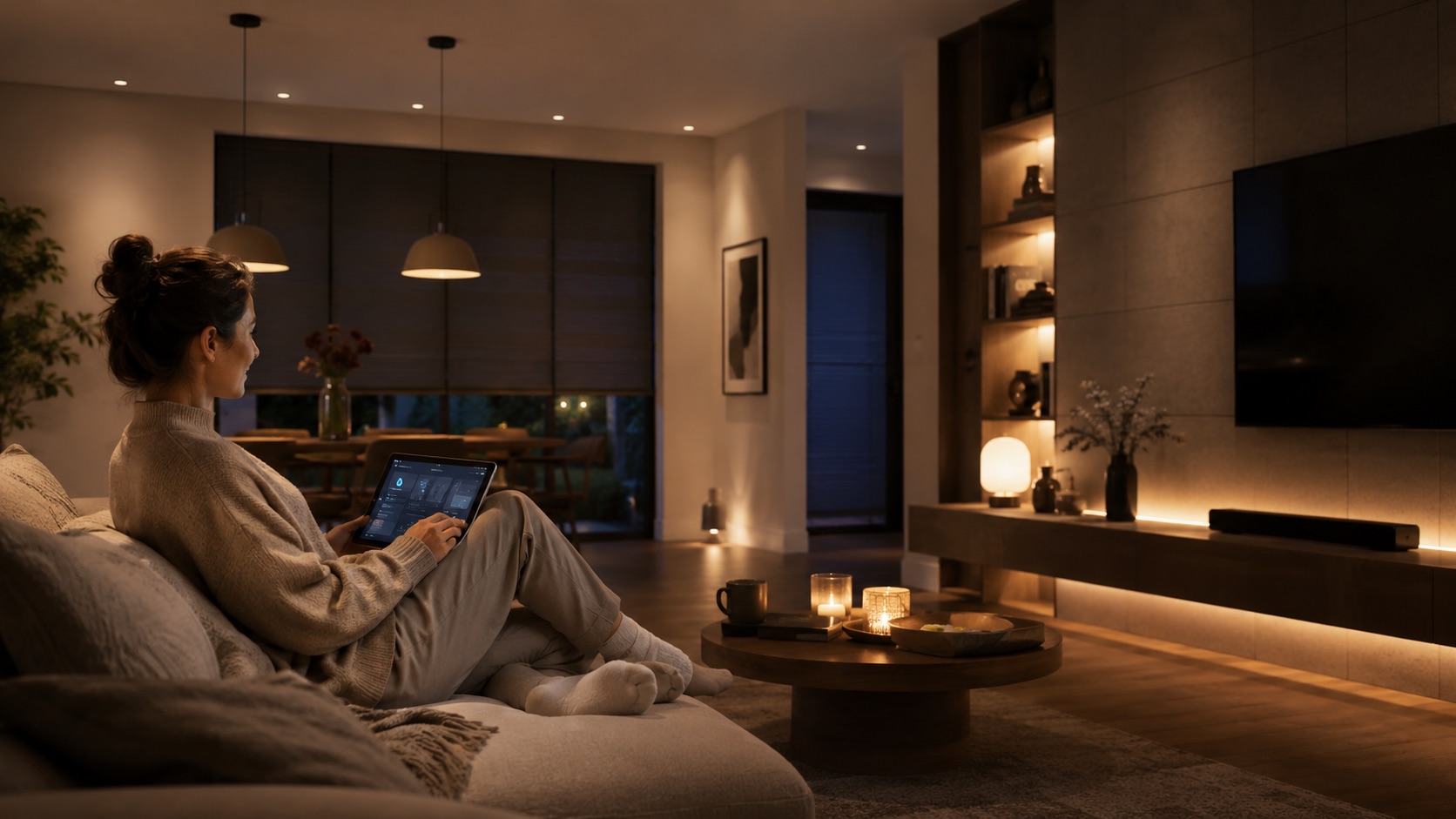
Best Smart Home Setup for Couples (2026)
The Smart Home That Works for Two
A smart home designed for one person is easy. You set your preferences, build your automations, and everything revolves around you. Add a second person with different habits, temperatures preferences, wake-up times, and music tastes — and suddenly your “smart” home feels pretty dumb.
The good news: smart home technology in 2026 has matured enough to handle multi-user households gracefully. Voice assistants recognize individual voices, thermostats support per-room preferences, and lighting can adapt to whoever’s in the room. The key is choosing the right devices and setting them up correctly from day one.
Here’s how to build a smart home that keeps both partners happy without constant compromise negotiations.
Multi-User Voice Profiles
The foundation of a couples-friendly smart home starts with voice recognition. Both Amazon Alexa and Google Assistant now offer robust voice profiles that distinguish between household members.
How Voice Profiles Help
- Personalized music: When Partner A asks for music, they get their playlists. Partner B gets theirs. No more “why is it playing your podcast?”
- Individual calendars: “What’s on my schedule today?” returns the correct person’s calendar
- Separate shopping lists: Add items to your personal list or the shared household list
- Custom routines: “Good morning” triggers different actions based on who says it
- Communication: Calls and messages route to the correct person’s contacts
Setup Tips
Set up voice profiles for both partners on every Echo or Google Home device. Train the voice model in a quiet room, and retrain every 6 months for best accuracy. Both partners should use the same primary smart home platform — mixing ecosystems within a household creates unnecessary friction.
Shared Access: Getting Both Partners Into Every App
One of the biggest couples frustrations is having smart home devices tied to one person’s account. Here’s the access strategy:
Amazon Alexa: Create an Amazon Household (links two adult accounts). Both partners get full Alexa control, individual profiles, and shared smart home device access.
Google Home: Add your partner as a household member. Both accounts get full device control and individual voice match profiles.
Apple Home: Share your Home via the Home app. Both partners get full control of all HomeKit devices with individual Apple IDs.
Individual device apps (Hue, smart locks, cameras): Create the main account, then invite your partner using the app’s sharing/family features. Never share a single login — it breaks voice profiles and individual controls.
Temperature Compromises
Temperature is the number-one smart home argument for couples. One partner runs hot, the other runs cold. Smart thermostats with room sensors solve this elegantly.
The Solution: Zone Control
The best smart thermostats in 2026 support multiple room sensors. Here’s the strategy:
- Ecobee Premium ($250) + room sensors ($80 for 2-pack): Place sensors in the rooms each partner occupies most. The thermostat averages or prioritizes based on schedule.
- Per-room radiator valves (Tado, $80/valve): For homes with radiators, each room gets independent temperature control.
- Schedule-based priority: During work hours, prioritize the home-office sensor for whoever works from home. Evening hours use the living room sensor.
The Compromise Framework
- Bedroom: Set to the cooler partner’s preference (easier to add blankets than remove heat)
- Living room: Split the difference, use a smart fan for the warm partner
- Home office: Each person’s office matches their preference exactly
Lighting That Works for Both
Lighting preferences vary dramatically between partners. One might prefer warm, dim ambiance while the other wants bright, cool light for reading or working.
Smart Lighting Strategy
- Shared spaces (living room, kitchen): Use scenes accessible to both partners. Create “Relaxing” (warm, dim) and “Bright” (cool, full) presets. Physical smart switches ensure either person can adjust without pulling out a phone.
- Individual spaces (bedside, desk): Each partner controls their own lamp independently. Smart bulbs with individual control mean one person can read while the other sleeps.
- Bedside automation: Motion sensors under each side of the bed trigger dim red path lighting only on that side — perfect for midnight bathroom trips without waking your partner.
Security for Two
Both partners need equal access and awareness of home security systems.
Smart Lock Setup
Every smart lock should have:
- Individual codes for each partner (so you know who came home when)
- Both partners’ phones registered for auto-unlock
- Both partners as administrators in the lock app
- Guest codes managed jointly for visitors, cleaners, or pet sitters
Camera and Alarm Access
- Both partners should receive motion alerts and camera notifications
- Both should be able to arm/disarm the security system
- Set up geofencing for BOTH phones — the system shouldn’t arm until both partners have left
- Create a shared “expecting someone” mode that temporarily disables specific alerts
Sleep Differences: The Big One
Different wake-up times, different sleep preferences, and different bedtime routines make the bedroom the most challenging smart home room for couples.
Different Wake Times
Instead of a blaring alarm that wakes both partners:
- Sunrise simulation: A smart bulb on the early riser’s side gradually brightens over 20 minutes. Use a Hue gradient lightstrip behind the headboard on one side only.
- Vibrating alarm: Smart watches or under-pillow vibrators wake one person silently.
- Automated coffee: The early riser’s “good morning” routine starts the coffee maker without waking the sleeping partner.
Bedtime Routine Conflicts
- Individual “goodnight” routines: Partner A’s routine turns off their bedside light and sets their morning alarm. Partner B’s routine does the same independently.
- Shared “house goodnight”: The last person to bed triggers the full routine — locks doors, arms security, turns off all remaining lights.
- White noise: A smart speaker playing sleep sounds helps the lighter sleeper while the other partner can still watch TV with low volume in the room.
Common Conflicts and Smart Solutions
| Challenge | Solution | Device | Price | How It Helps |
|---|---|---|---|---|
| Different wake-up times | Sunrise alarm on one side only | Philips Hue gradient strip | $170 | Gentle light wakes one partner without disturbing the other |
| Temperature disagreements | Room sensors + zones | Ecobee Premium + sensors | $330 | Each room matches the occupant’s preference |
| Music conflicts | Voice profiles + individual speakers | Echo Dot (each room) | $50 each | Each person gets their own music in their space |
| One partner forgets to lock up | Automated lock at bedtime | August Wi-Fi Smart Lock | $230 | Auto-locks at scheduled time or when both phones are home |
| Different lighting moods | Scene buttons on wall | Hue Smart Button | $25 | Physical press cycles through both partners’ preferred scenes |
| Doorbell interrupts sleeping partner | Per-room notification control | Ring/Arlo + Echo settings | Varies | Disable chime in bedroom while keeping it in office |
| TV volume bothers partner | Proximity-aware volume | Sonos Beam + routine | $450 | Auto-reduces volume after partner’s bedtime |
| Morning coffee timing | Individual “good morning” routines | Smart plug + coffee maker | $25 | Each voice profile triggers coffee at the right time |
Automation Rules for Two-Person Households
Presence Detection
- Both home: Normal comfort settings, shared lighting scenes
- One person home alone: Adjust thermostat to that person’s preference, play their preferred background audio
- Both away: Eco mode, security armed, robot vacuum runs
- One person arrives home: Disarm security but maintain the home-alone-person’s settings
The “I’m Going to Bed” Problem
Create a “heading to bed” routine that:
- Dims shared spaces (doesn’t turn them off — the other person might still be up)
- Sets bedroom to sleep mode for that partner
- Only triggers the full “house asleep” routine when both partners have activated their individual sleep modes
Budget-Friendly Couples Starter Pack
You don’t need to spend thousands. Start with these essentials:
- Smart speaker per room (Echo Dot 5th gen, $50 each): Voice profiles are the foundation
- Smart thermostat with sensors (Ecobee Premium, $250 + $80 sensors): End temperature wars
- Smart bedside bulbs (Hue White Ambiance, $25 each): Individual wake-up lighting
- Smart lock (August Wi-Fi, $230): Both partners get codes and auto-unlock
- Smart plugs (TP-Link Kasa, $25 for 4-pack): Coffee maker, fans, white noise machines
Total starter budget: ~$735 for a genuinely couples-optimized smart home.
For more device ideas on a budget, see our guide to smart home devices under $50.
Tips for a Harmonious Smart Home
- Both partners should attend setup: Don’t let one person configure everything alone. Both need to understand how things work.
- Use physical controls as fallback: Not everyone wants to use voice commands. Smart switches and buttons ensure either partner can control things their preferred way.
- Start simple: Don’t automate everything at once. Start with the biggest friction point (usually temperature or wake times) and expand gradually.
- Respect privacy: Don’t use location sharing or cameras in ways that feel like surveillance. Smart home tech should increase trust, not erode it.
- Have a “manual override” plan: When automation conflicts arise, have a clear way to take manual control without breaking the system.
Frequently Asked Questions
Can two people have separate Alexa routines on the same Echo device?
Yes. When voice profiles are set up, saying “Alexa, good morning” triggers different routines depending on whose voice is recognized. Each person can create their own personal routines through the Alexa app under their profile. Shared routines (like “Alexa, movie time”) work the same regardless of who speaks.
What happens if the smart thermostat has conflicting preferences from both partners?
Smart thermostats like Ecobee handle this through sensor priority scheduling. You assign which room sensor takes priority at different times of day. During work hours, prioritize the occupied room. At night, prioritize the bedroom. You can also set a compromise range (e.g., 70–73°F) that keeps both partners within tolerance.
How do smart locks handle two different auto-unlock phones?
Most smart locks (August, Yale, Schlage) support multiple registered phones for auto-unlock. The lock opens when either registered phone comes within Bluetooth range. You can see which partner unlocked the door (and when) in the app’s activity log. Both phones work independently — one leaving doesn’t affect the other’s access.
Is it better to use one smart home platform or let each partner use their preferred ecosystem?
One shared platform is strongly recommended. Mixing ecosystems (one partner on Google, one on Alexa) creates constant friction — routines don’t overlap, voice commands work differently, and shared devices require duplicate configuration. Pick one platform together and use it consistently. If you disagree, the best smart home ecosystem guide can help you compare.
How do you handle smart home notifications without overwhelming both partners?
Assign notification ownership by category. One partner handles security alerts, the other handles maintenance (filter changes, device offline). Shared alerts (doorbell, smoke detector) go to both. Use critical vs. routine notification tiers — both partners get emergencies, but routine updates only go to the designated owner. Most apps support per-device notification settings for each household member.