Best Smart Home for Frequent Travelers (2026)
Best Smart Home for Frequent Travelers (2026)
Leaving your home unattended for days or weeks at a time creates a unique set of anxieties. Is the house secure? Did a pipe burst? Are the plants dead? Is it obvious nobody’s home? Smart home technology in 2026 addresses every single one of these concerns — giving frequent travelers complete visibility and control from anywhere in the world.
Whether you’re a business traveler gone three days a week or a digital nomad away for months, this guide covers the essential smart home setup that keeps your home safe, maintained, and looking lived-in while you’re away.
Presence Simulation: Making Your Home Look Occupied
An empty house is an invitation. Burglars look for predictable patterns — no lights, no movement, accumulated packages. Smart presence simulation makes your home appear occupied even when you’re 5,000 miles away.
Smart Lights with Randomized Schedules
The simplest and most effective presence simulation uses smart bulbs or switches on randomized timers. Rather than lights clicking on at exactly 7:00 PM every night (a dead giveaway for automation), modern smart lighting can vary timing by 15-30 minutes each day and activate different rooms on different nights.
The Philips Hue system excels here with its built-in “mimic presence” feature that learns your typical lighting patterns and replays them with slight variations when you’re away. LIFX and other smart bulbs achieve the same through Home Assistant automations or Alexa routines with randomized offsets.
TV Simulator Devices
A flickering blue-white light behind curtains mimics the appearance of someone watching television. Dedicated TV simulator devices like the FakeTV cost under $30 and use minimal power, but a smart LED strip set to a “TV simulation” mode achieves the same effect with more flexibility.
Smart Blinds and Curtains
Automated blinds that open in the morning and close in the evening complete the illusion of occupancy. SwitchBot Curtain or IKEA FYRTUR blinds on a daily schedule make it look like someone is starting and ending their day normally.
Remote Monitoring: Eyes and Ears on Your Home
Indoor and Outdoor Cameras
Cameras are non-negotiable for frequent travelers. You need both perimeter coverage (outdoor cameras watching entry points) and interior coverage (to verify all-clear or assess any incidents).
For a subscription-free approach, consider systems from our home security without monthly fees guide. Reolink and Eufy offer local storage cameras with remote access that don’t require monthly payments — essential when you’re already paying for flights and hotels.
Top picks for travelers:
- Reolink Argus 4 Pro — Solar-powered, wire-free, 4K. Perfect for homes where you can’t easily charge cameras while away.
- Eufy Indoor Cam S350 — 4K with pan/tilt, local storage, no subscription.
- Arlo Pro 5 — Wire-free with excellent cloud features if you prefer managed storage.
Temperature Monitoring
An unmonitored home in winter can mean frozen pipes and catastrophic water damage. In summer, excessive heat can damage electronics, artwork, and wooden furniture.
A smart thermostat handles this automatically by maintaining safe temperature ranges even in vacation mode. The Ecobee Premium and Google Nest both offer remote alerts if temperatures drop below or rise above set thresholds. For more granular room-by-room monitoring, Aqara temperature sensors placed throughout the home report to your phone via their hub.
Water Leak Sensors
Water damage is the most expensive risk for an unattended home. A burst pipe or failed water heater can cause thousands in damage within hours. Smart leak sensors placed near water heaters, washing machines, under sinks, and near toilets provide instant alerts.
Best leak sensors for travelers:
- Flo by Moen Smart Water Shutoff — Detects leaks AND automatically shuts off your main water supply. The ultimate peace of mind for extended absences.
- Aqara Water Leak Sensor — Affordable ($20), Zigbee-connected, and integrates with automations to trigger shutoff valves.
- Govee WiFi Water Sensors — Budget-friendly with direct WiFi connection, no hub required.
Smoke and CO Monitoring
Smart smoke detectors like the Google Nest Protect send alerts directly to your phone, unlike traditional detectors that just scream into an empty house. If a fire alarm triggers while you’re away, you’ll know immediately and can call emergency services.
Plant Watering Automation
Dead plants are more than an aesthetic issue — they’re a sign that nobody’s home. Automated plant watering systems keep your indoor garden thriving during extended trips.
Indoor Plant Watering Solutions
- Eve Aqua + indoor drip system — Connect a gravity-fed drip system to a smart water controller. Schedule watering for specific days and durations.
- Kollea Automatic Watering System — Battery-powered, programmable timer with drip stakes. Not smart-connected, but reliable for up to 60 days.
- DIY with smart plug + pump — A small submersible pump in a water reservoir, activated by a smart plug on schedule. Cheapest and most flexible for Home Assistant users.
Outdoor Irrigation
Smart sprinkler controllers like the Rachio 3 or RainMachine handle your lawn and garden while you’re gone. They adjust watering based on weather forecasts and soil moisture, so you don’t return to either a dried-out or waterlogged yard.
Mail and Package Alerts
Accumulated packages are a theft risk and a visible sign of absence. Smart devices help you manage deliveries remotely.
Video Doorbells
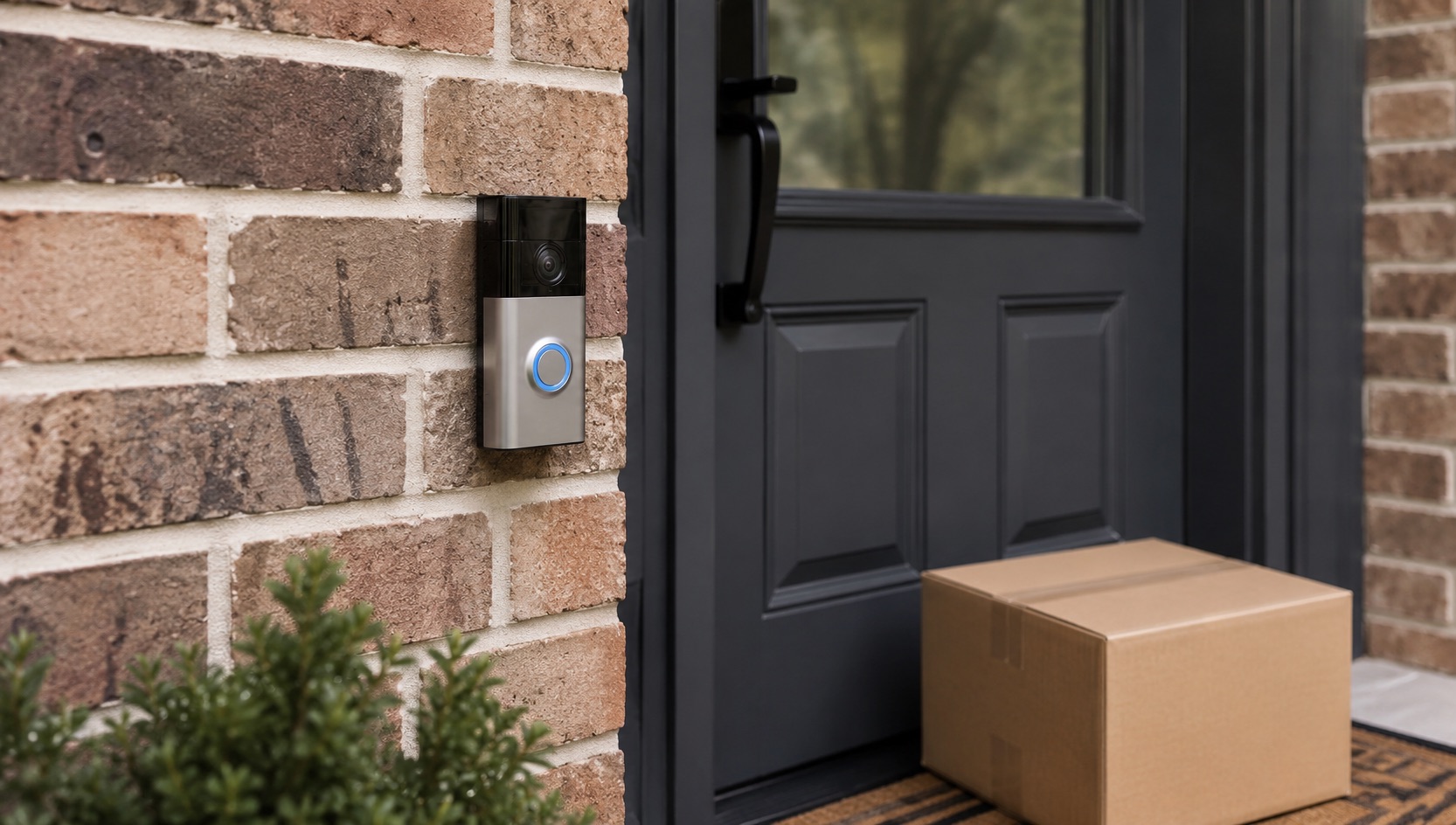
A video doorbell serves triple duty for travelers: package delivery verification, visitor communication, and front-door security. You can speak to delivery drivers and ask them to place packages out of sight, or instruct them to try a neighbor.
The Ring Battery Doorbell Pro and Arlo Essential Doorbell both offer package detection zones that specifically alert you when something is left on your doorstep.
Smart Lock for Package Access
If you have a covered porch or vestibule, a smart lock lets you grant temporary access to trusted neighbors or delivery services. Create a temporary code that works only during specific hours, and revoke it remotely when no longer needed.
Vacation Mode: Extended Absence Settings
When you’re leaving for more than a few days, your home needs a full vacation configuration:
Thermostat Setback
Set your thermostat to maintain safe temperatures without wasting energy on full comfort levels. In winter, 55°F (13°C) prevents freezing without heating empty rooms to 72°F. In summer, 85°F (29°C) prevents humidity damage without running AC at full blast.
Water Main Shutoff
For trips longer than a week, consider shutting off the water main. The Flo by Moen or LeakSmart valve does this automatically or on command from your phone. This eliminates the risk of water damage entirely — the single most impactful thing you can do before an extended trip.
Power Management
Smart plugs can cut power to devices that shouldn’t run while you’re away (certain appliances, chargers) while keeping essential systems powered (router, security cameras, refrigerator, HVAC).
Remote Door Access for Pet Sitters and Cleaners
If someone needs access while you’re away — pet sitter, house cleaner, plant-watering neighbor — smart locks make this seamless:
- Yale Assure Lock 2 — Create scheduled access codes that only work during specific time windows.
- August WiFi Smart Lock — Grant virtual keys through the app, with activity logs showing exactly when someone entered and left.
- Level Lock+ — Invisible smart lock that works with existing keys plus smartphone access.
Combine smart locks with an indoor camera and you get verification that your helper came, did their job, and left without issues.
Vacation Security: Full Protection Package
Randomized Automation Schedules
Beyond simple light timers, a comprehensive vacation security setup includes:
- Randomized interior lights across multiple rooms
- Exterior lights on motion sensors and dusk-to-dawn schedules
- Smart blinds on daily open/close cycles
- Audio simulation (radio on timer in different rooms)
- Regular camera checks via motion alerts
Alarm System Integration
A monitored or self-monitored alarm system provides the final layer. Systems like SimpliSafe or Ring Alarm offer professional monitoring options that dispatch police if triggered — valuable when you can’t respond personally.
Smart Sensors for Complete Awareness
Door/window sensors alert you to any unexpected opening. Place them on all exterior doors, accessible windows, and your garage. Any opening while you’re away triggers an immediate alert to your phone.
Comparison Table
| Travel Concern | Solution | Device | Price | Remote Access |
|---|---|---|---|---|
| Home looks empty | Presence simulation lighting | Philips Hue Starter Kit | $130 | Full app control, mimic presence mode |
| Burglary risk | Outdoor camera monitoring | Reolink Argus 4 Pro | $140 | 24/7 remote view, motion alerts |
| Frozen pipes / overheating | Temperature monitoring | Ecobee Premium Thermostat | $250 | Remote temp control, threshold alerts |
| Water damage | Leak detection + auto shutoff | Flo by Moen | $500 | Instant alerts, remote shutoff |
| Package theft | Video doorbell + smart lock | Ring Doorbell + Yale Lock | $350 | Live view, temporary access codes |
| Dead plants | Automated watering | Eve Aqua + drip system | $80 | Scheduled watering via app |
| Fire/CO risk | Smart smoke detection | Nest Protect (3-pack) | $350 | Phone alerts from anywhere |
| Unauthorized entry | Door/window sensors | Aqara sensors (8-pack) | $100 | Instant open/close notifications |
| Pet/cleaner access | Smart lock scheduling | August WiFi Smart Lock | $230 | Time-limited virtual keys |
| TV appearance | TV simulator | FakeTV device | $25 | Set-and-forget (no remote needed) |
Building Your Traveler Smart Home: Step by Step
Before your first trip:
- Install water leak sensors near all water sources
- Set up at least one indoor and one outdoor camera
- Install a smart thermostat with remote access
- Put living room and bedroom lights on smart switches or bulbs
Before an extended trip (1+ week): 5. Activate presence simulation schedules 6. Enable water shutoff (automatic or manual) 7. Set up plant watering system 8. Share temporary smart lock codes with your helper 9. Verify all cameras and sensors are online 10. Set thermostat to vacation mode
Related Guides
Frequently Asked Questions
What’s the minimum smart home setup for someone who travels weekly?
At minimum, you need a video doorbell, one indoor camera, a smart thermostat, and water leak sensors. This covers your biggest risks: package theft, break-ins, temperature extremes, and water damage. Add smart lights on timers for basic presence simulation. Total cost: approximately $500-700 for a reliable baseline setup that handles 2-5 day absences.
How do I keep my smart home running if the internet goes down while I’m away?
This is a real concern for travelers. First, invest in a reliable router — mesh systems like Eero or TP-Link Deco rarely go offline. Second, choose devices with local automation capability (Home Assistant, Hubitat) so that automations like presence simulation continue even without internet. Third, consider a cellular backup for your router (Eero has this built in). Finally, ask a nearby contact to power-cycle your router if you lose connectivity.
Do presence simulation lights actually deter burglars?
Research and police reports consistently show that visible signs of occupancy are effective deterrents. Burglars prefer easy targets — randomized interior lighting, combined with exterior motion-activated lights and visible cameras, makes your home look both occupied and monitored. The key is randomization: static timers that turn on and off at the same time daily are less convincing than varied patterns across multiple rooms.
Should I shut off my water main every time I travel?
For trips of 3+ days, yes — it’s the single most effective way to prevent catastrophic water damage. A smart shutoff valve like Flo by Moen makes this easy (one tap in the app). For shorter trips (1-2 nights), leak sensors with alerts are sufficient since you can contact someone to shut off water if a leak is detected. The exception is if you have someone watering plants or pets needing water — in that case, rely on leak sensors instead.
How much does a comprehensive traveler smart home setup cost?
A full setup covering security, monitoring, presence simulation, water protection, and remote access typically costs $1,500-$2,500 for quality devices. The breakdown: cameras ($300-500), smart locks and doorbell ($300-500), thermostat ($200-300), water protection ($500-600), smart lighting for simulation ($150-300), and sensors ($100-200). This is a one-time investment with no monthly fees if you choose subscription-free cameras and self-monitored security.
Final Thoughts
A well-equipped smart home transforms travel from a source of anxiety into a worry-free experience. The investment pays for itself not just in prevented disasters (a single burst pipe can cost $10,000+), but in the daily peace of mind that comes from knowing your home is secure, monitored, and maintained — no matter where in the world you happen to be.
Start with water protection and cameras — they address the highest-cost risks. Then layer in presence simulation and convenience features like smart locks for helpers. Within a single weekend of setup, you’ll wonder how you ever traveled without it.