Best Smart Home Setup for Vacation Homes (2026)
Best Smart Home Setup for Vacation Homes (2026)
A vacation home or Airbnb rental sitting empty for weeks — or months — is a liability without the right tech. Pipes freeze, leaks go undetected, guests lock themselves out, and break-ins happen when nobody’s watching. Smart home devices solve all of this by letting you monitor, control, and protect your property from anywhere with a phone.
The difference between a primary residence and a vacation home setup is reliability at a distance. You can’t just walk downstairs to check a sensor alert. Everything needs to work autonomously, notify you when something goes wrong, and give you remote override capability. This guide covers exactly what you need — organized by priority — with specific product recommendations for 2026.
Why Vacation Homes Need Different Smart Home Tech
Your primary home benefits from smart devices as a convenience. Your vacation home depends on them. Here’s what makes the requirements different:
- No one is there to catch problems early. A small leak becomes a flooded basement in days.
- Guest turnover requires flexible access. You can’t hand out physical keys to every Airbnb guest.
- Climate control has higher stakes. A thermostat failure in winter means burst pipes, not just discomfort.
- Power and internet outages happen without you knowing. You need devices that recover gracefully and alert you.
- Insurance may require certain protections. Some insurers mandate monitored security or water shutoff valves for vacation properties.
If you’re still building your foundation, start with our guide to setting up a smart home from scratch to understand ecosystems and connectivity basics.
Essential Devices: Complete Comparison
| Category | Device | Price | Why Critical for Vacation Home | Remote Access |
|---|---|---|---|---|
| Security Camera | Reolink Argus 4 Pro (Solar) | $180 | Solar-powered, no wiring needed, works during power outages with battery | App + cloud/local storage |
| Video Doorbell | Ring Battery Doorbell Pro | $230 | See who’s at the door, talk to guests/deliveries remotely | Ring app, Alexa |
| Smart Lock | Schlage Encode Plus | $300 | Guest codes with schedules, auto-lock, activity log | Schlage app, Apple Home, Alexa |
| Water Leak Sensor | Flo by Moen Smart Water Monitor | $500 | Detects leaks AND auto-shuts water supply — prevents catastrophic damage | Moen app, push alerts |
| Leak Sensor (Budget) | Aqara Water Leak Sensor | $15 | Place under sinks, near water heater, behind toilets | Aqara/HomeKit alerts |
| Thermostat | ecobee Smart Thermostat Premium | $250 | Freeze protection alerts, remote scheduling, occupancy detection | ecobee app, all ecosystems |
| Humidity/Temp Sensor | SensorPush HT.w | $50 | WiFi-direct monitoring, alerts for extreme temps/humidity — no hub needed | SensorPush app, alerts |
| Smoke/CO Detector | Google Nest Protect | $130 | Phone alerts anywhere in the world, self-testing, 10-year lifespan | Google Home app |
| Water Shutoff Valve | Dome Water Main Shut-Off | $100 | Pairs with leak sensor to physically shut off water supply remotely | Z-Wave hub required |
| Smart Display | Echo Show 8 | $150 | Guest welcome screen with WiFi password, check-in instructions | Alexa app |
| Smart Plug | TP-Link Kasa KP125 | $15 | Automate lamps for occupied-look, monitor energy use remotely | Kasa app |
Security: Your First Priority
An empty property is a target. You need deterrence (visible cameras), detection (motion alerts), and response (remote access to locks and lights).
Outdoor Cameras with Solar Power
Solar-powered cameras are non-negotiable for vacation homes. Wired cameras fail during power outages — precisely when you’re most vulnerable. The Reolink Argus 4 Pro delivers 4K resolution, color night vision, and runs indefinitely on its solar panel. No subscription required for local storage.
Place cameras at the driveway, front door, and any back entry points. Enable motion zones to reduce false alerts from wildlife.
Video Doorbell
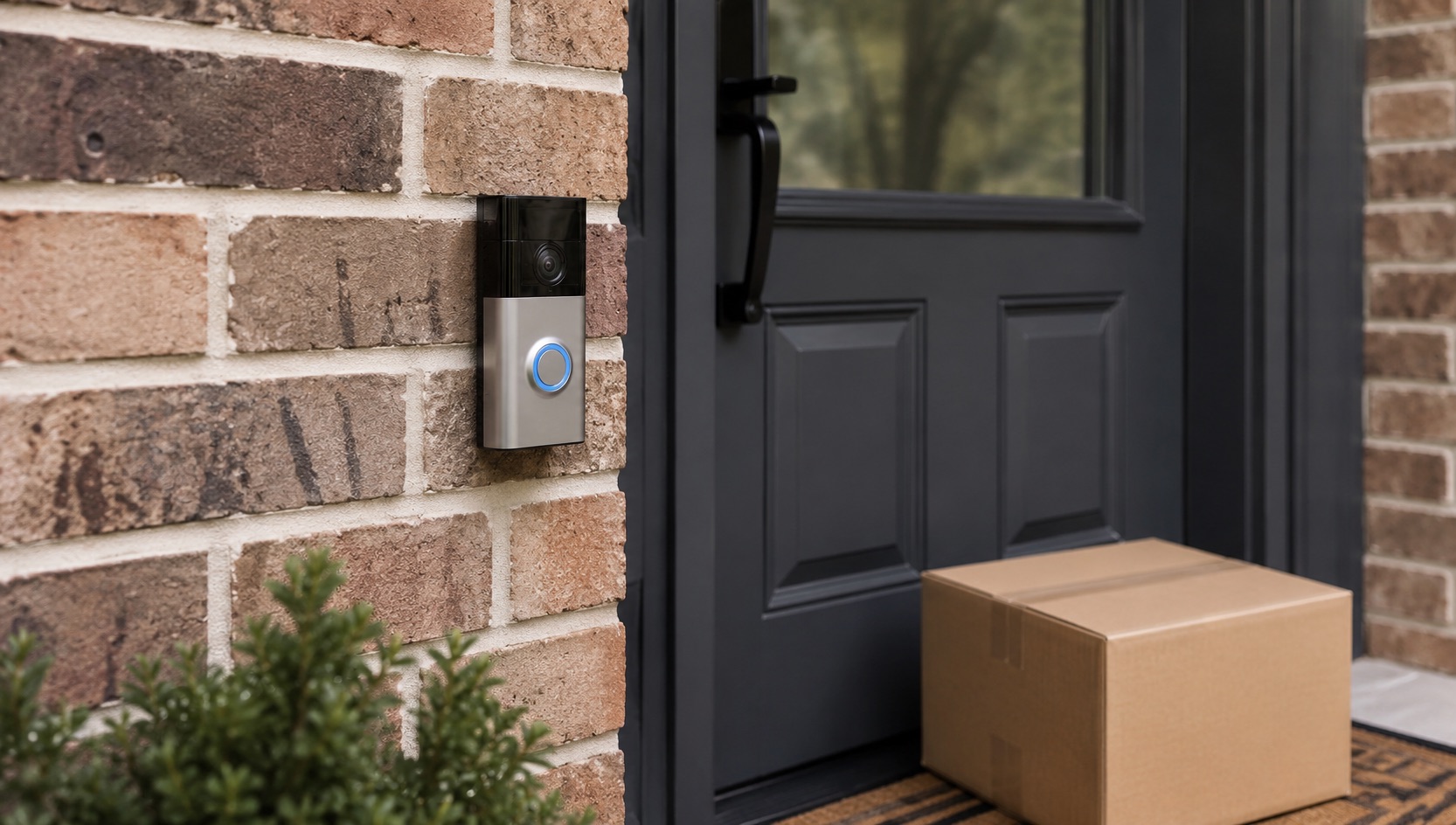
The Ring Battery Doorbell Pro lets you see and talk to anyone at your door in real time. For Airbnb hosts, this means verifying guest arrivals without being on-site. The package detection feature also confirms deliveries.
Smart Lock with Guest Codes
A quality smart lock is arguably the single most important device for a vacation rental. The Schlage Encode Plus supports:
- Temporary codes that expire after checkout
- Scheduled access — cleaners get a code that only works Tuesdays 10am–2pm
- Activity logging — see exactly when each code was used
- Auto-lock — guests never accidentally leave the door unlocked
For Airbnb specifically, platforms like Hospitable and Guesty can auto-generate and send door codes to guests before arrival.
Water Leak Sensors — The Most Underrated Protection
Water damage is the #1 insurance claim for vacation homes. A slow leak under a sink can cause $20,000+ in damage before anyone notices. Place smart sensors at every risk point:
- Under kitchen and bathroom sinks
- Near the water heater
- Behind toilets
- Near the washing machine
- In the basement/lowest level
The Flo by Moen system monitors your entire water supply line, detecting micro-leaks by pressure changes, and can physically shut off water if something goes wrong. It’s expensive ($500) but trivial compared to a single water damage claim.
Climate Control: Prevent Costly Damage
Smart Thermostat with Freeze Protection
An empty home in winter still needs climate control. The ecobee Smart Thermostat Premium offers a dedicated freeze protection mode that maintains minimum temperatures to prevent pipe damage, even if you’ve turned down heating to save energy.
Critical features for vacation homes:
- Remote temperature adjustment before guest arrival
- Freeze/heat alerts when temperature drops below or exceeds safe ranges
- Geofencing won’t work here — use scheduled modes instead
- Smart recovery pre-conditions the home before guests arrive
Check our best smart thermostat roundup for more options with remote access.
Humidity and Temperature Monitoring
Beyond the thermostat itself, place dedicated SensorPush HT.w sensors in:
- The basement (moisture buildup)
- The attic (extreme heat detection)
- Near plumbing risers (freeze risk)
- Bathrooms (mold-promoting humidity)
Set alerts for humidity above 60% or temperatures below 40°F. These sensors work on WiFi directly — no hub needed — and store data in the cloud for trend analysis.
Monitoring: Know What’s Happening 24/7
Smart Smoke and CO Detectors
Standard smoke detectors are useless in an empty home — they’ll blare into an empty room until the battery dies. Google Nest Protect sends phone alerts with specifics: “Smoke detected in the kitchen” vs. “CO detected in the basement.” You can respond immediately by calling the fire department, even from 1,000 miles away.
Smart Water Shutoff Valve
If you don’t invest in the full Flo by Moen system, the Dome Water Main Shut-Off valve retrofits onto your existing main shutoff. Pair it with Aqara leak sensors through a Z-Wave hub — when a leak is detected, the valve closes automatically. Total cost: ~$130 for the valve plus $15 per sensor.
Power and Internet Monitoring
Your entire smart home depends on WiFi. Use a UPS (battery backup) on your router and hub to survive brief outages. Services like Fing can alert you when your home network goes offline, signaling a power outage that needs attention.
Guest Management: Airbnb and Rental Essentials
Automated Check-In Experience
Create a seamless guest experience without being present:
- Smart lock sends a unique code 4 hours before check-in
- Smart lights turn on automatically at the scheduled check-in time
- Thermostat adjusts to comfortable temperature 2 hours before arrival
- Echo Show displays welcome message with WiFi password and house rules
Automated Checkout and Turnover
After checkout time:
- Smart lock deactivates guest code
- Thermostat drops to energy-saving mode
- Lights turn off on schedule
- You receive a notification confirming the property is secured
WiFi Credentials on Smart Display
An Echo Show 8 in the living room can display a custom screen with WiFi network name and password, emergency contacts, and house rules. Guests won’t need to text you at midnight asking for the WiFi password.
Network Setup for Reliability
Your vacation home network needs to be bulletproof:
- Mesh WiFi (like eero or Google Nest WiFi) for full property coverage
- UPS on router — keeps internet alive during brief outages
- Automatic reboot — smart plug on router set to power cycle at 4am weekly
- Cellular backup — consider a hotspot failover for critical security devices
Budget Breakdown
A complete vacation home smart setup costs approximately:
- Essential tier (~$700): Smart lock + 4 leak sensors + thermostat + 2 smart plugs
- Recommended tier (~$1,500): Add outdoor camera, video doorbell, smoke detectors, water shutoff valve
- Premium tier (~$2,500): Add Flo by Moen, multiple cameras, Echo Show, full sensor network
The essential tier alone prevents the most common and expensive problems (water damage, lockouts, frozen pipes).
FAQ
Can I manage a vacation home smart system with unreliable internet?
Most critical devices (smart locks, smoke detectors) work offline for core functions — locks still accept codes, detectors still alarm locally. However, remote monitoring requires internet. Consider a cellular backup like a T-Mobile Home Internet unit as a failover. Solar cameras with local SD storage also continue recording during outages.
Do I need a smart home hub for a vacation property?
Not necessarily. Many WiFi-direct devices (ecobee, Ring, Reolink, SensorPush) work independently. However, if you’re using Zigbee or Z-Wave devices like Aqara sensors or the Dome shutoff valve, you’ll need a hub. An Aeotec SmartThings hub is a reliable option that works with both protocols.
How do I handle smart home devices when selling a vacation property?
Cloud-based devices (Ring cameras, smart locks) can be factory-reset and removed from your account. Hardwired devices like smart thermostats typically stay with the property. Document everything for the buyer — it’s a selling point, not a liability.
What’s the best way to prevent pipe freezing in a smart vacation home?
Layer your protection: Set the ecobee to freeze protection mode (maintains minimum 55°F), place SensorPush sensors near vulnerable pipes for early alerts, and install a smart water shutoff valve as a last resort. If temperatures drop dangerously, you can remotely boost the heat or shut off water before pipes burst.
Are smart home devices in vacation rentals a privacy concern for guests?
Indoor cameras must be disclosed and are banned in private spaces (bedrooms, bathrooms) on all rental platforms. Outdoor cameras at entry points are acceptable and expected. Smart locks, thermostats, and sensors don’t record audio/video and aren’t privacy concerns. Always disclose all smart devices in your listing description — transparency builds trust.
Final Recommendations
For a vacation home, prioritize in this order:
- Water leak detection — prevents the most expensive damage
- Smart lock — solves access management permanently
- Smart thermostat — freeze protection and energy savings
- Outdoor camera — deterrence and documentation
- Smoke/CO detector — life safety with remote alerts
Start with the essential tier, prove the value over one season, then expand. Every device pays for itself the first time it prevents a problem you’d otherwise discover weeks too late.