Shelly Smart Home Devices — Complete Guide (2026)
Why Shelly Is the Go-To Brand for DIY Smart Home Enthusiasts
If you’ve spent any time researching smart home devices that respect your privacy and work without cloud dependency, you’ve probably encountered Shelly. This Bulgarian company has carved out a dominant position in the local-first smart home space by producing affordable, compact WiFi relays and sensors that integrate seamlessly with open platforms like Home Assistant.
Unlike most smart home brands that lock you into proprietary apps and cloud services, Shelly devices communicate over standard protocols — HTTP, MQTT, and CoAP — meaning you retain full control over your data and automations. No subscription fees, no cloud outages taking down your lights, and no vendor lock-in.
In this complete guide, we’ll cover every major Shelly product category, help you choose the right devices for your setup, and explain why Shelly has become the top recommendation for anyone building a smart home from scratch.
The Core Shelly Product Lines
Shelly Flood S Gen4 — Compact Leak Detection
The Flood S Gen4 adds a compact point leak sensor to Shelly’s current generation. Shelly lists Wi-Fi 6, Bluetooth, Zigbee 3.0, Matter-over-Wi-Fi, IP67 protection, a built-in buzzer, and separate flood and rain modes. It cost €18.90 in Europe and $27.99 in the US when checked on August 27, 2026.
This is a specs-based inclusion, not a hands-on review. Shelly claims up to two years from the included CR123A battery; we have not independently verified detection speed or battery life. Matter-over-Wi-Fi and Zigbee are alternative setup paths rather than simultaneous operating modes. For local automations and setup choices, see our Shelly and Home Assistant guide and water leak detector comparison.
Shelly 1 (Gen 1) — The Original In-Wall Relay
Price: ~$12
The Shelly 1 is where it all started. This tiny WiFi relay fits behind your existing light switch and turns any “dumb” switch into a smart one. The genius of the Shelly 1 is that your physical switch still works normally — flip it and the light turns on — but now you can also control it via app, voice assistant, or automation.
At just 42×36×17mm, it fits in most standard electrical boxes worldwide. It supports up to 16A switching, making it suitable for lights, fans, and even small appliances.
Shelly 2PM — Dual Channel with Power Monitoring
Price: ~$18
The Shelly 2PM gives you two independent relay channels plus built-in power monitoring. This means you can control two separate lights (or a light and a fan) from a single device while tracking energy consumption in real time.
The power monitoring feature is particularly valuable for identifying energy-hungry devices and building automations based on power draw — for example, detecting when a washing machine cycle finishes.
Shelly Plus Series — The ESP32 Upgrade
Price: $14–$22 depending on model
The Plus series represents Shelly’s second generation, upgrading from ESP8266 to ESP32 chips. This brings several advantages:
- Bluetooth connectivity for easier initial setup
- Scripting support — run JavaScript-based automations directly on the device
- Better WiFi performance with improved range and stability
- More memory for future firmware updates
Key models include the Shelly Plus 1 (single relay), Shelly Plus 2PM (dual relay with power monitoring), Shelly Plus i4 (4-button scene controller), and Shelly Plus Plug S (smart plug with energy monitoring).
Shelly Pro Series — Professional DIN Rail Installation
Price: $30–$60 depending on model
For serious installations — particularly new construction or electrical panel upgrades — the Shelly Pro series mounts on standard DIN rails inside your breaker box. These devices offer:
- Dual-network connectivity (WiFi + Ethernet)
- Higher switching capacity
- Professional-grade build quality
- Display screens on some models
- Multiple relay channels (up to 4 on the Pro 4PM)
The Pro series is ideal for electricians and advanced DIYers who want centralized control at the panel level.
Shelly Plug S — The Energy Monitoring Smart Plug
Price: ~$15
Not every smart device needs to go behind a wall switch. The Shelly Plug S is a compact smart plug with built-in energy monitoring that works right out of the box. Plug it in, connect to WiFi, and you can control and monitor any plugged-in device.
The energy monitoring is surprisingly accurate and logs historical consumption data, making it perfect for tracking costs of individual appliances.
Shelly Door/Window 2 — Battery-Powered Contact Sensor
Price: ~$20
The Shelly Door/Window 2 is a battery-powered magnetic contact sensor that reports open/closed status over WiFi. It also includes a lux (light level) sensor and tilt detection. Battery life is excellent — typically 12–18 months depending on reporting frequency.
Shelly H&T — Temperature and Humidity Sensor
Price: ~$25
This battery-powered sensor reports temperature and humidity readings at configurable intervals. It features an e-ink display showing current readings and supports USB-C charging (or replaceable batteries). Perfect for climate monitoring and triggering heating/cooling automations.
Shelly Device Comparison Table
| Device | Price | Type | Use Case | Local Control | HA Integration |
|---|---|---|---|---|---|
| Shelly 1 | $12 | In-wall relay | Make any switch smart | ✅ Full | ✅ Native |
| Shelly 2PM | $18 | Dual relay + power | Two loads + energy tracking | ✅ Full | ✅ Native |
| Shelly Plus 1 | $14 | In-wall relay (ESP32) | Smart switch with scripting | ✅ Full | ✅ Native |
| Shelly Plus 2PM | $20 | Dual relay + power (ESP32) | Dual control + monitoring | ✅ Full | ✅ Native |
| Shelly Plus Plug S | $15 | Smart plug | Appliance control + energy | ✅ Full | ✅ Native |
| Shelly Pro 1 | $30 | DIN rail relay | Panel-level control | ✅ Full | ✅ Native |
| Shelly Pro 4PM | $60 | 4-channel DIN rail | Multi-circuit monitoring | ✅ Full | ✅ Native |
| Shelly Door/Window 2 | $20 | Contact sensor | Door/window open detection | ✅ Full | ✅ Native |
| Shelly H&T | $25 | Temp/humidity sensor | Climate monitoring | ✅ Full | ✅ Native |
| Shelly Plus i4 | $18 | Scene controller | 4-button input for scenes | ✅ Full | ✅ Native |
Key Advantages of the Shelly Ecosystem
1. Local-First Operation
Every Shelly device works 100% locally. While Shelly offers a cloud service for remote access, it’s entirely optional. Your devices communicate directly over your local network, meaning they work even if your internet goes down. This is a critical advantage over brands like Tuya or TP-Link Kasa, which depend heavily on cloud connectivity.
2. Open Protocols: MQTT, HTTP, and CoAP
Shelly devices expose REST APIs over HTTP and support MQTT natively. This means you can integrate them with virtually any home automation platform — not just Home Assistant, but also Node-RED, openHAB, Domoticz, or even custom scripts.
3. No Hub Required
Unlike Zigbee or Z-Wave devices that need a coordinator, Shelly devices connect directly to your WiFi network. This eliminates a single point of failure and simplifies your setup. However, for large installations (20+ devices), you’ll want a robust mesh WiFi system to ensure coverage.
4. Fits Behind Existing Switches
The compact form factor of Shelly relays means they fit inside standard electrical boxes behind your existing switches. Your home looks exactly the same — no ugly smart switches, no replacing perfectly good hardware. Your existing switches continue to work mechanically while gaining smart capabilities.
5. Exceptional Value
At $12–$25 for most devices, Shelly offers some of the best price-to-feature ratios in the smart home space. Many Shelly devices cost less than comparable options while offering more features (like power monitoring and scripting). Check our guide on smart home devices under $50 for more budget-friendly options.
6. Native Home Assistant Integration
Home Assistant auto-discovers Shelly devices on your network. No YAML configuration needed — devices appear automatically with all entities properly configured. The integration supports firmware updates, device configuration, and full real-time status monitoring.
Getting Started with Shelly
Installation Basics
Most Shelly relay devices require basic electrical wiring knowledge. You’ll need to:
- Turn off the breaker for the circuit you’re working on
- Remove the existing switch from the wall
- Wire the Shelly relay according to the diagram (Line, Neutral, Switch, Output)
- Fit the Shelly behind the switch and reinstall
- Connect to the Shelly’s WiFi AP for initial setup
Important: If you’re not comfortable working with mains electricity, hire a qualified electrician. The Shelly Plug S is a great alternative that requires zero electrical work.
Recommended First Automations
Once your Shelly devices are installed and connected to Home Assistant, consider these starter automations:
- Motion-activated lights using Shelly Motion sensor + Shelly 1 relay
- Energy alerts when a device exceeds a power threshold (via Shelly 2PM)
- Nighttime lighting — dim lights automatically after sunset using schedules
- Appliance notifications — know when the dryer finishes via power monitoring
Network Considerations
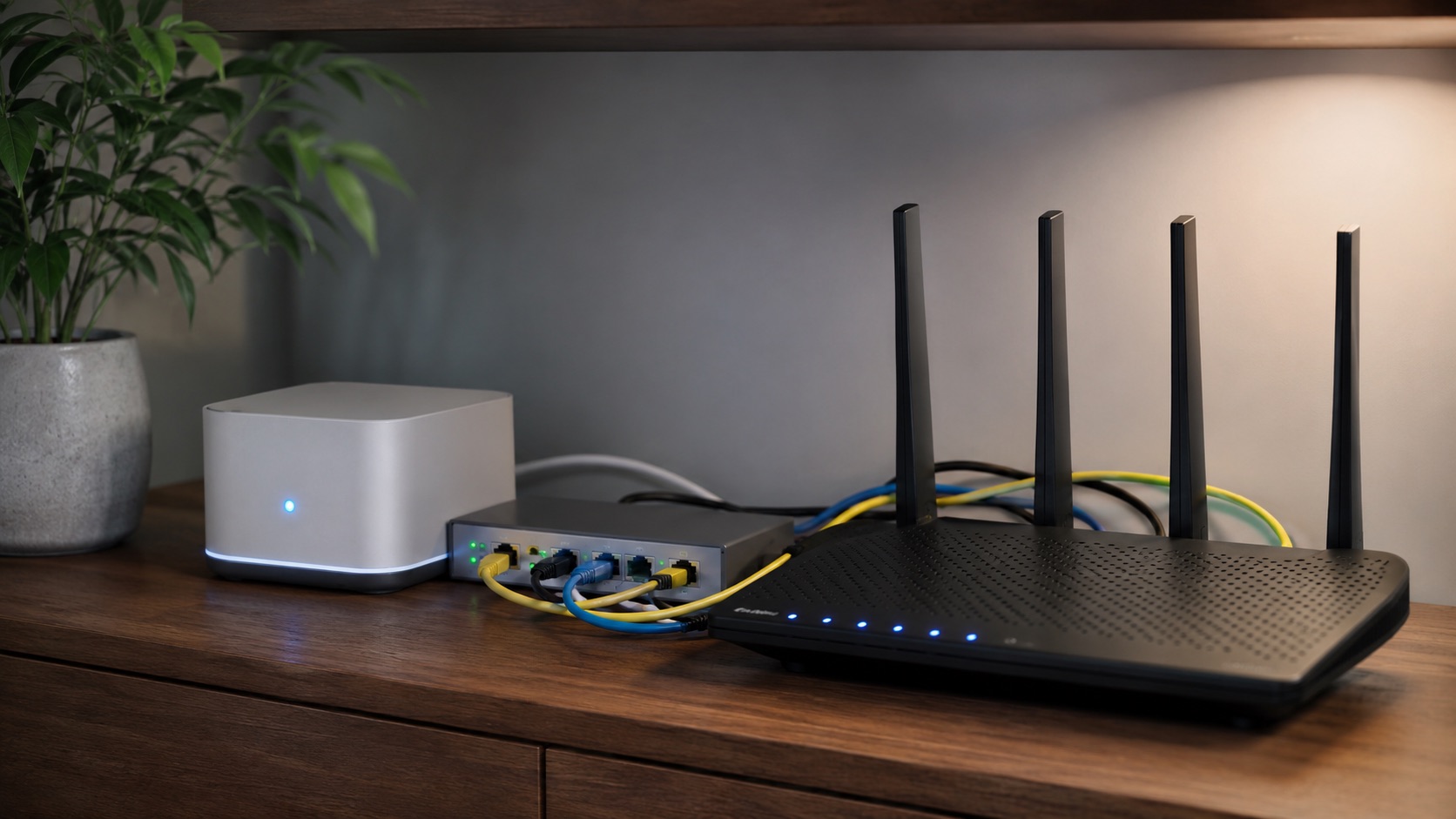
Since Shelly devices use WiFi, your network needs to handle the additional connections. For a typical home with 10–20 Shelly devices, most modern routers handle this fine. For larger installations, ensure your router supports 30+ simultaneous connections and consider a dedicated IoT VLAN for security.
Shelly vs. the Competition
Compared to Zigbee-based systems (like IKEA TRÅDFRI or Aqara), Shelly trades mesh networking for simpler setup and no hub requirement. Compared to cloud-dependent brands (Tuya, Meross), Shelly offers true local control and open APIs. Compared to premium brands (Lutron, Legrand), Shelly offers similar functionality at a fraction of the price — though without the polished consumer experience.
Frequently Asked Questions
Do Shelly devices work without internet?
Yes. Shelly devices operate entirely on your local network. They communicate via WiFi but do not require internet access for local control, schedules, or automations (when paired with a local platform like Home Assistant). The Shelly Cloud app requires internet for remote access, but local operation is always available.
Can I use Shelly without Home Assistant?
Absolutely. Shelly devices work standalone with the Shelly app, or integrate with any platform supporting HTTP/MQTT — including Node-RED, openHAB, Hubitat, and custom solutions. Home Assistant simply offers the most seamless native integration. You can also control them via voice with Alexa or Google Home.
Do Shelly relays need a neutral wire?
Most Shelly relays require a neutral wire for power. The Shelly 1L is the exception — it’s designed specifically for installations without a neutral wire (common in older European homes), though it has some limitations on minimum load. Check your wiring before purchasing.
How many Shelly devices can my WiFi handle?
A typical consumer router handles 20–30 WiFi devices without issues. For larger installations, a mesh WiFi system with dedicated IoT network is recommended. Shelly devices use minimal bandwidth (they’re not streaming video), so the limitation is usually concurrent connections rather than throughput.
Are Shelly devices safe for electrical installations?
Shelly devices are CE certified and designed to meet EU electrical safety standards. They include overcurrent and overtemperature protection. However, installation must comply with your local electrical codes. When in doubt, hire a licensed electrician. The devices themselves are robust — many users report years of continuous operation without failures.
Final Verdict
Shelly represents the ideal balance of affordability, openness, and reliability for DIY smart home builders. The local-first approach ensures your home keeps working regardless of cloud status, while open protocols mean you’re never locked into a single ecosystem. Whether you’re automating your first light switch or building out a whole-house system, Shelly deserves a place in your smart home toolkit.
For the best experience, pair Shelly devices with a dedicated smart home hub running Home Assistant, and you’ll have a powerful, privacy-respecting smart home that rivals systems costing ten times as much.