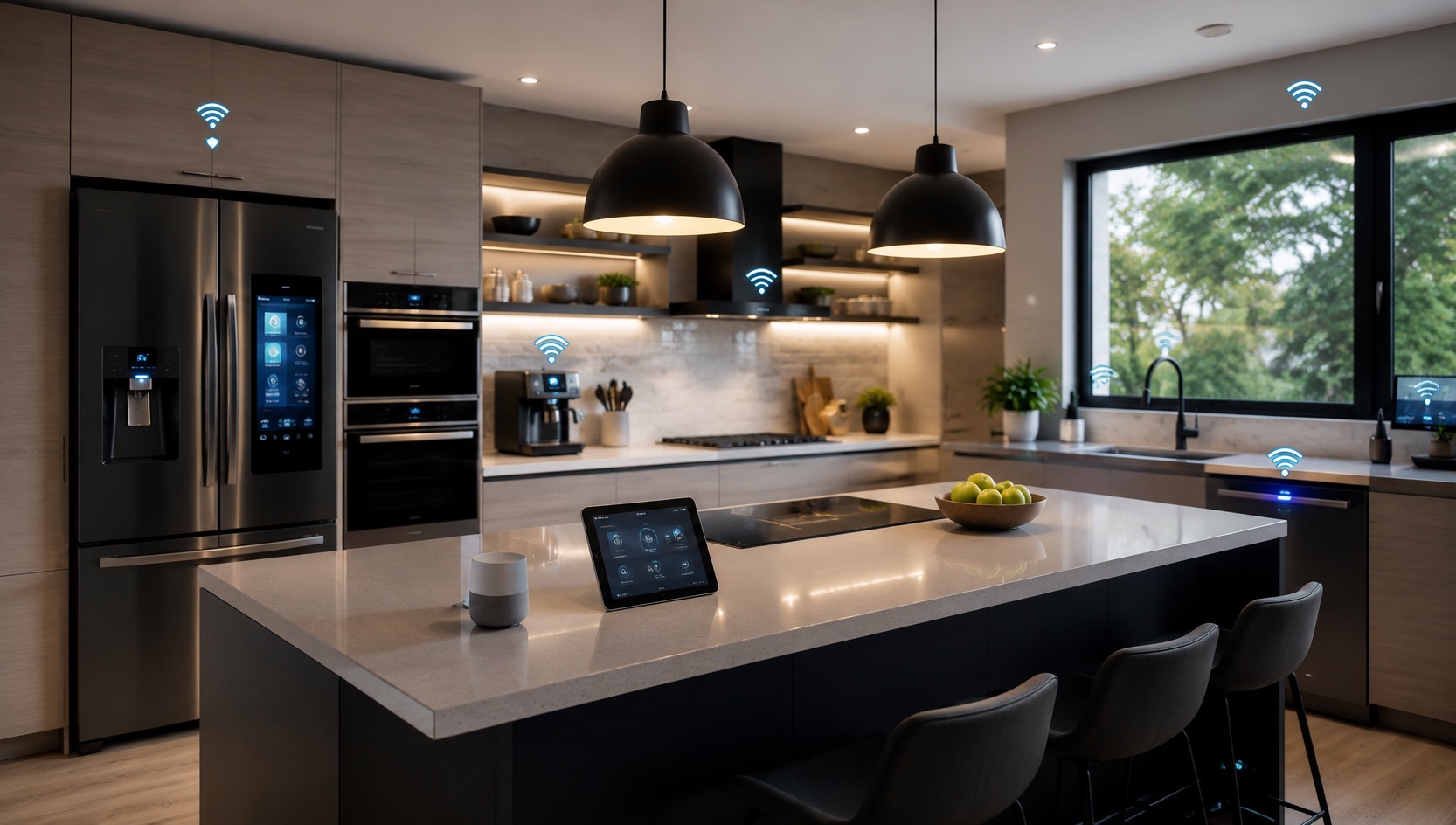
Best Smart Home for Sustainability (2026)
Why Smart Homes Are the Easiest Path to Sustainability
Most people want to reduce their environmental impact but don’t know where to start — or assume it requires expensive solar panels and a complete lifestyle overhaul. The reality is that the average home wastes 20-30% of its energy through pure inefficiency: heating empty rooms, powering devices that are “off” but still drawing power, running sprinklers during rainstorms, and lighting rooms nobody is in.
Smart home technology eliminates this waste automatically. You don’t need to change your habits or sacrifice comfort — you install devices that handle efficiency for you. A smart thermostat doesn’t ask you to be cold; it learns when you’re home and only heats occupied spaces. Smart plugs don’t ask you to unplug your TV every night; they cut phantom power at midnight automatically.
This guide covers the best smart home devices for sustainability in 2026, with real savings numbers and CO2 reduction estimates for each category.
Energy Monitoring: See the Waste Before You Fix It
You can’t reduce what you can’t measure. Whole-home energy monitoring shows you exactly where your electricity goes — and the results are usually shocking. Most households discover 2-3 major energy vampires they never knew about.
Best Pick: Emporia Vue Gen 3 ($90)
The Emporia Vue clamps onto your electrical panel and monitors every circuit in real time. Within a week, you’ll know exactly which circuits draw the most power, when your peak usage hours are, and which devices are costing you money while “off.” The app breaks down usage by circuit with daily, weekly, and monthly trends.
What You’ll Discover:
- Your old refrigerator uses 3x more than a modern one
- Your home office equipment draws 80W even when sleeping
- Your HVAC system runs 40% more than necessary
- Phantom loads across your home total $100-200/year
Runner-Up: Sense Energy Monitor ($300)
Sense uses machine learning to identify individual devices by their electrical signature. It automatically detects your dryer, dishwasher, EV charger, and other appliances without circuit-level clamps. More expensive but provides device-level detail without additional hardware.
For a deeper look at monitoring options, see our best energy monitoring devices guide.
Smart Thermostat: 15-26% HVAC Savings
Heating and cooling accounts for roughly 50% of your home’s energy use. A smart thermostat is the single highest-impact sustainability device you can install — cutting HVAC energy by 15-26% without any comfort sacrifice.
Best Pick: ecobee Smart Thermostat Premium ($250)
The ecobee uses room sensors to detect occupancy and temperature in multiple rooms. Instead of heating your entire home based on one hallway thermostat reading, it focuses energy on rooms you’re actually using. The built-in occupancy detection means it never heats an empty house — it adjusts within minutes of everyone leaving.
Savings breakdown:
- Occupancy-based scheduling: 10-15% reduction
- Remote sensors preventing over-conditioning: 5-8% reduction
- Eco+ optimization (grid-aware scheduling): 3-5% reduction
- Total: 15-26% less HVAC energy
Runner-Up: Google Nest Learning Thermostat ($250)
Nest learns your schedule automatically over the first two weeks and creates an optimized heating/cooling plan. The “Home/Away Assist” feature uses phone GPS and built-in motion detection to switch to energy-saving temperatures when you leave. Google claims average savings of 10-15% on heating and 15% on cooling.
For a detailed thermostat comparison, check our best smart thermostat guide.
Smart Plugs: Eliminating Vampire Loads ($100-200/Year Savings)
“Vampire loads” or “phantom power” is the electricity devices draw while technically off. Your TV, game console, cable box, computer monitor, coffee maker, and chargers all sip power 24/7. Individually it’s small (5-25W per device), but across 15-20 devices it adds up to $100-200 per year — and generates 500-1000 lbs of CO2 annually for nothing.
Best Pick: TP-Link Kasa Smart Plug with Energy Monitoring ($15)
The Kasa plug tracks exactly how much power each connected device draws, including standby power. Set a schedule to cut power at midnight and restore it at 6 AM. Your TV and entertainment center draw 0W from midnight to morning instead of their usual 30-50W combined phantom draw.
Strategic Placement (highest impact first):
- Entertainment center (TV + soundbar + game console + streaming stick): 40-80W phantom
- Home office (monitor + computer + peripherals): 20-50W phantom
- Kitchen counter (coffee maker + toaster + microwave display): 10-25W phantom
- Charger station (phone + laptop + tablet chargers with nothing plugged in): 5-15W phantom
The Math:
- 4 smart plugs eliminating ~150W of phantom loads
- 150W × 8 hours/night × 365 days = 438 kWh/year saved
- At $0.15/kWh = $66/year saved from nighttime alone
- Add daytime “away” cutoffs and savings reach $100-200/year
Smart Power Strip: Eve Energy Strip ($100)
For entertainment centers with multiple devices, Eve’s smart power strip controls each outlet independently. Cut power to the TV, soundbar, and game console while keeping the router always on.
Solar Panel Monitoring: Maximize Your Investment
If you already have solar panels (or are considering them), smart monitoring ensures you’re getting maximum production and using solar energy efficiently.
Best Pick: Enphase Enlighten ($0 with Enphase microinverters)
If your solar system uses Enphase microinverters, the Enlighten app shows real-time production per panel, lifetime energy generated, and alerts you immediately if any panel underperforms. A dirty or shaded panel that drops 30% in production gets flagged before it costs you months of lost generation.
For Non-Enphase Systems: Solar Analytics ($150 + $5/month)
Solar Analytics works with any inverter brand and provides performance benchmarking against expected output based on your location and weather. It tells you when your system underperforms what it should produce, catching issues early.
Smart Integration:
- Shift heavy loads (dishwasher, laundry, EV charging) to peak solar hours automatically
- Home battery systems (Tesla Powerwall, Enphase IQ) store excess for evening use
- Smart EV chargers pause during cloud cover and resume when solar returns
Water-Saving Sprinkler Controllers: 50% Less Water
Outdoor irrigation is one of the biggest water wasters in residential homes. Traditional timer-based sprinklers run on a fixed schedule regardless of whether it rained yesterday, whether it’s going to rain tomorrow, or whether the soil is already saturated.
Best Pick: Rachio 3 Smart Sprinkler Controller ($230 for 8-zone)
Rachio connects to local weather data and adjusts watering automatically. If rain is forecast for tomorrow, tonight’s watering skips. If it’s been unusually hot, it adds a few extra minutes. The “Weather Intelligence Plus” feature considers rain, wind, temperature, humidity, and solar radiation before deciding whether to water.
Real savings:
- Average household using Rachio reports 50% water reduction
- That’s approximately 25,000-35,000 gallons per year for a typical lawn
- At average water rates: $200-400/year saved
- Environmental impact: conserving a critical resource in drought-prone areas
Runner-Up: RainMachine Touch HD ($200)
RainMachine runs its weather algorithms locally (no cloud dependency) and offers soil-type optimization. It adjusts watering duration based on your specific soil’s absorption rate, preventing runoff waste.
Bonus: Smart Hose Timer — Orbit B-hyve ($50)
For smaller gardens or homes without in-ground sprinklers, the B-hyve smart hose timer brings weather-aware scheduling to any hose-connected sprinkler for just $50. Skip watering when rain is coming, adjust for seasonal needs automatically.
LED Smart Bulbs: 90% Less Energy Than Incandescent
If you still have incandescent or even CFL bulbs anywhere in your home, smart LED bulbs offer a double benefit: efficiency and automation. A 9W LED smart bulb produces the same light as a 60W incandescent — 90% less energy — and adds automation that ensures lights aren’t on when nobody’s in the room.
Best Pick: Philips Hue White ($12/bulb)
Hue bulbs last 25,000 hours (22+ years at 3 hours/day), use 9W instead of 60W, and integrate with occupancy automation. Set them to turn off when a room is unoccupied for 5 minutes. The combination of LED efficiency plus occupancy-based automation saves 95%+ compared to an incandescent left on all day.
Budget Option: IKEA TRÅDFRI ($8/bulb)
IKEA’s Zigbee bulbs are the cheapest smart LEDs available. Pair them with motion sensors for automatic on/off in hallways, closets, and bathrooms — rooms where lights frequently get left on unnecessarily.
The Impact:
- Replacing 20 incandescent bulbs with smart LEDs: saves ~1,000 kWh/year
- Adding occupancy automation: saves an additional 200-400 kWh/year
- Total CO2 reduction: approximately 800-1,000 lbs/year
EV Smart Charging: Off-Peak Only
Electric vehicles are already greener than gas cars, but charging them smartly makes them even greener (and cheaper). Off-peak electricity is often generated by cleaner sources (less coal peaking plants) and costs significantly less.
Best Pick: Emporia EV Charger Level 2 ($450)
Emporia’s charger integrates with their energy monitoring system and supports scheduled charging. Set it to only charge between 11 PM and 6 AM when electricity is cheapest and the grid is cleanest. It also supports solar-only charging — the car only charges when your panels are producing excess power.
ChargePoint Home Flex ($600)
ChargePoint offers utility rate integration, automatically identifying the cheapest hours in your rate plan and scheduling charging accordingly. With time-of-use rates, off-peak charging can be 50-70% cheaper than peak rates.
Savings:
- Average EV uses ~4,000 kWh/year for charging
- Off-peak rate ($0.08/kWh) vs. peak rate ($0.25/kWh)
- Annual savings: $680/year by shifting to off-peak
- CO2 reduction: 20-40% less carbon per kWh during off-peak hours
Occupancy-Based Everything: The Zero-Waste Home
The ultimate sustainable smart home only uses energy in occupied spaces. Every light, fan, heater, and device responds to whether someone is actually present.
The Setup:
- Motion sensors in every room — Aqara P2 ($20 each) or Hue Motion ($40 each)
- Smart lights that turn off after 5 minutes of no motion
- Smart thermostat with room sensors that only conditions occupied rooms
- Smart plugs that cut devices when rooms are empty
- Smart fans that stop when nobody is in the room
The Result: A family of four typically occupies 2-3 rooms at any given time but conditions and lights their entire 7-8 room home. Occupancy-based automation means only 30-40% of your home uses energy at any moment instead of 100%. That’s a 50-60% reduction in lighting energy and 20-30% reduction in HVAC energy, automatically, without any conscious effort.
Best Hub for Occupancy Automation: Home Assistant (free + $50-130 hardware)
Home Assistant handles complex occupancy logic: if no motion in the living room for 10 minutes AND the bedroom sensor detects presence, turn off living room lights and reduce heating. This multi-room awareness is more accurate than single-room motion sensors alone.
For ecosystem guidance, visit our best smart home ecosystem guide.
Comparison Table: Sustainability Devices and Savings
| Category | Device | Price | Annual Savings | CO2 Reduction |
|---|---|---|---|---|
| Energy monitoring | Emporia Vue Gen 3 | $90 | $50-150 (awareness) | 200-600 lbs/year |
| Smart thermostat | ecobee Premium | $250 | $150-300 | 1,000-2,000 lbs/year |
| Vampire load elimination | TP-Link Kasa plugs (×4) | $60 | $100-200 | 500-1,000 lbs/year |
| Water conservation | Rachio 3 | $230 | $200-400 | Water savings (25K+ gal) |
| LED smart lighting | Philips Hue (×20) | $240 | $80-150 | 800-1,000 lbs/year |
| EV off-peak charging | Emporia EV Charger | $450 | $680 | 800-1,600 lbs/year |
| Occupancy automation | Motion sensors (×8) | $160 | $100-200 | 500-1,000 lbs/year |
| Solar monitoring | Enphase Enlighten | $0 | Prevents losses | Maximizes clean energy |
Total potential annual savings: $1,360-2,080 Total CO2 reduction: 3,800-7,200 lbs/year (1.7-3.3 metric tons)
Getting Started: The Sustainability Priority List
If you’re building a green smart home from scratch, invest in this order based on environmental impact per dollar:
- Smart thermostat ($250) — highest single-device impact
- Smart plugs on phantom loads ($60) — immediate savings, zero effort
- Energy monitor ($90) — shows you where to focus next
- Smart sprinkler controller ($230) — massive water savings if you have a lawn
- LED smart bulbs + motion sensors ($300) — replaces inefficient lighting entirely
- EV smart charger ($450) — if you have an EV, enormous cost savings
Total starter cost for positions 1-5: $930 with projected savings of $680-1,250/year — paying for itself in under 12 months.
The Bigger Picture: Smart Home as Climate Action
Individual actions feel small against a global problem, but residential energy use accounts for roughly 20% of US carbon emissions. If every home implemented even basic smart automation (thermostat + plugs + occupancy), national residential emissions would drop by an estimated 8-12%. Smart homes aren’t just about convenience or saving money — they’re genuinely meaningful climate action at scale.
The best part: sustainability and savings are perfectly aligned. Every device that reduces your carbon footprint also reduces your bills. There’s no sacrifice required — just smarter resource use.
Related Guides
Frequently Asked Questions
How quickly do sustainability smart home devices pay for themselves?
Most devices pay for themselves within 6-18 months. A smart thermostat ($250) saving $150-300/year pays back in under a year. Smart plugs ($60 for four) saving $100-200/year pay back in 3-6 months. The Rachio sprinkler controller ($230) saving $200-400/year in water pays back within one season. Energy monitors don’t save money directly but typically identify $200+ in savings opportunities within the first month.
Do smart home devices themselves use significant energy?
Smart home devices use minimal energy — typically 1-3W each for sensors, plugs, and hubs. A full system of 30 smart devices uses roughly 50-90W total (less than a single incandescent bulb). The energy they save dwarfs what they consume by a factor of 50-100x. The net impact is massively positive.
Can I track my actual CO2 reduction over time?
Yes. Apps like Emporia and ecobee show historical energy usage compared to baseline. Many utility companies now provide year-over-year comparisons. Home Assistant can calculate CO2 equivalent based on your local grid’s energy mix. Some utilities even provide carbon intensity data in real-time, letting you shift usage to cleaner hours automatically.
What’s more impactful: solar panels or smart home automation?
They’re complementary, not competing. Solar panels generate clean energy; smart automation reduces how much energy you need in the first place. A home that installs solar but doesn’t optimize consumption still wastes 20-30% of its generated power on phantom loads and inefficiency. Start with efficiency (smart devices are cheaper), then add generation (solar). The combination reduces your grid dependence by 80-95%.
Do I need a specific ecosystem for a sustainable smart home?
No single ecosystem is required, but Home Assistant offers the most flexibility for complex sustainability automations (like solar-aware EV charging or occupancy-based multi-zone control). For simpler setups, Amazon Alexa and Google Home both support basic scheduling, occupancy routines, and thermostat integration. The devices matter more than the platform — choose based on what you want to automate, not brand loyalty.