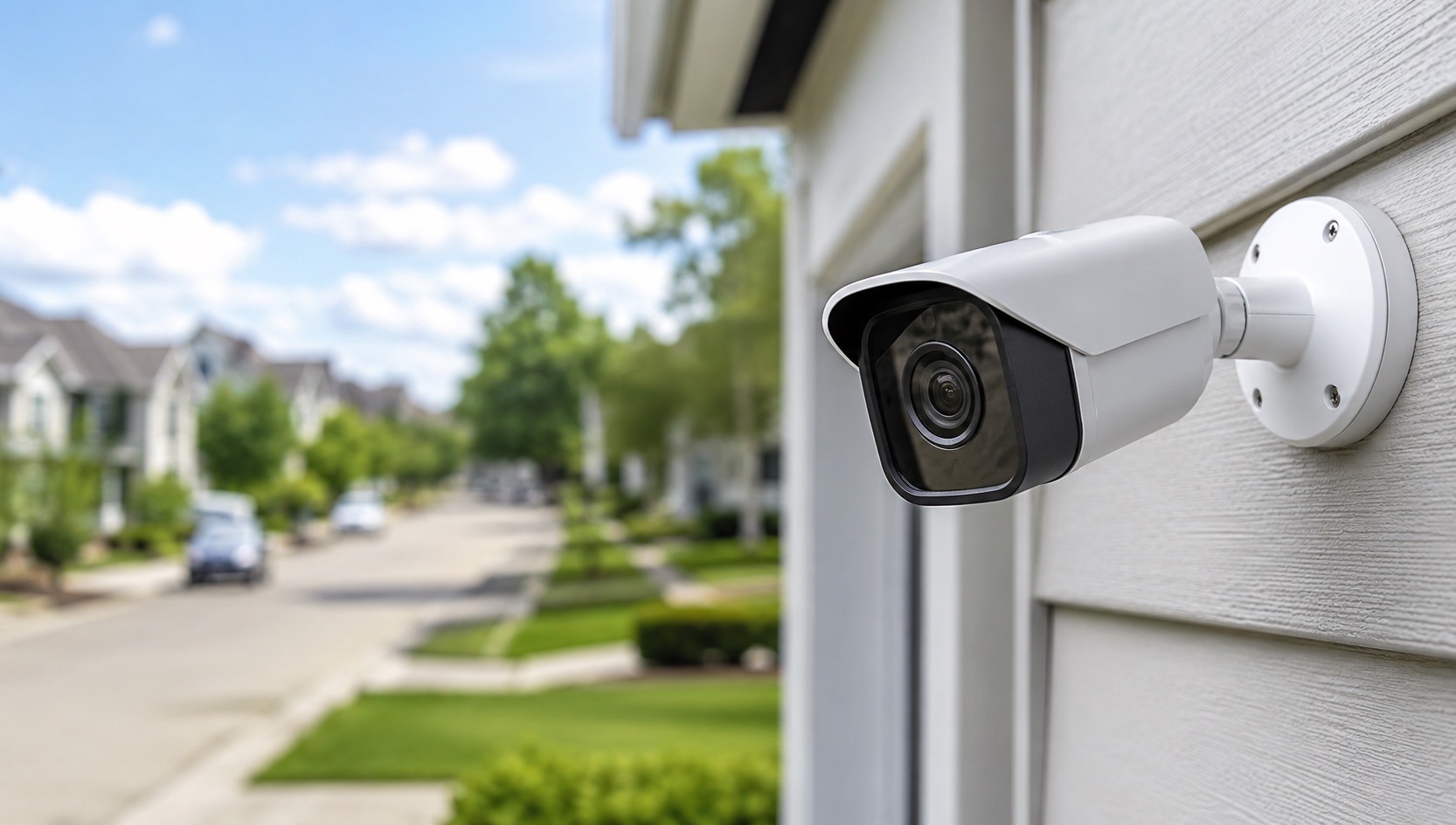
Security Camera Placement: Where to Put Cameras (2026)
Security Camera Placement: Where to Put Cameras (2026)
I’ve installed security cameras on three different properties over the past four years: my own home, my parents’ place, and a friend’s rural property. Every time, I’ve made mistakes and learned from them. The difference between useful footage and useless recordings comes down to where you mount the camera, not which camera you buy.
Here’s my complete placement guide based on real installations.
The Golden Rule: Cover Entry Points First
Burglars enter through doors. This sounds obvious, but I see people aiming cameras at their garden, their street, or random walls while leaving their actual entry points uncovered. A study by the University of North Carolina found that 34% of burglars enter through the front door and 22% through a back window or door. Start there.
Your priority order should be:
- Front door
- Back door
- Driveway/approach
- Side gate or alley
- Garage
- Garden/perimeter
Don’t skip to step 6 before you’ve nailed steps 1-3.
Location 1: Front Door (Priority: Critical)
This is your single most important camera. If you can only afford one camera, put it here. Here’s why: if someone approaches your home (delivery, visitor, or intruder), this camera captures their face at close range. That’s the footage police actually need.
Mount height: 2.5 to 3 meters (8-10 feet). This is high enough that someone can’t easily reach it, but low enough to capture facial features clearly. I’ve seen cameras mounted at 4+ meters and the footage shows the top of everyone’s head. Useless for identification.
Angle: Tilt 15-20 degrees downward. You want to capture the face of someone standing at your door, not the sky above their head. Test this by having someone stand at the door and checking the live feed.
Camera type: A doorbell camera (like the Reolink Video Doorbell) gives you the best face angle because it’s at eye level. But supplement it with a higher-mounted bullet or dome camera that captures the wider approach. I run both on my front door.
Watch for: Backlight from the sun. If your front door faces west, afternoon sun will blow out the image. Choose a camera with good HDR/WDR, or add a small overhang to shade the lens.
Location 2: Driveway (Priority: High)
Your driveway camera serves two purposes: capturing license plates of vehicles and recording the approach path to your home. Someone casing your house will often drive by or park nearby first.
Mount height: 2.5 to 3 meters, aimed along the length of the driveway. You want to see vehicles head-on or at a slight angle, not from directly above.
Angle: 15-25 degrees down. The camera should cover the full driveway length, from the street to where cars park.
Camera type: A bullet camera with a narrower field of view (around 80-90 degrees) works best here. Wide-angle lenses distort license plates at distance. I use a Reolink RLC-810A with its 87-degree lens pointed down my 12-meter driveway and I can read plates clearly.
Watch for: Headlights at night. Cars pulling in will blast your camera with light. Good IR cut filters and WDR help enormously. Position the camera slightly to the side rather than dead center to reduce direct headlight hits.
Location 3: Back Door (Priority: High)
The second most common entry point. Back doors are attractive to burglars because they’re typically hidden from street view and neighbors. Your back camera needs to cover the door itself and the immediate approach (patio, garden path).
Mount height: 2.5 to 3 meters on the rear wall, looking back toward the garden.
Angle: 20-30 degrees down. You want to see both the door area and anyone approaching across the garden.
Camera type: A wider angle camera works well here (100-110 degrees) since you’re often covering a broader area. A turret or dome camera mounts flush and is less obtrusive.
Watch for: IR reflection. If you mount the camera under a soffit or overhang, the IR LEDs can bounce off the surface above and create a white haze on night footage. Point it slightly away from overhanging surfaces, or use a camera with adjustable IR power.
Location 4: Side Gate (Priority: Medium-High)
This is the most forgotten camera location. Everyone covers front and back but ignores the side passage between the house and the fence. Burglars love side gates because they provide hidden access to the rear of the property.
Mount height: 2-2.5 meters. Side passages are narrow, so you can mount lower.
Angle: Point straight down the alley/passage. A narrow field of view works perfectly here.
Camera type: A bullet camera aimed down the passage length. If the passage is very narrow (under 1 meter), even a basic 1080p camera will capture enough detail.
Watch for: Limited lighting. Side passages are often dark. Make sure your camera has good IR range (20+ meters) or add a motion-activated light nearby. I have a simple solar light that fires when someone enters the side gate. It lights up the scene and acts as a deterrent.
Location 5: Garage (Priority: Medium)
If your garage is detached or accessible from outside, you want a camera covering the garage door and interior. Garages contain bikes, tools, and often provide internal access to the house.
Mount height: 2.5-3 meters on the outside covering the garage door. For interior coverage, 2.5 meters in a corner looking across the full space.
Angle: 15-20 degrees down for exterior. Interior cameras can point more level since you want to see faces of anyone entering.
Camera type: Exterior: bullet camera covering the door. Interior: a dome or turret with wide angle (120+ degrees) to cover the full space. Interior cameras don’t need weatherproofing but should have good IR for when the lights are off.
Location 6: Garden/Perimeter (Priority: Lower)
Once your entry points are covered, you can add perimeter cameras. These catch people before they reach your house and give you earlier warning. But they’re supplementary, not essential.
Mount height: 3+ meters if possible, to cover more ground.
Angle: 25-30 degrees down for maximum coverage area.
Camera type: PTZ cameras work great here if you have a large property. Otherwise, a wide-angle bullet covering the fence line or garden boundary.
Camera Placement Comparison Table
| Location | Priority | Camera Type | Mount Height | Angle Down | Why This Matters |
|---|---|---|---|---|---|
| Front Door | Critical | Doorbell + bullet | 2.5-3m (8-10ft) | 15-20° | Captures faces, most used entry |
| Driveway | High | Bullet (narrow FOV) | 2.5-3m (8-10ft) | 15-25° | License plates, approach path |
| Back Door | High | Dome/turret (wide) | 2.5-3m (8-10ft) | 20-30° | Second entry point, hidden from street |
| Side Gate | Medium-High | Bullet (narrow) | 2-2.5m (7-8ft) | 15-20° | Forgotten access to rear |
| Garage | Medium | Bullet + interior dome | 2.5-3m (8-10ft) | 15-20° | Valuable items, house access |
| Garden/Perimeter | Lower | Wide-angle or PTZ | 3m+ (10ft+) | 25-30° | Early warning, not identification |
The 5 Most Common Placement Mistakes
Mistake 1: Mounting Too High
I see this constantly. People mount cameras at 5 meters thinking it prevents tampering. But at that height, you get the tops of heads, not faces. Police need facial features to identify suspects. Keep it at 2.5-3 meters. Yes, someone with a ladder could reach it. But they’d be on camera the entire time they try.
Mistake 2: Pointing at the Sky
A camera angled too far up wastes half its sensor on sky. That sky is pure white during the day, causing the camera’s auto-exposure to darken everything else. Tilt down until the horizon is in the top quarter of the frame, maximum.
Mistake 3: Ignoring Backlight
West-facing cameras get destroyed by afternoon sun. East-facing cameras struggle in the morning. Think about where the sun will be during the golden hour (the time most break-ins happen: late afternoon/early evening). Use WDR cameras and add shade structures if needed.
Mistake 4: Overlapping Coverage Instead of Filling Gaps
Two cameras covering the same spot doesn’t help when there’s a blind alley with zero coverage. Map your property on paper, draw camera cones, and look for gaps. Better to have 6 cameras covering 6 areas than 3 cameras all pointed at the front garden.
Mistake 5: Forgetting About Night Performance
Your camera footage is probably most valuable at night (that’s when most break-ins happen). But people test cameras during the day and call it done. Always check your night footage quality. Does the IR illuminate far enough? Are there hot spots? Can you still identify a face at the door?
My 6-Camera Setup (What I Actually Run)
Here’s my current setup on my own property:
- Reolink Video Doorbell at the front door (face-level, covers porch)
- Reolink RLC-810A above the front door (wider view of driveway + approach)
- Reolink RLC-810A on the back wall (covers garden and back door)
- Reolink RLC-520A pointed down the side passage
- Reolink RLC-810A covering the garage door exterior
- Reolink RLC-520A inside the garage (wide corner view)
Total cost for cameras: around €400. All running PoE back to a switch and recording 24/7 on a Reolink NVR with 2TB storage. I keep 14 days of continuous footage. Motion events are flagged and kept longer.
PoE vs WiFi: My Strong Opinion
Run PoE (Power over Ethernet) if you possibly can. WiFi cameras drop connection, have latency, and depend on your router’s range. PoE cameras get power and data from one cable, they’re reliable, and they don’t eat your WiFi bandwidth. I’ve had zero dropouts with PoE in three years. My parents’ WiFi cameras disconnect at least once a month.
The upfront cost of running ethernet cables is worth it. For a new build or renovation, there’s zero excuse not to run cables. For existing homes, external cable runs with conduit are perfectly doable as a weekend project.
Legal Considerations (Europe/Belgium)
Quick note since I’m in Belgium: you cannot point cameras at public roads or neighbors’ property. You need signage indicating CCTV is in operation. Keep cameras aimed at your own property only. Check your local regulations, they vary by country.
FAQ
How many cameras do I need for a typical house? Four to six covers most homes properly. Two at the front (doorbell + overview), one at the back, one at the side passage, and optionally one for the garage. A larger property or one with multiple access points might need 8+. Start with the 4 critical positions and add from there.
What resolution do I need for facial identification? At minimum 2K (4MP). I run 4K (8MP) on my front door and driveway cameras because those are where identification matters most. Side cameras can get away with 2K or even 1080p if they’re covering narrow passages where people are close to the lens.
Should I hide cameras or make them visible? Visible. Research consistently shows that visible cameras deter burglars. A dome camera they can see makes them think twice. Hidden cameras are useful as backup (catching someone who disables the visible one), but your primary cameras should be obvious. I use white cameras on dark walls so they stand out.
Do I need cameras inside the house too? Only if you want them. Interior cameras are useful for monitoring pets, checking on elderly family members, or as a last line of evidence if someone gets inside. I don’t run indoor cameras because I value privacy inside my own home, but that’s a personal choice. If you do use them, point them at entry hallways, not bedrooms or bathrooms.
How much storage do I need for 24/7 recording? Roughly 1TB per camera per month at 4K continuous recording, or about 250GB per camera at 2K. With 6 cameras at 4K, a 4TB drive gives you about 10 days of footage. I use 2TB with motion-only recording on less critical cameras and get 14 days easily. Most incidents are reported within a week, so 14 days is plenty.
Related Guides
- Best PoE Switches for Home Security Cameras for the networking side
- Reolink Cameras Complete Guide for my full camera reviews
- Smart Home Security and Privacy Guide for the broader security picture
- Wired vs Wireless Smart Home for why I prefer cables
- Best Smart Home Hub 2026 for integrating cameras with your system
Bottom Line
Camera placement matters more than camera specs. A €50 camera in the right spot beats a €300 camera pointed at the sky. Cover your entry points first, mount at 2.5-3 meters, angle 15-30 degrees down, and always check night performance. Then add perimeter coverage with whatever budget remains.