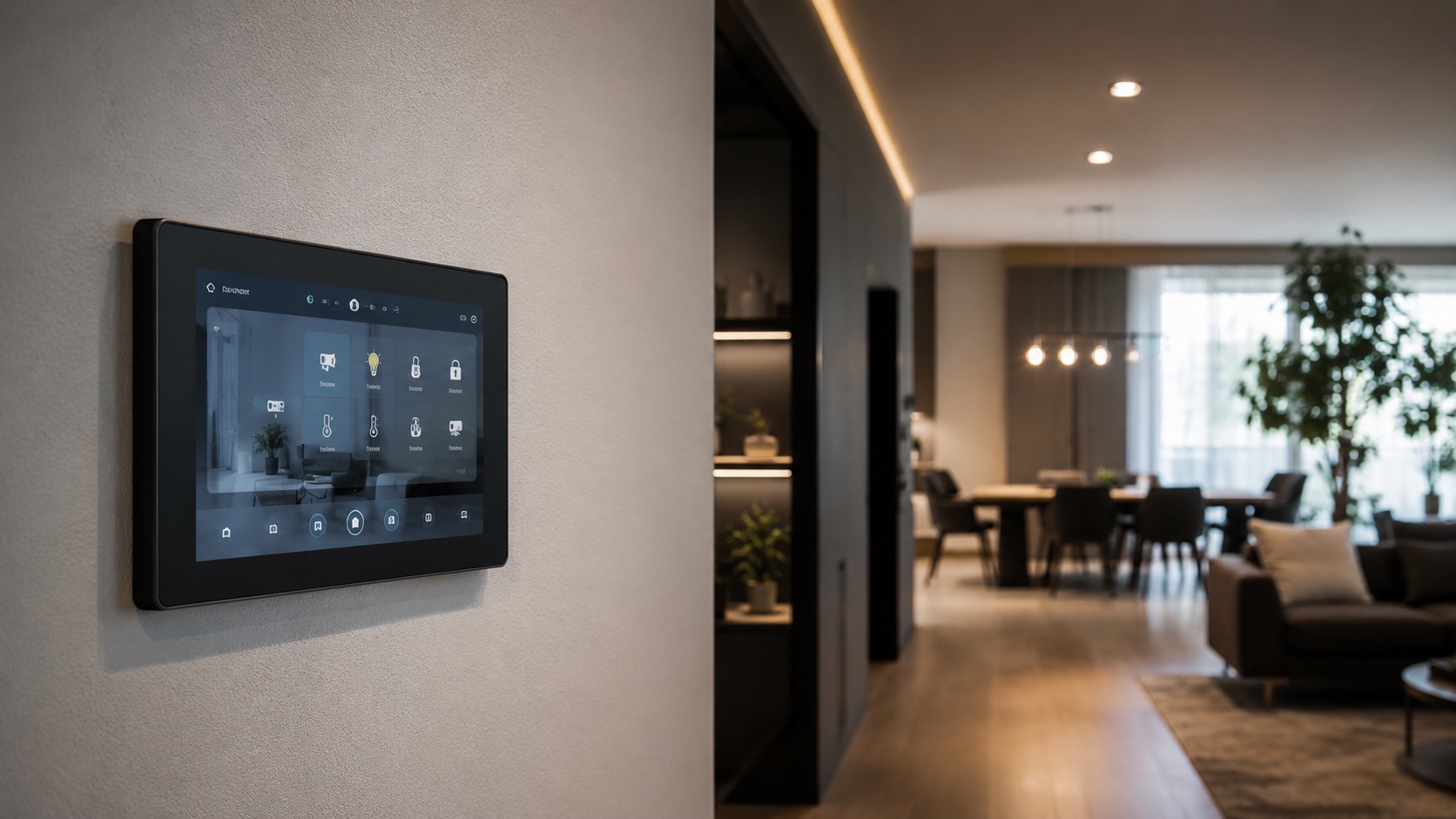
Best Smart Home for Minimalists (2026)
The Minimalist Smart Home Philosophy
Most smart home guides celebrate more — more gadgets, more screens, more voice assistants in every room. The minimalist approach flips this entirely. The best smart home is one you never see, never think about, and never have to troubleshoot because you only have three apps fighting for attention instead of fifteen.
A minimalist smart home follows three principles:
- Invisible over visible — hidden devices beat countertop clutter every time
- Fewer but better — one excellent hub replaces five mediocre apps
- Automation over interaction — the best interface is no interface at all
This guide covers the specific devices, strategies, and automations that create a clean, calm, functional smart home without visual noise or unnecessary complexity. Every recommendation earns its place by either disappearing completely or simplifying something that was previously manual.
Hidden Devices: Technology That Disappears
The most important principle for a minimalist smart home is invisibility. If guests walk into your home and comment on all your gadgets, you’ve failed. The goal is a home that feels calm and uncluttered while quietly working for you behind the scenes.
The Level Lock: Truly Invisible Smart Lock
The Level Lock is the gold standard for minimalist smart home design. Unlike August or Schlage locks that bolt a visible smart module onto your door, the Level Lock hides entirely inside the existing deadbolt. From the outside, your door looks completely unchanged — same keyhole, same thumbturn. But it has auto-lock, auto-unlock via phone proximity, and guest access built in.
This is the difference between “smart home” and “minimalist smart home.” Both approaches give you keyless entry. Only one does it without changing how your door looks.
In-Wall Relays vs. Smart Plugs
Smart plugs are the enemy of minimalism. They’re visible, they block adjacent outlets, and they add bulk behind furniture. The minimalist alternative: Shelly in-wall relays.
A Shelly 1PM or Shelly Plus 1 fits behind your existing light switch or outlet inside the wall box. Once installed, your switches look completely normal but gain smart control, scheduling, and energy monitoring. No visible devices. No extra apps beyond your hub. Just your existing switches with invisible intelligence added.
The same principle applies to smart plugs for lamps and appliances. Instead of a bulky smart plug visible behind your nightstand, wire a Shelly relay behind the outlet. The outlet looks stock. The lamp plugs in normally. But you have full smart control via automation.
Recessed and Hidden Sensors
Traditional smart sensors stick to walls and doors with visible white boxes. Minimalist alternatives exist:
- Aqara Door/Window Sensor P2 — at just 30.8mm × 15.5mm, these nearly disappear on white door frames
- Thread motion sensors — mount on ceiling corners where they’re invisible from eye level
- Aqara FP2 presence sensor — one sensor replaces multiple motion sensors, reducing total device count
- Recessed door sensors — drill into the door frame for completely invisible open/close detection
The Aqara FP2 is particularly powerful for minimalists because one device covers an entire room with zone-based presence detection. Instead of three motion sensors on walls, you have one ceiling-mounted device that handles everything.
Fewer But Better: One Hub to Rule Them All
The average smart home user has 4-7 apps on their phone for different device brands. This is the opposite of minimalism. Every additional app is cognitive overhead — another login, another interface to learn, another notification source.
The Single Hub Strategy
Choose one hub and only buy devices that work with it. The best smart home ecosystem for 2026 depends on your preferences, but for minimalists specifically:
Home Assistant (advanced minimalist): Maximum control with minimum ongoing interaction. Set it up once, automate everything, then forget it exists. The upfront investment in configuration pays off in zero daily interaction afterward.
Apple Home (aesthetic minimalist): Clean interface, minimal app design, works quietly in the background. HomeKit’s strict certification means fewer compatible devices — which is actually a feature for minimalists. Less choice means less decision fatigue.
Google Home (pragmatic minimalist): Good voice control means fewer physical interactions with devices. “Hey Google, good night” replaces manually adjusting six different things.
The key: pick one and commit. Don’t mix ecosystems. Every additional app or hub you add subtracts from the minimalist goal.
Reducing Notification Noise
A minimalist smart home should be silent unless something actually matters. Configure your hub to suppress routine notifications and only alert for genuine events:
- Disable: “Front door locked,” “Living room light turned off,” routine confirmations
- Keep: Water leak detected, smoke alarm triggered, unexpected motion while away
- Schedule: Daily energy summary at one specific time, not real-time updates
Automation Over Gadgets: The Best Interface Is No Interface
Minimalists should automate aggressively so they never interact with their smart home manually. Every automation you build is one less thing you have to think about, tap, or ask for.
Motion-Activated Everything
Replace manual switches with motion-based lighting throughout your home. The best smart light switches with occupancy sensing eliminate the need to ever touch a light switch:
- Hallways and stairs: Lights follow you automatically, turn off 2 minutes after you leave
- Bathrooms: Motion triggers dim night light after 10pm, full brightness during the day
- Closets and pantries: On when door opens, off when door closes
- Garage: On when motion detected, off after 5 minutes of stillness
You’ll stop thinking about lighting entirely. It just happens.
Time-Based Climate
Instead of manually adjusting thermostats, create a schedule once and forget it:
- 6:30 AM: Heat to 20°C (wake comfort)
- 8:30 AM: Setback to 17°C (everyone’s gone)
- 4:30 PM: Pre-heat to 20°C (arrive home to comfort)
- 10:30 PM: Cool to 18°C (sleep temperature)
Add presence detection as an override: if nobody’s home during scheduled comfort hours, save energy automatically. No daily decisions required.
Arrival and Departure Routines
Two automations replace dozens of manual actions:
Leave home:
- Lock all doors
- Arm security
- Set thermostat to away
- Turn off all lights
- Close garage door if open
Arrive home:
- Disarm security
- Unlock front door
- Turn on entry light
- Resume climate schedule
- Start background music (optional)
These trigger automatically based on phone GPS. You never press a button, open an app, or speak a command. Your home just responds to your presence.
Invisible Tech: The Minimalist Device Stack
Here’s the complete technology layer that powers a minimalist smart home without adding visible clutter:
Thread Sensors
Thread is the minimalist’s protocol. Thread sensors are tiny, battery-powered, require no hub (they mesh with each other), and work locally without cloud dependencies. Fewer points of failure, less complexity.
In-Wall Shelly Relays
Every dumb switch in your home becomes smart without changing its appearance. Shelly Plus 1 or 2PM relays fit behind standard switches and add WiFi control, scheduling, and power monitoring. Combined with motion sensors, you eliminate the need for smart switches entirely — your existing switches remain, augmented invisibly.
Recessed Ceiling Speakers
Visible smart speakers like Echo Dots and HomePod Minis add countertop clutter. The minimalist alternative: in-ceiling speakers connected to a hidden amplifier running AirPlay, Chromecast, or a Sonos Amp. Music fills the room from nowhere visible. The amplifier hides in a closet or AV cabinet.
Hidden Hub
Your smart home hub (Home Assistant, Homey, or SmartThings) hides in a closet, utility room, or behind media furniture. There’s no reason for it to be visible. Run cables once during setup, then close the door and forget it exists.
Minimalist Smart Home Comparison Table
| Category | Minimalist Pick | Price | Why Minimalist | Visible? |
|---|---|---|---|---|
| Smart Lock | Level Lock+ | $329 | Hides inside existing deadbolt | No — completely invisible |
| Light Control | Shelly Plus 1PM (in-wall) | $16 | Behind existing switch, no visual change | No — inside wall box |
| Motion Sensor | Aqara FP2 (ceiling mount) | $75 | One sensor replaces 3, mounts on ceiling | Barely — ceiling mounted |
| Door Sensor | Aqara P2 (recessed) | $18 | Tiny profile, disappears on white frames | Minimal — 30mm device |
| Speaker | Sonos Amp + in-ceiling speakers | $699+ | Music from invisible source | No — speakers are flush |
| Hub | Home Assistant Yellow | $149 | Hides in closet, local control | No — placed out of sight |
| Thermostat | Ecobee Premium | $249 | Clean glass design, replaces existing stat | Minimal — flush to wall |
| Camera (indoor) | Eve Indoor Cam | $99 | Smallest form factor, no cloud | Minimal — very compact |
| Climate Sensor | Eve Room (Thread) | $99 | Small, clean design, no cloud | Minimal — small device |
| Blinds | IKEA FYRTUR | $129+ | Motor hides in roller, clean look | No — hidden in roller tube |
Clean Aesthetic: Design Decisions That Matter
Beyond hiding individual devices, minimalists should consider the overall aesthetic:
Color Coordination
Choose devices in white or match your wall color. The Aqara sensors come in white, Eve devices use clean white/silver, and Shelly relays are invisible regardless. Avoid mixing black and white devices on the same wall — it draws the eye to the technology.
Wire Management
Run cables inside walls wherever possible. For cameras or sensors that need power, hire an electrician once to run in-wall wiring rather than using visible cable clips. The one-time cost pays off in permanent visual cleanliness.
Reduce Device Count
The most minimalist device is one you don’t buy. Before purchasing, ask:
- Can automation eliminate this need entirely?
- Can one device replace multiple?
- Will this be visible in daily life?
- Does this add another app or account?
If the answer to questions 3 or 4 is yes, look for an invisible alternative or skip it entirely.
What to Avoid
Some popular smart home categories directly conflict with minimalism:
- Smart displays — large screens on countertops screaming for attention
- LED strip lights — visible tech that draws the eye
- Smart plugs — bulky, visible, outlet-blocking
- Voice assistants with screens — more clutter, more notifications, more distraction
- Separate remotes and buttons — Flic buttons and similar add physical clutter
Each of these can be replaced with invisible alternatives or eliminated through automation.
Related Guides
- Best Smart Home for Multi-Generational Homes (2026)
- Best Smart Home Setup for Multi-Story Houses (2026)
FAQ
How much does a minimalist smart home cost compared to a regular one?
Surprisingly, a minimalist setup often costs less. You’re buying fewer devices overall — just better ones. A complete minimalist smart home (hub, 6 Shelly relays, Level Lock, 3 sensors, thermostat) runs $800-1200 versus $1500+ for a typical gadget-heavy setup with smart plugs, multiple speakers, displays, and separate device hubs.
Can I build a minimalist smart home as a renter?
Partially. Shelly relays require basic electrical work (reversible when you leave), and the Level Lock installs without modifying the door. Battery-powered Thread sensors use adhesive mounts. The main challenge is in-ceiling speakers and recessed sensors that require permanent installation. Focus on the reversible elements: lock, sensors, and hub.
Do I need voice assistants for a minimalist smart home?
No — and arguably you shouldn’t have them. Voice assistants require visible speakers, create notification noise, and encourage interaction rather than automation. A truly minimalist smart home runs on sensors and schedules, not voice commands. If you do want voice, use your phone or a HomePod Mini hidden in a cabinet.
How do I convince my partner that fewer devices is better?
Focus on the outcome: fewer things to charge, fewer apps to manage, nothing cluttering countertops, nothing blinking at night, and everything just works without thinking about it. Frame it as simplification, not restriction. Most non-technical partners prefer a home that quietly works over one with visible gadgets everywhere.
What’s the single most impactful minimalist smart home upgrade?
Motion-activated lighting throughout your home. It eliminates the most frequent daily interaction (light switches) completely, requires no visible additions (sensors can be ceiling-mounted or built into switches), and the effect is immediate — you stop thinking about lighting forever. Start with hallways and bathrooms, then expand room by room.
Getting Started: The Minimalist Priority Order
If you’re building a minimalist smart home from scratch, add devices in this order:
- Hub (hidden in closet) — the invisible brain
- In-wall relays for lighting — immediate invisible impact
- Motion sensors for key areas — automation foundation
- Smart lock — invisible daily convenience
- Thermostat — schedule-and-forget climate
- Door/window sensors — security without visible hardware
Each addition should make your home simpler to live in. If any device adds complexity, visible clutter, or another app — skip it. The minimalist smart home is complete when you stop noticing it exists.